Thailasia Tour Part 2: Unpacking in Bangkok
Heat, humidity and jet-lag. I thought I would adjust to all three within a day or two, but still felt jet-lagged when I cycled out of Bangkok five nights after arriving. Most importantly, bike and belongings were all safe and intact. This post covers a little about the gear I packed for the following several months.
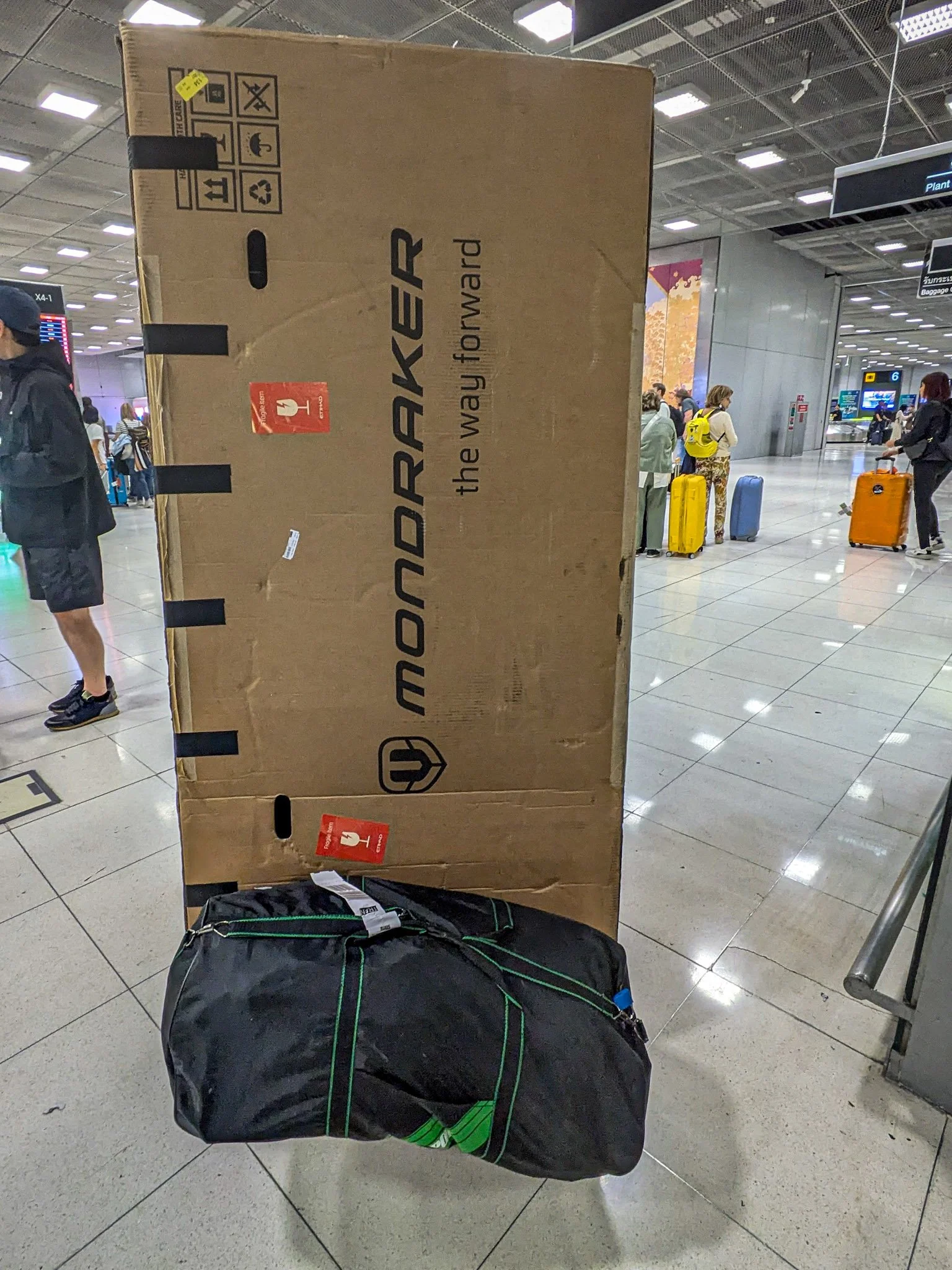
Safe arrival. The more I fly with a bike the more I seem to worry. Surely it should be the other way around? An Ethiad flight safely transported my boxed bicycle (bike 17kg, box 5kg - limit 25kg) and additional luggage (10kg paid) to Bangkok. Many airlines allow bicycles to be included as part of checked baggage, with weight allowances varying between 23-32kg.
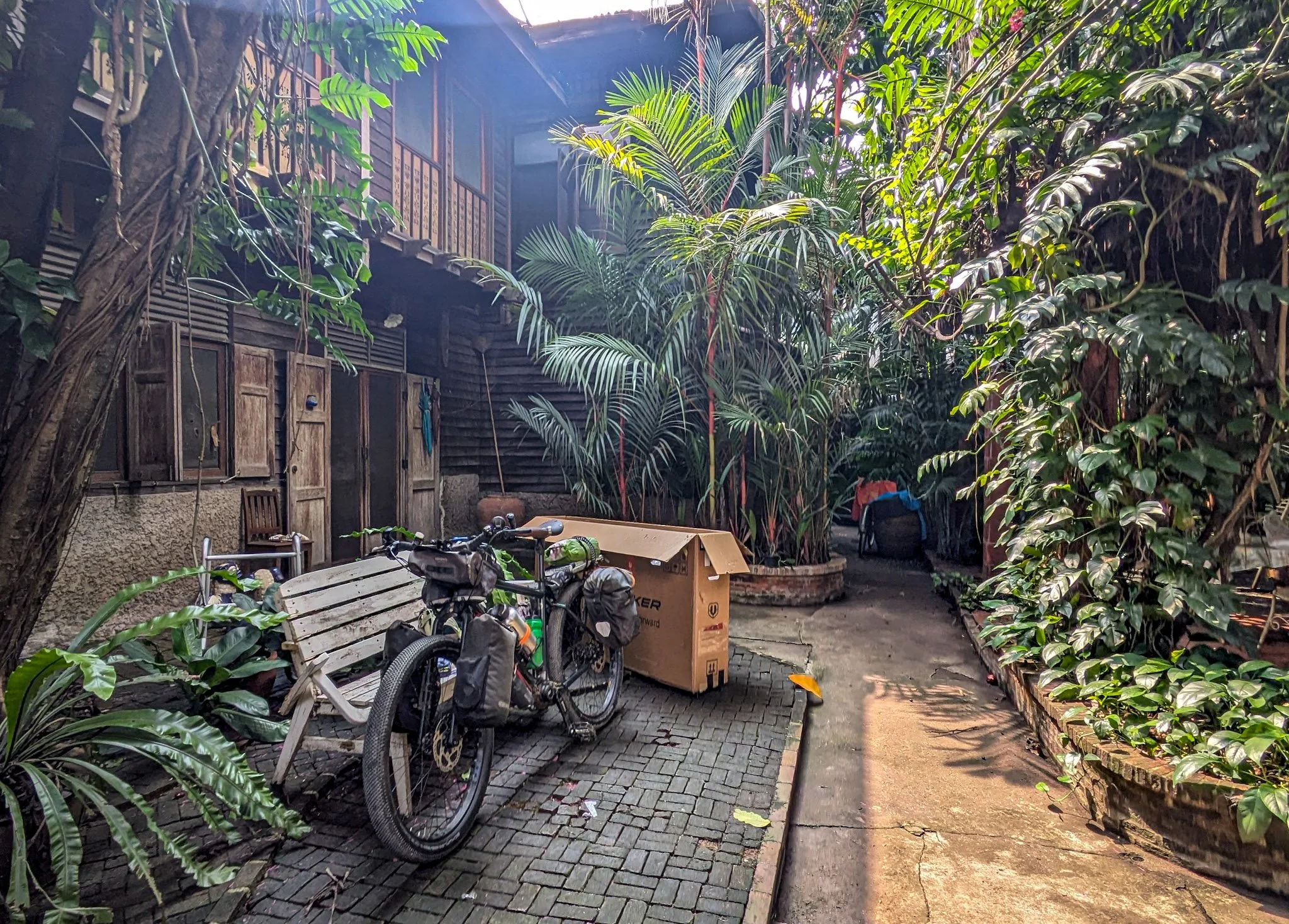
Unboxing. Accommodation for the first night was in an old family home tucked away in the backstreets of Banglamphu - a popular district of Bangkok with plenty of budget accommodation. I’d made a booking online for one night only, uncertain how the guest house would be. While the place was full of old-school character (felt more like a museum inside), I found a better option nearby, so checked out the morning after arriving - happy that the bicycle was intact.
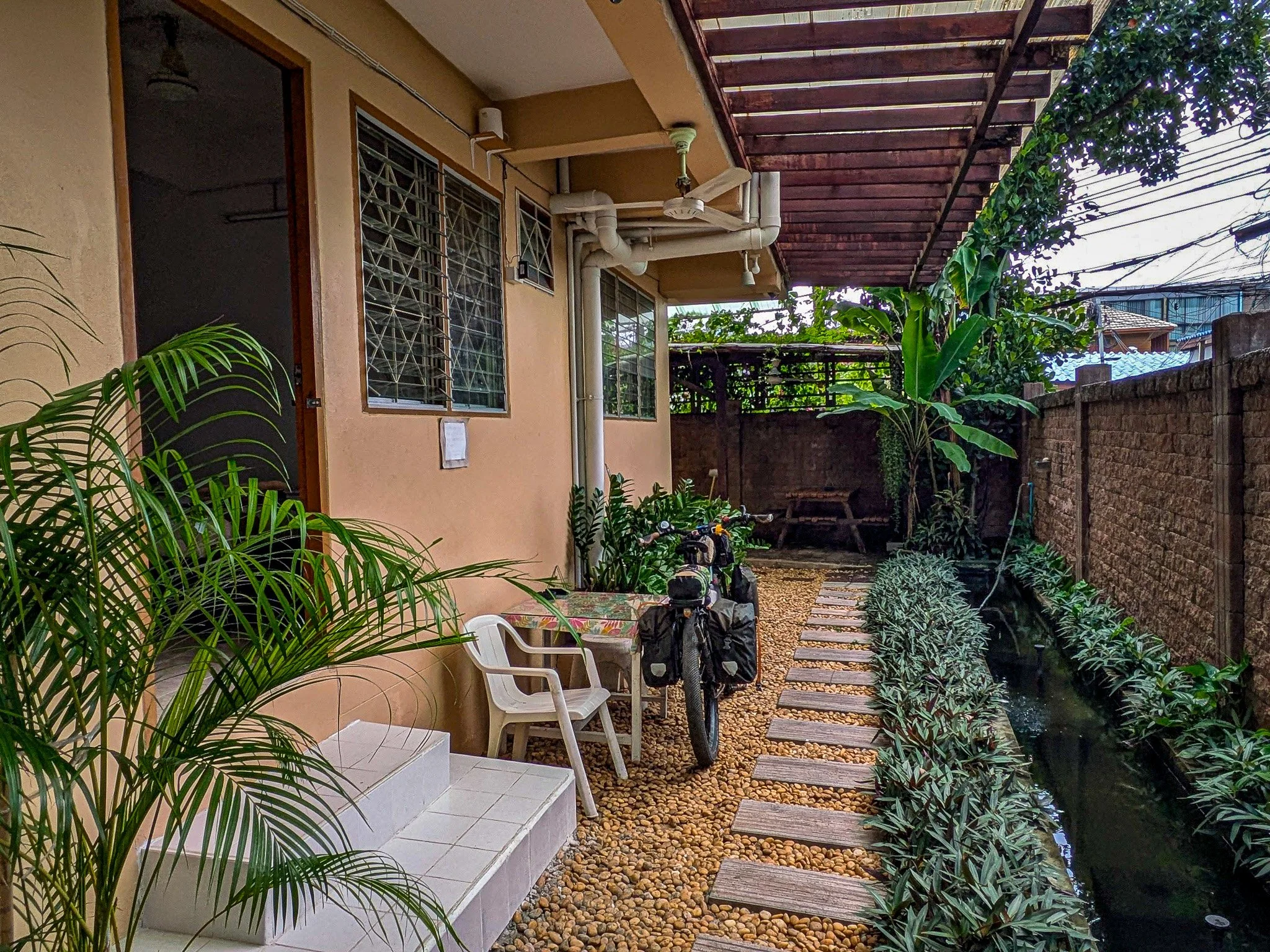
A short distance away I checked into this peaceful guest house. A good place to rest and acclimatise before riding out of Bangkok.
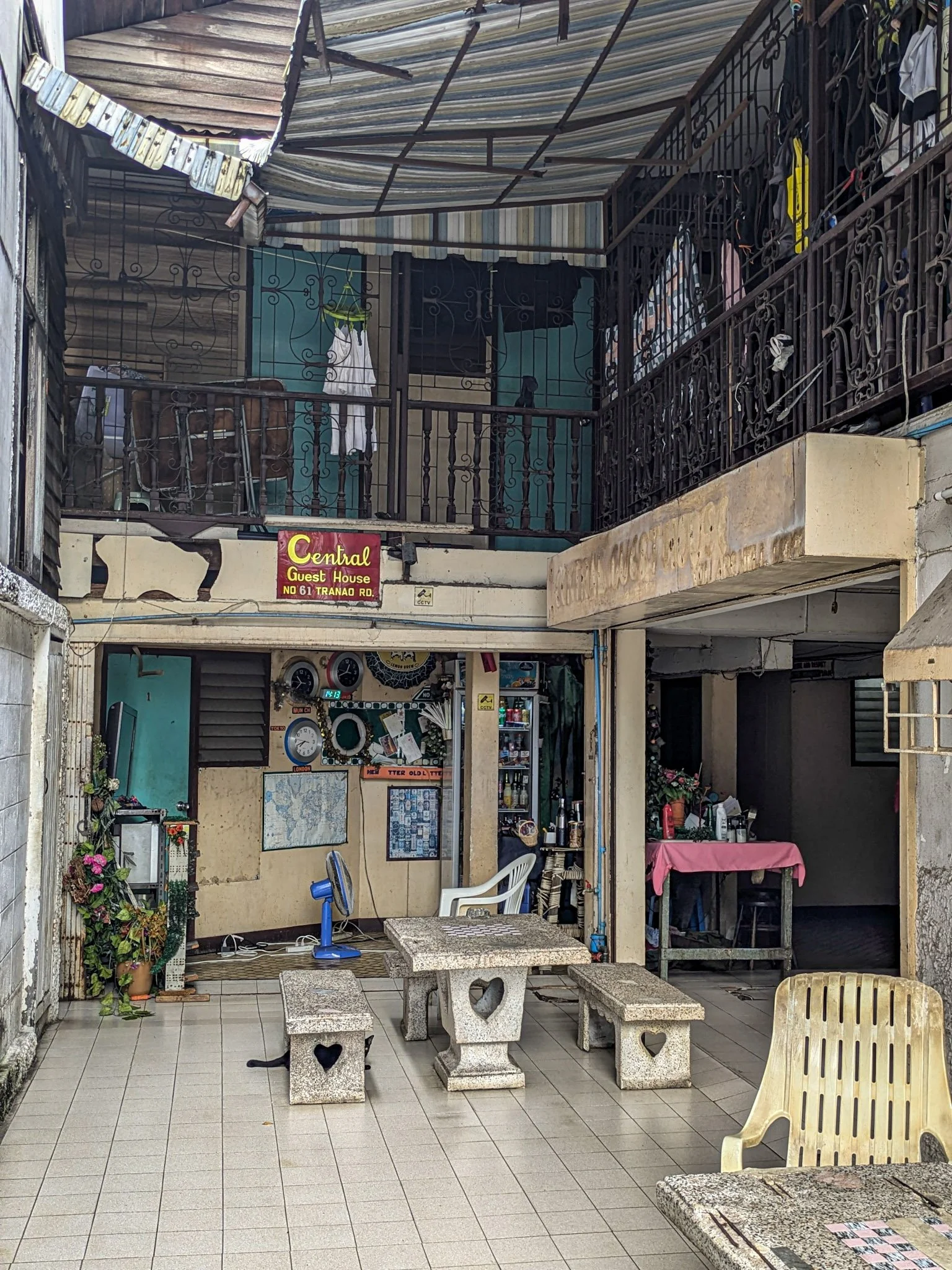
Much to my surprise, the guest house where I stayed back in 2006 was still open and appeared unchanged. Tucked away in a backstreet at one end of the well-known Khao San road.
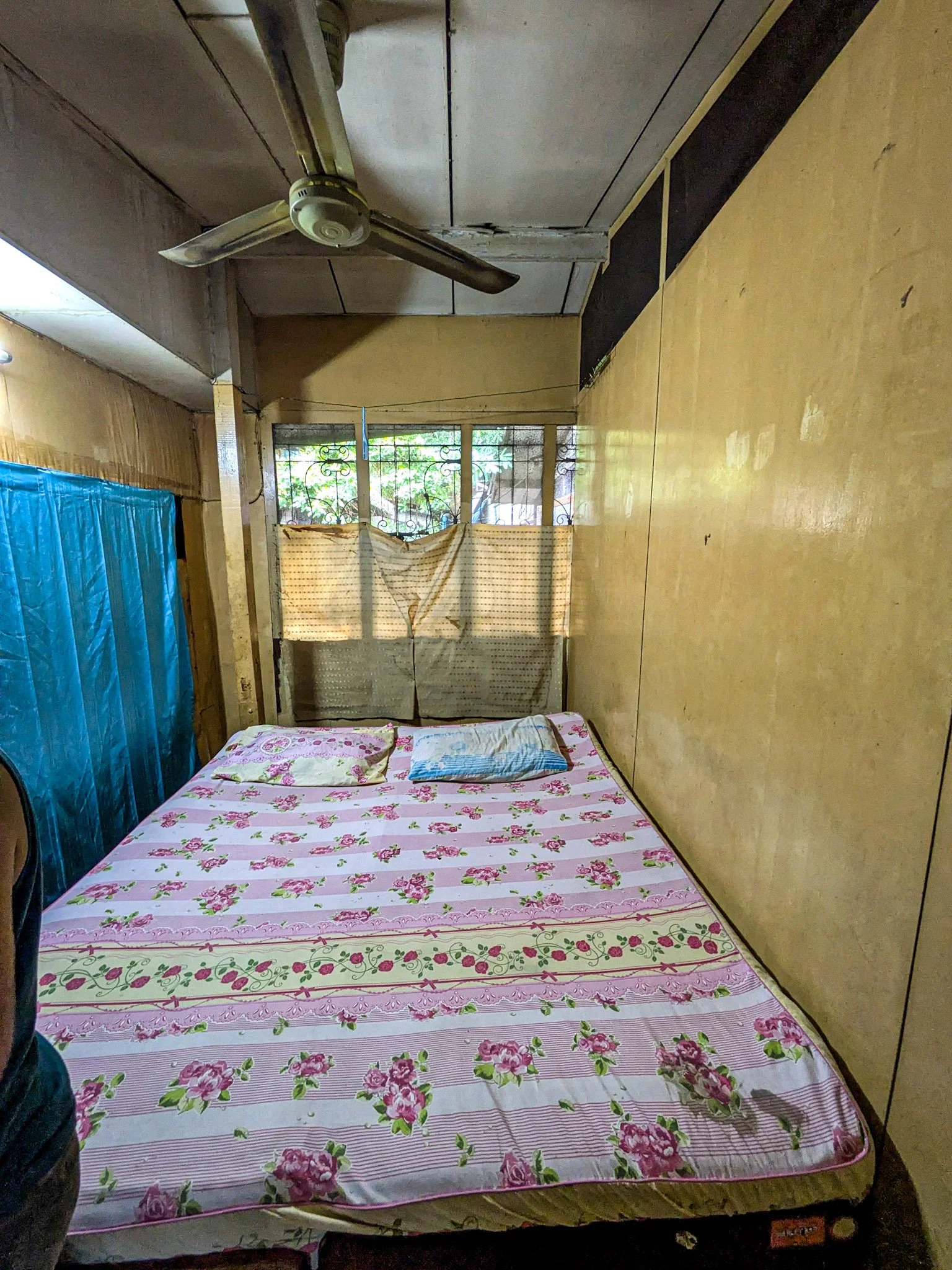
Which meant that the rooms looked like they hadn’t been properly cleaned in 20 years either! Very glad to not be staying here. When I asked about the price of the rooms, I think they were exactly the same as I paid 20 years ago! About $4. The room in the much cleaner guest house I stayed for several nights was around $10.
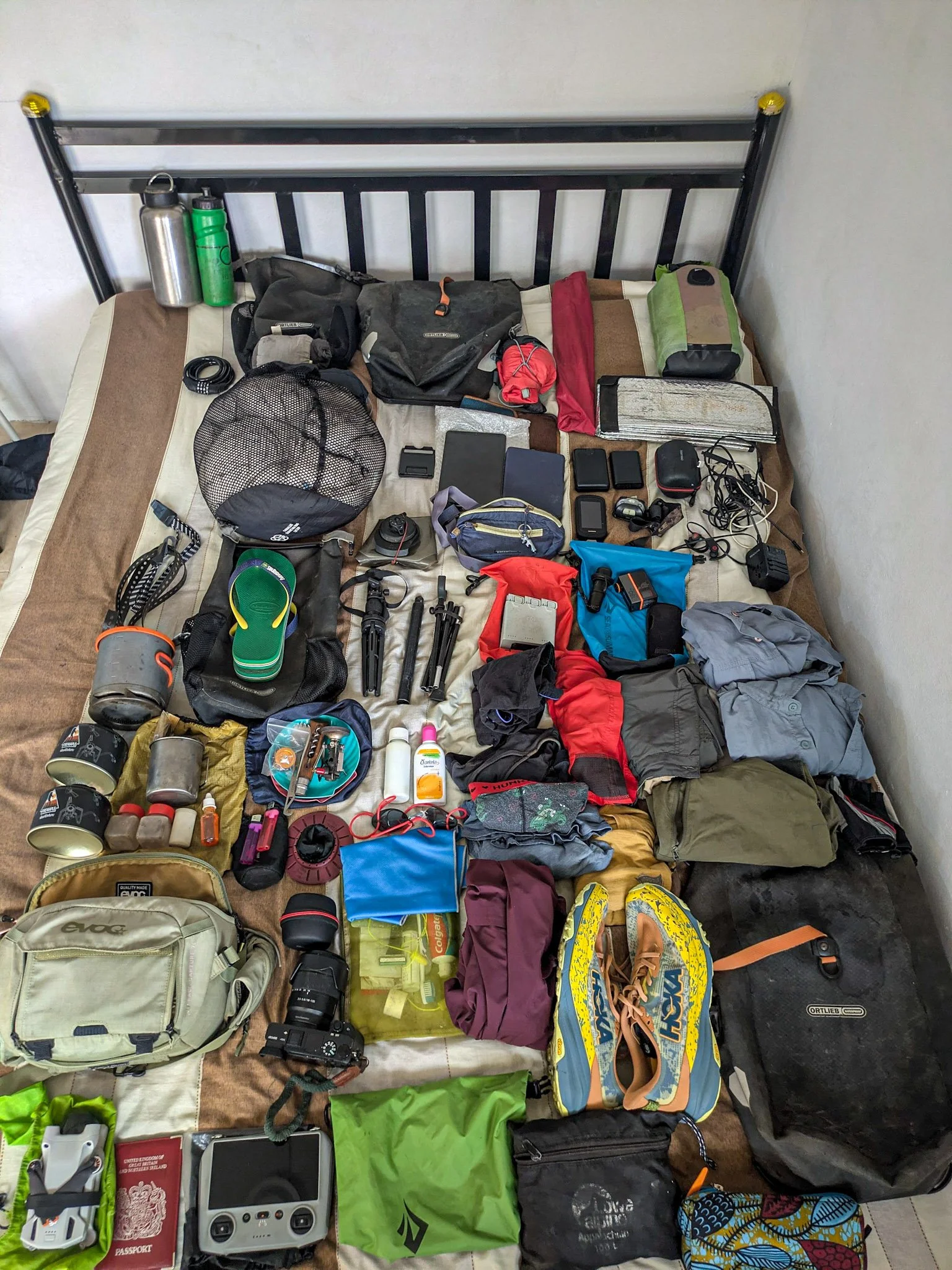
The full kit. I always find it easiest to lay everything out in front of me before starting a trip. I’ve done this many times before, although every trip is slightly different, so I try to ensure that I know where everything is going to go before I actually pack it away. In terms of deciding what to take and what not to take, I go by the simple principle that if I am carrying something for a prolonged period of time (say 1 month) and it’s not being used, I could probably do without it.

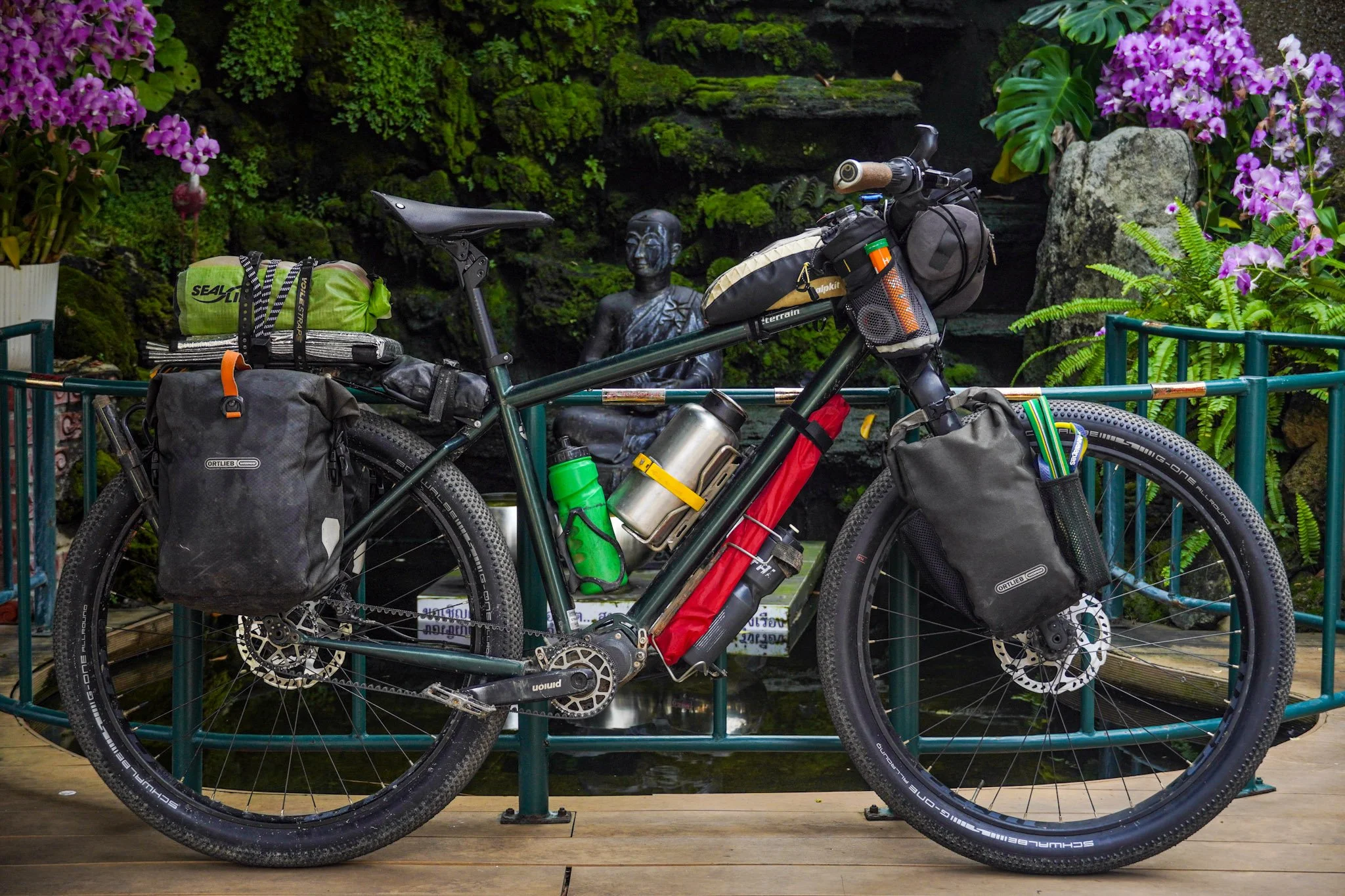
In one small pannier I packed some tools/spare parts/straps (black and blue bag), my clothes in a dry bag (2x t-shirts, 1x short-sleeve shirt, 1x long-sleeve shirt, 2x pairs of shorts, 1x pair of hiking trousers 1x rain jacket, 3x underpants) and a wash bag. I wasn’t sure whether to take my trail running shoes or leave them in Bangkok to pick up at a later date, but I was glad I took them. There was space in the pannier and I used them frequently - running 2-4 times a week throughout the journey (I cycled in trekking sandals). In total this bag weighed around 3.5kg.
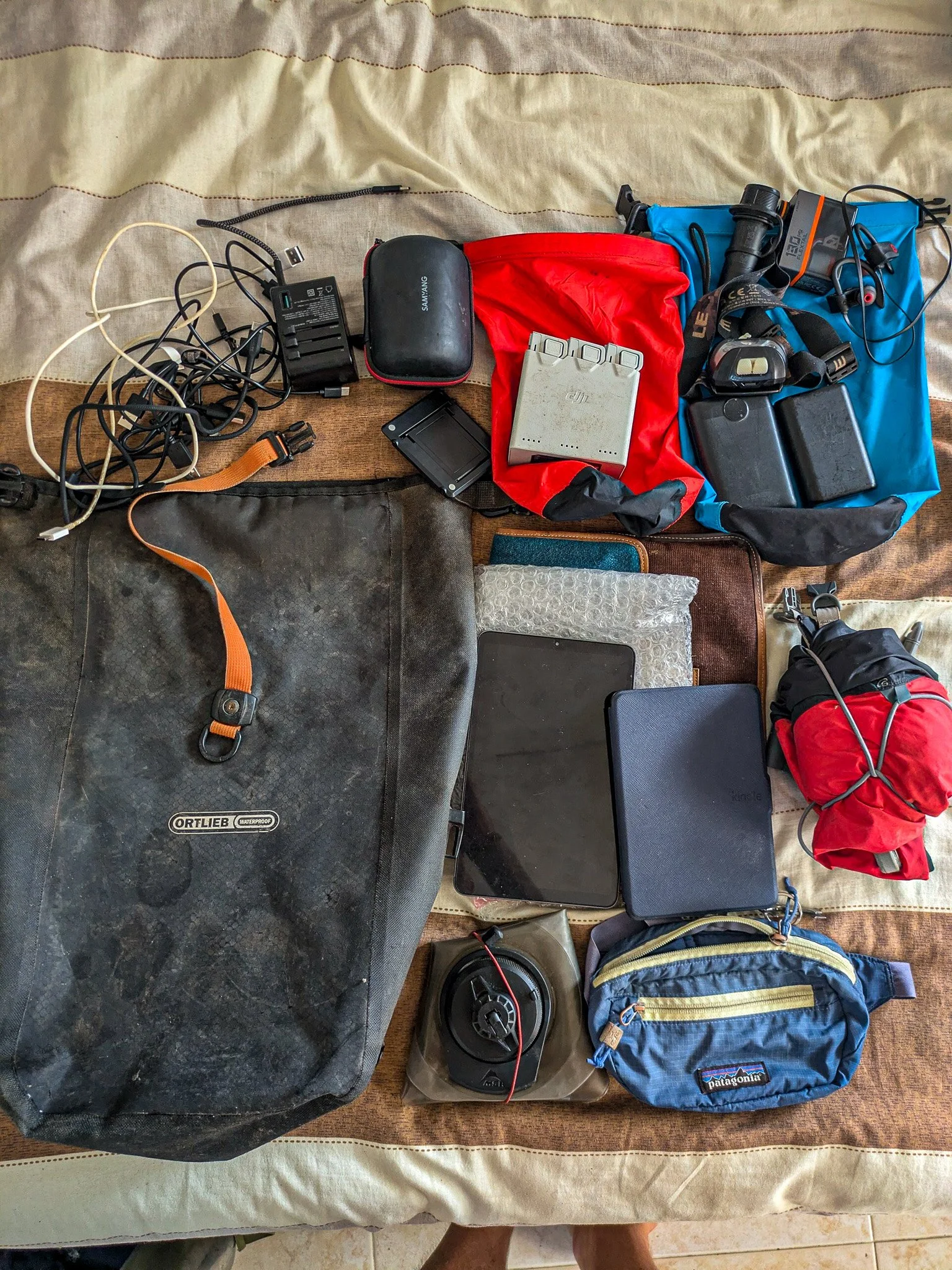
In the other pannier I packed all my electronics (usb cables, travel plug, 2x power bank, spare drone batteries, spare camera lens, head torch, earphones) as well as kindle, tablet, 25-litre day-sack, small hip-bag and water bladder (4 litre). Approximately 3kg here, with plenty of space for anything extra.
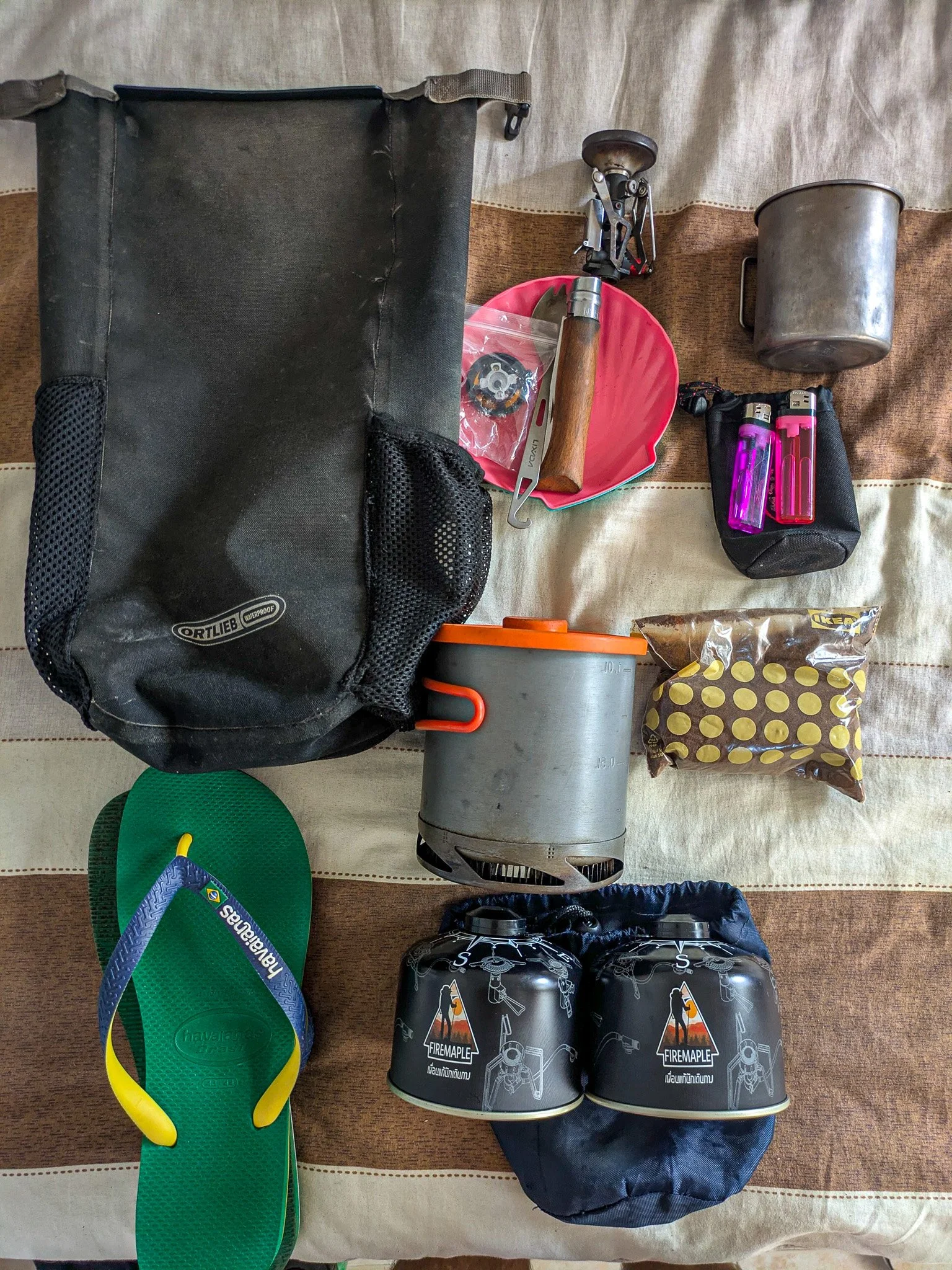
In one front fork bag I decided to carry my cooking gear for camping. As I didn’t plan to camp and cook as much, I packed a smaller pot than I have done on previous trips (1 litre) and opted to use camping gas with a small gas stove. The mesh pockets on the outside of the bag were useful for carrying my flip flops. Around 2kg in total.
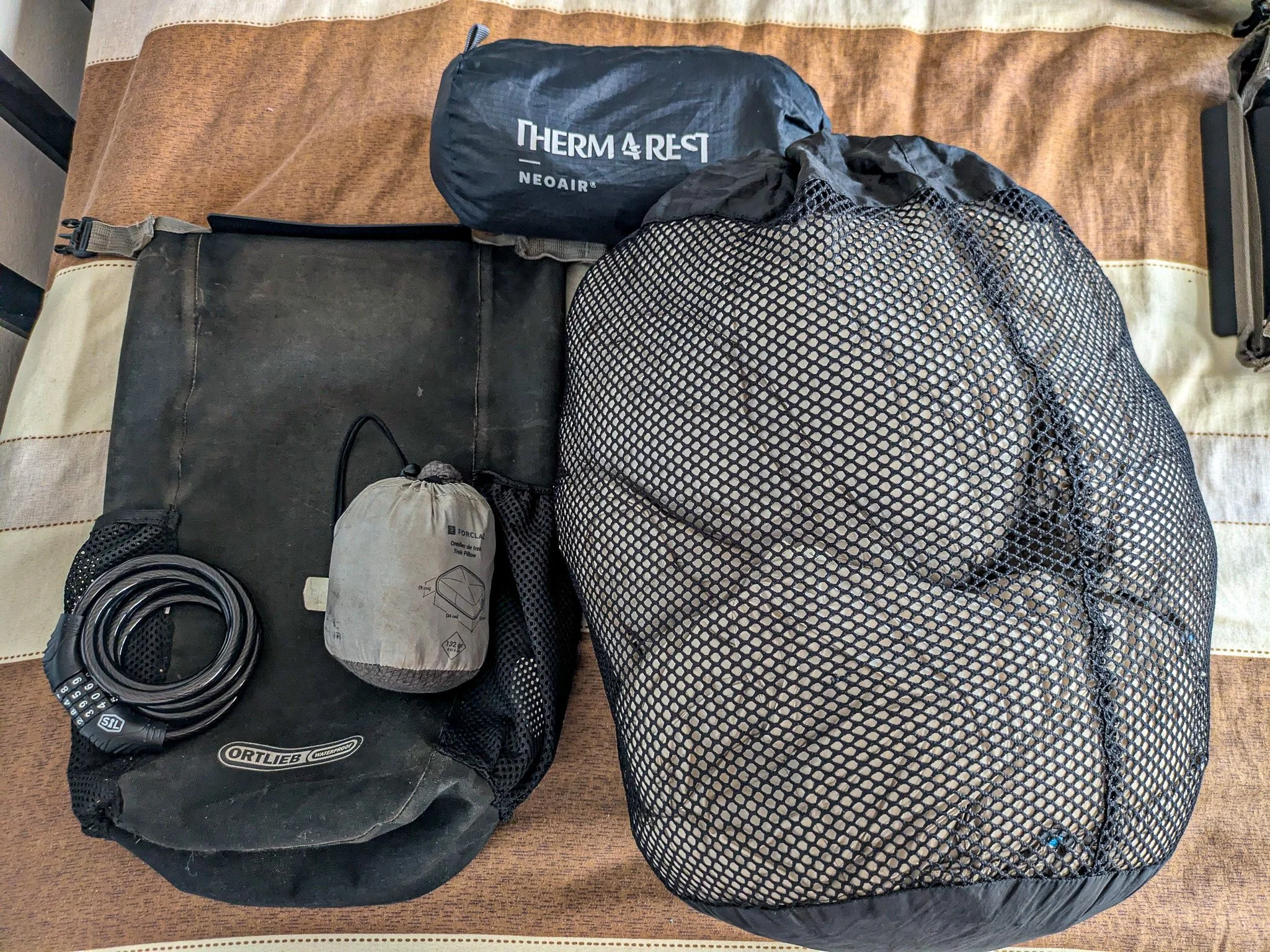
In the other fork bag I packed my sleeping quilt, thermarest pad, pillow, and used one mesh pocket for a small cable lock. Less than 2kg in total.
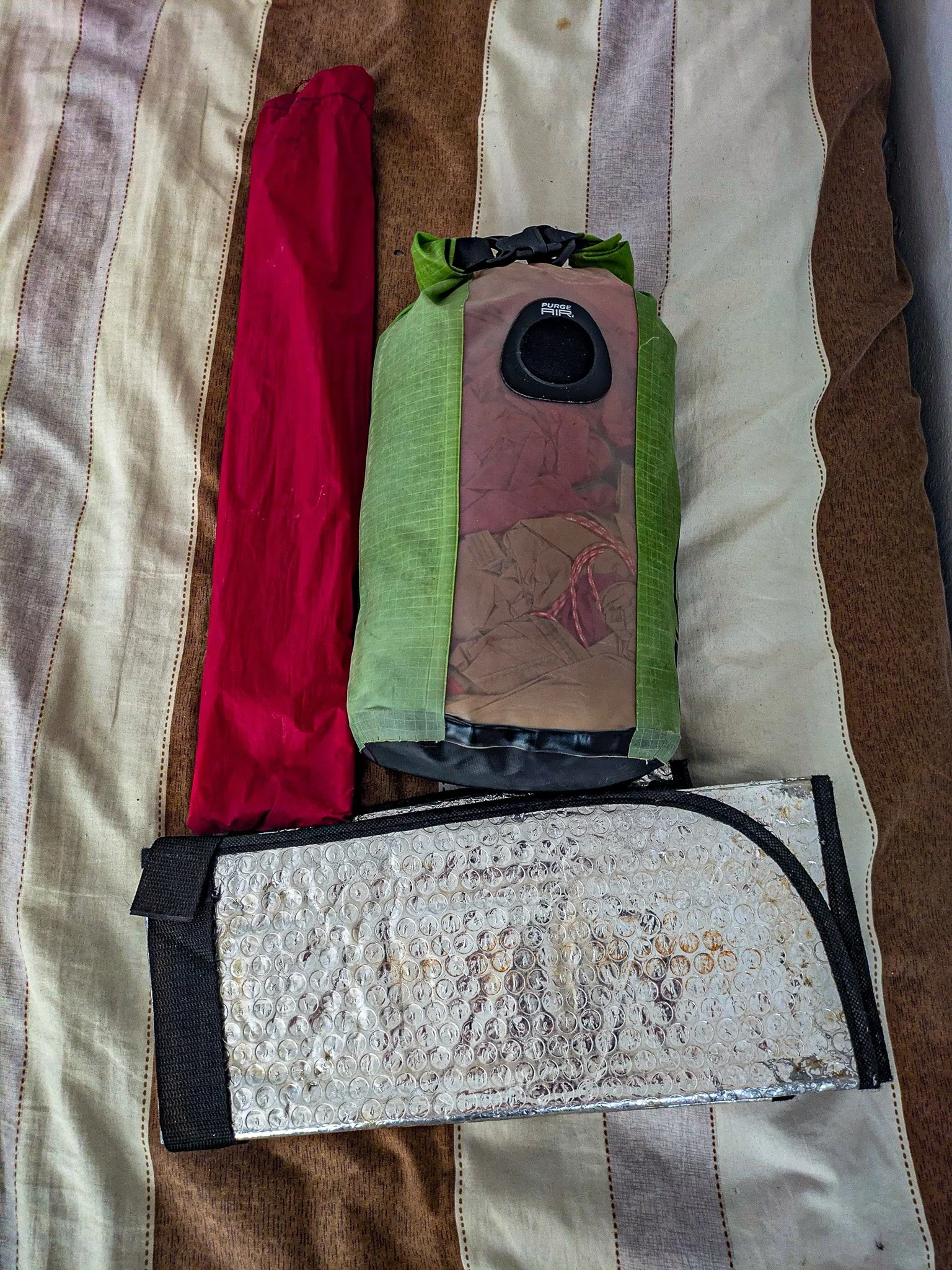
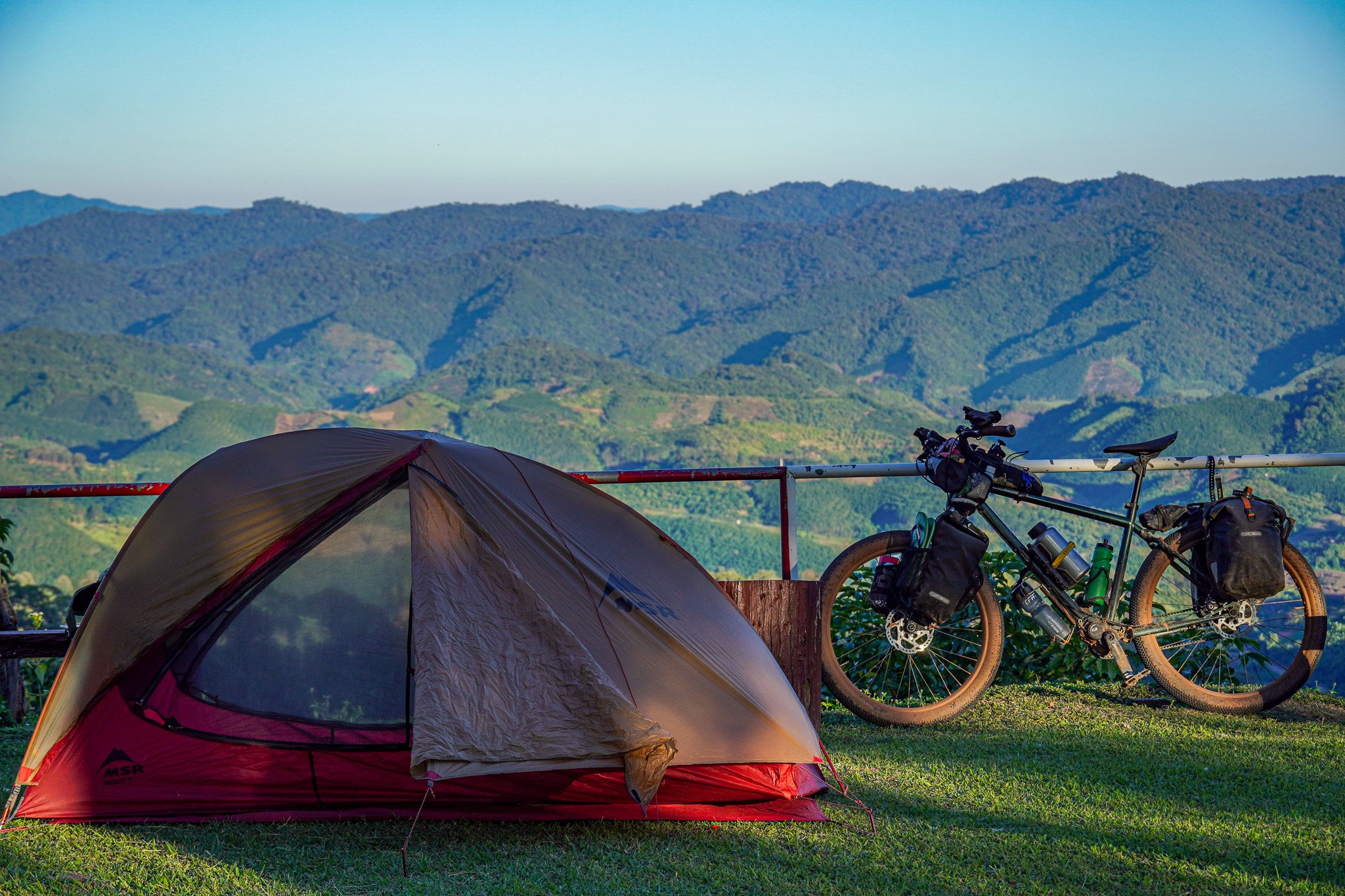
My tent went in a dry bag strapped onto the top of my rear rack. For the first time I decided to carry my tent poles separately - strapping them on the underside of the down-tube. The reflective car sunscreen provides protection between the ground and my thermarest when camping.
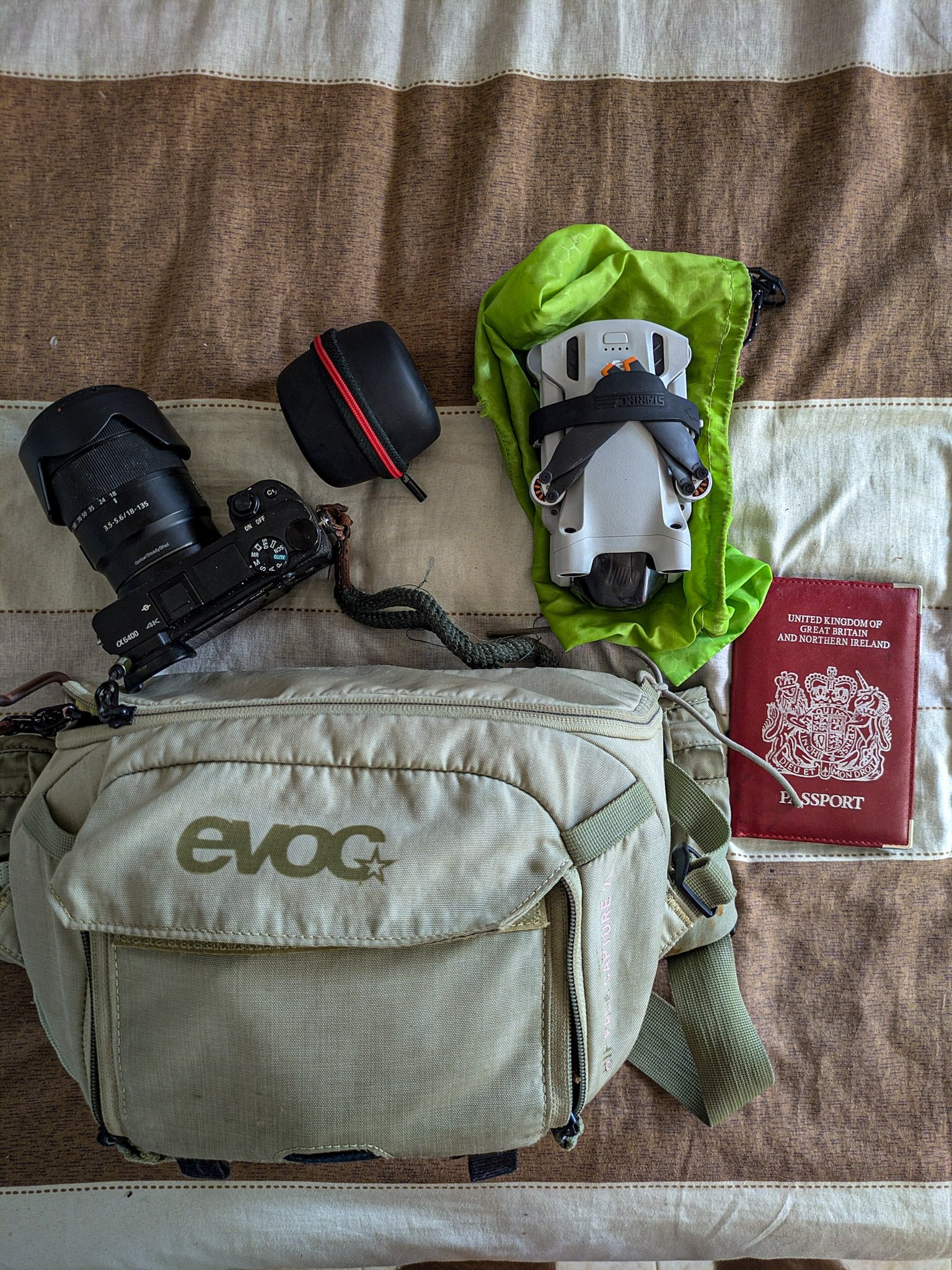
This 7-litre hip bag is how I have carried my camera (Sony A6400 +18-135mm lens), spare lens (Samyang 12mm) and drone (DJI Mini 3 pro) in recent years, as well as other valuables like passport and cash. It is always with me when I step off the bike, and I barely feel it on my waist when cycling. Total weight around 1.5kg.
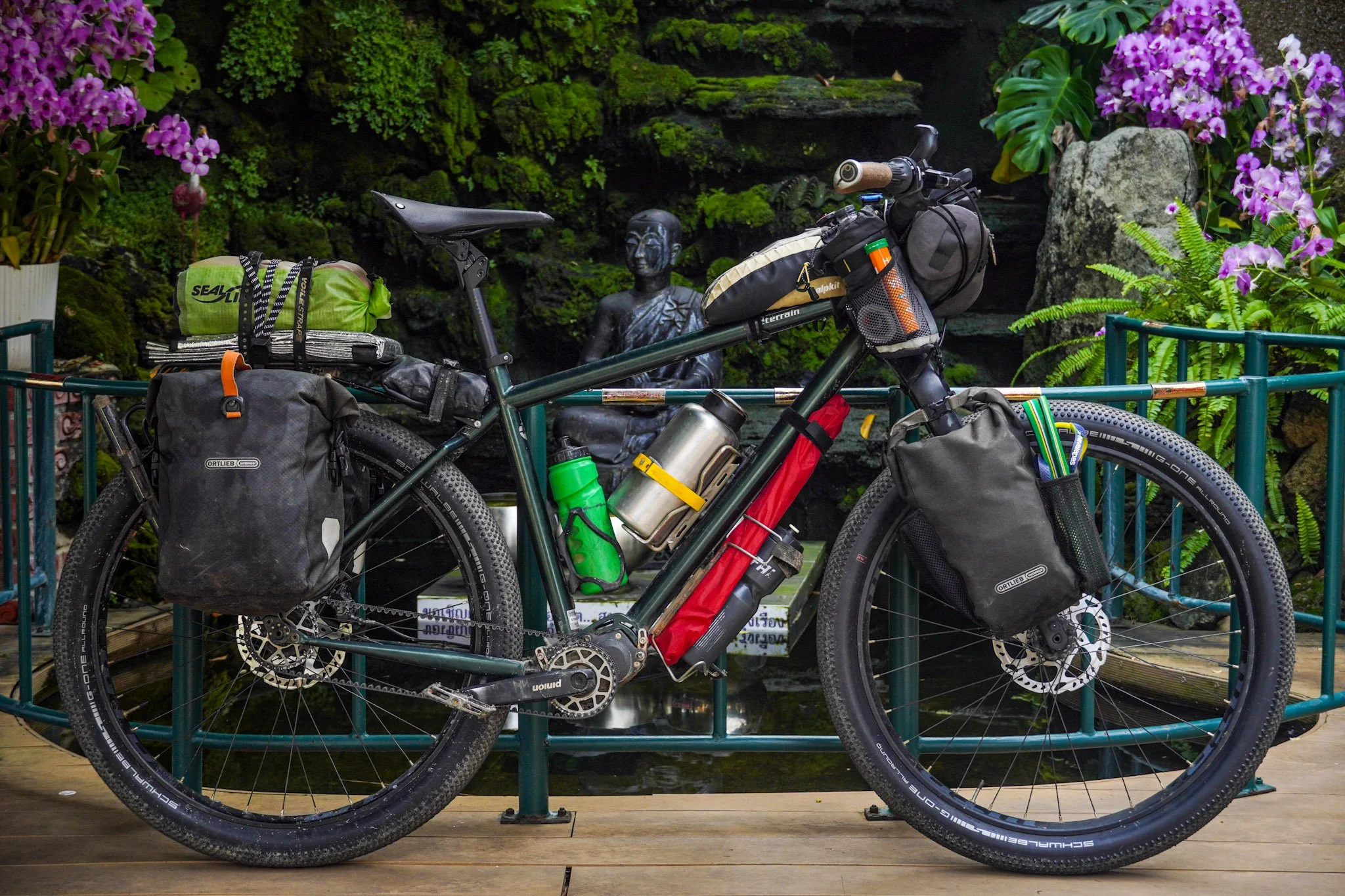
Ready to roll. The small handlebar bag contains my drone remote control, and stem bags carry a water bottle in one, mini tripod, selfie stick and snacks in the other. In total around 12-13kg of gear on the bike, minus food and water. If I wasn’t camping it would be possible to tour this part of the world with just two small rear panniers.
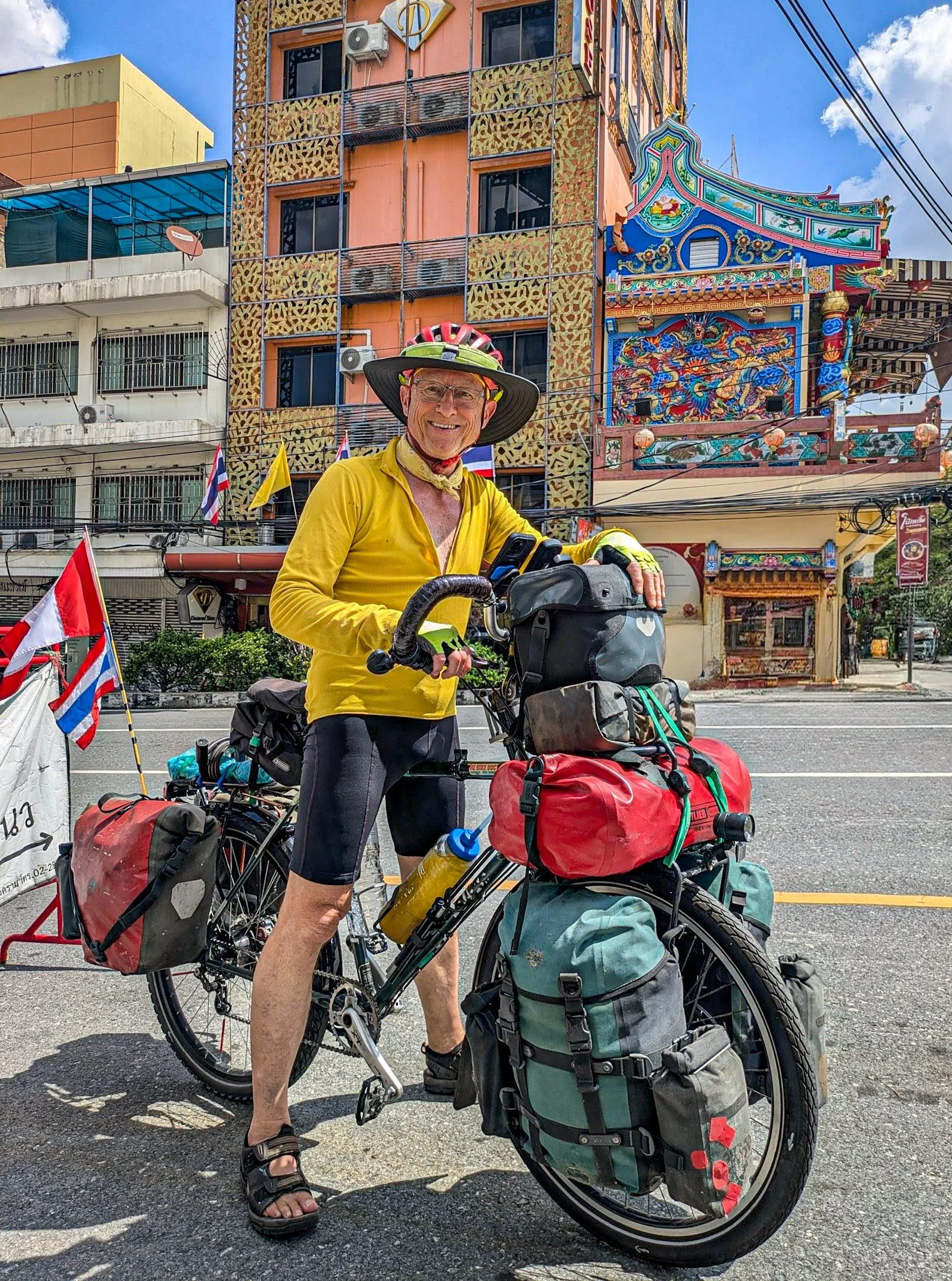
A contrast in packing from my Canadian friend Mario, who I met during my time in Bangkok. We have been facebook contacts for a number of years, so it was good to finally meet in person. Mario has made numerous trips in Thailand and South East Asia during the winter months. No camping gear in this fully-loaded rig on his Surly Long Haul trucker.
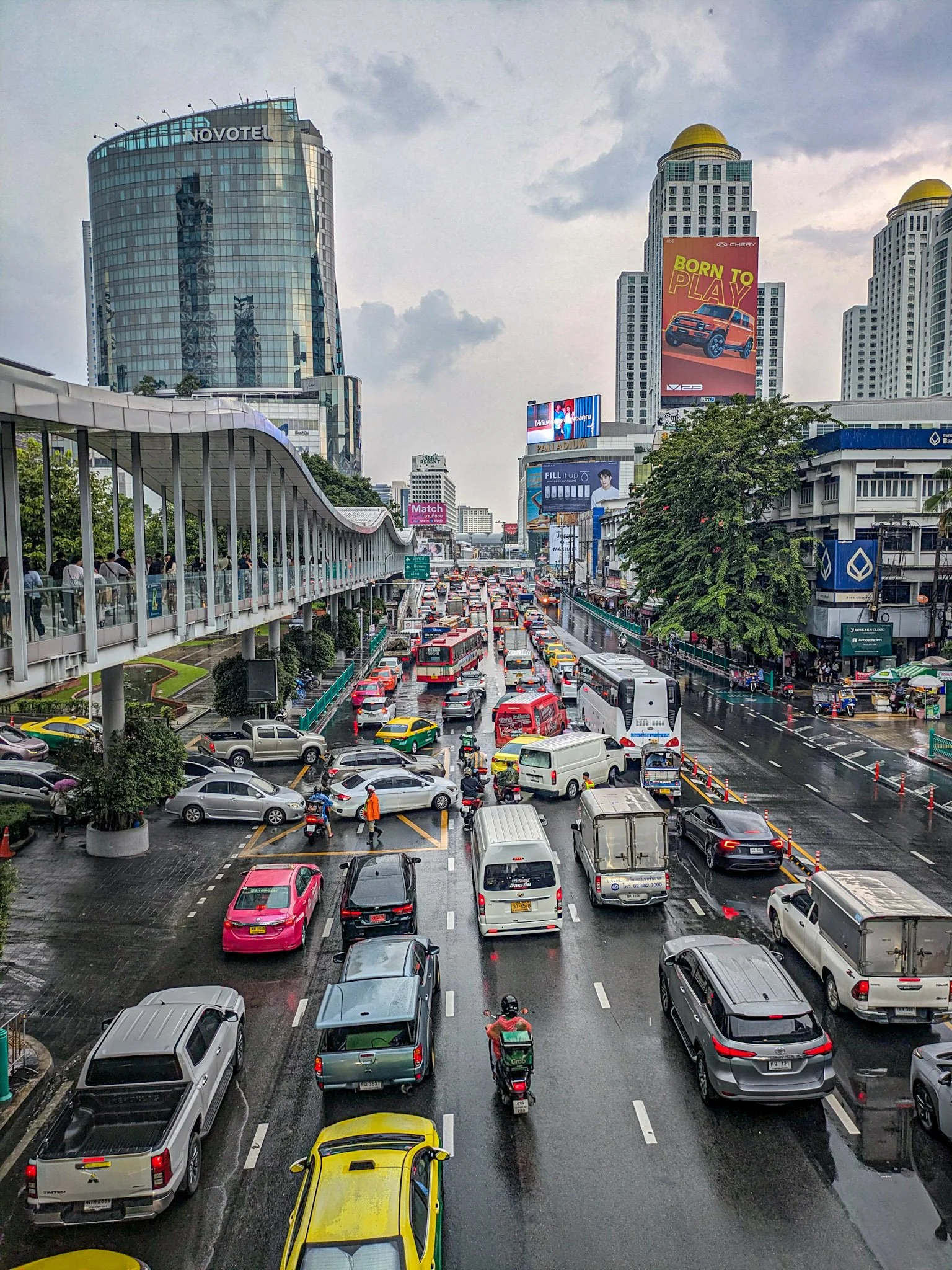
Bangkok gridlock. I think most cities in this part of the world are the same when it comes to traffic. Moving by two wheels is far faster. With the dense network of roads that exist here, it is possible to avoid most roads like this.
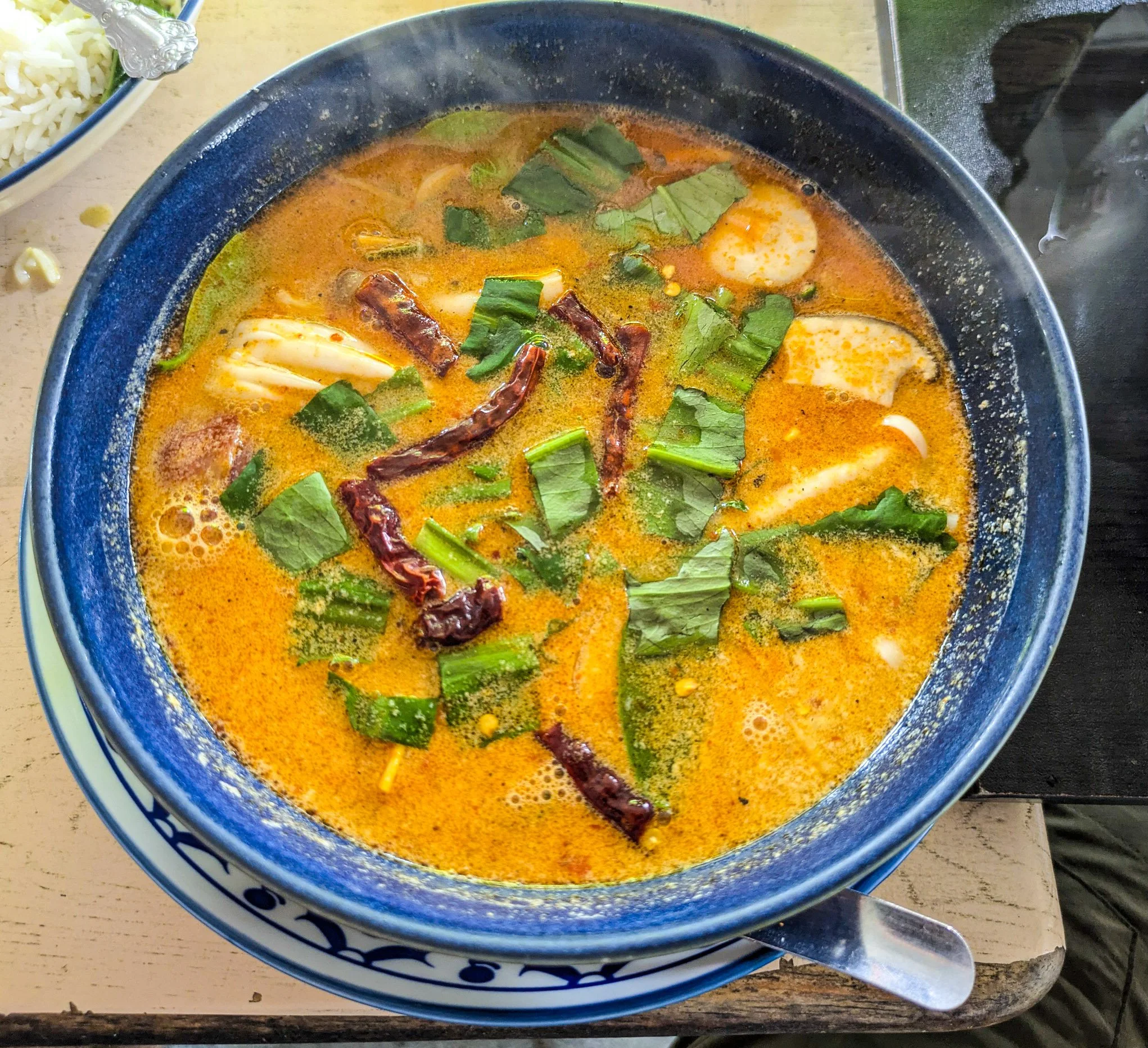
A taste of things to come. A good reason to return to Thailand.
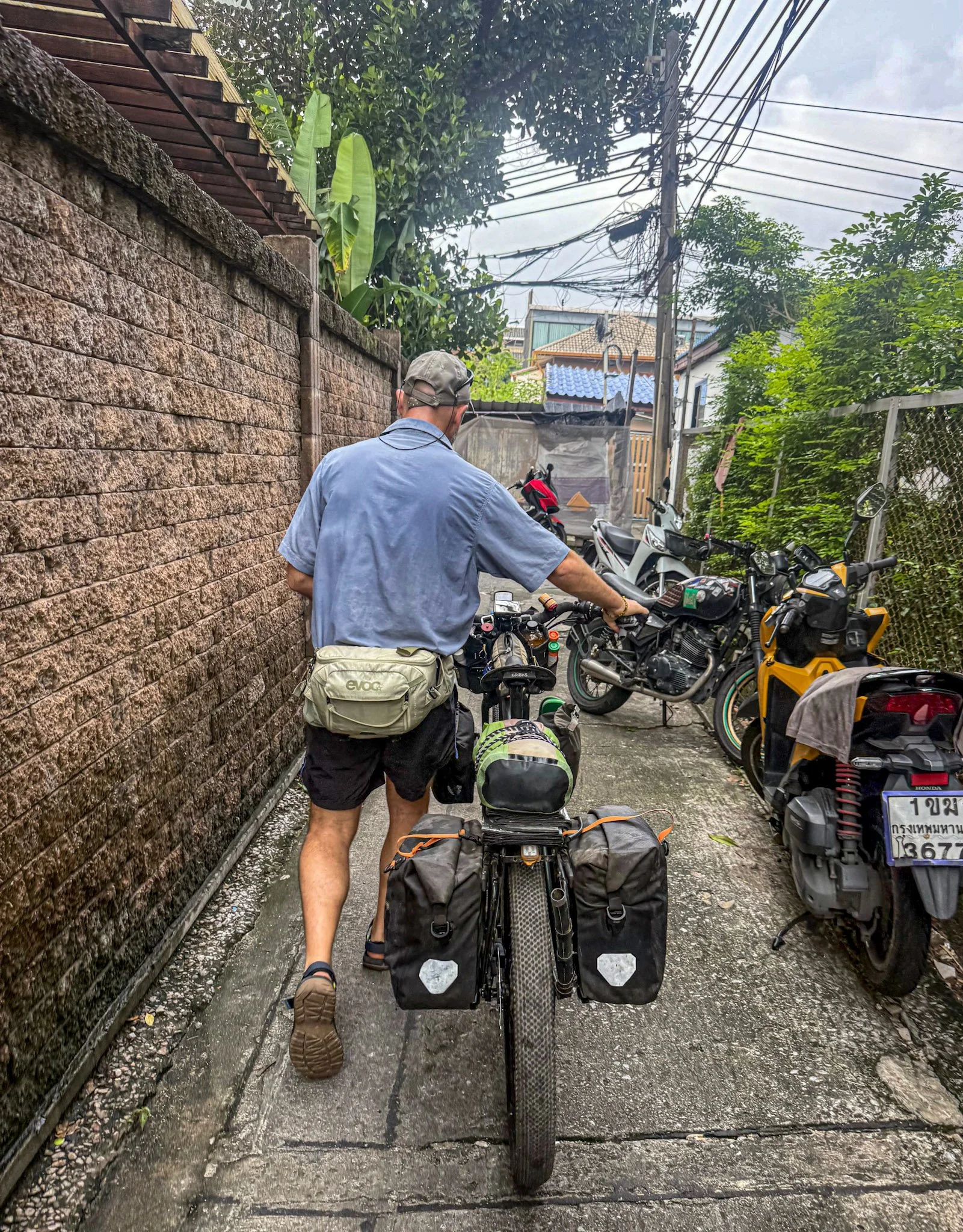
Rolling out. I stayed in Bangkok for 5 nights before heading north. I had considered taking a train out of the city, but cycling was not nearly as bad I remember from 20 years ago. Back then I stuck to a main highway as paper maps showed none of the small inter-connecting streets that modern mapping apps do now.
If you enjoyed and found this post useful, please support the website and ongoing content creation by clicking the link below. Always a great motivation. Thanks