Thailasia Tour Part 3: Riding North. Bangkok - Chiang Saen
The photos in this post cover the first 15 days of cycling, from Bangkok to the most northern point of Thailand that I would go - the small town of Chiang Saen, which sits on the banks of the Mekong River opposite Laos. Roads were a mixture of small paved routes as well as some farm and forest tracks. More details can be found by zooming into the Komoot map below.
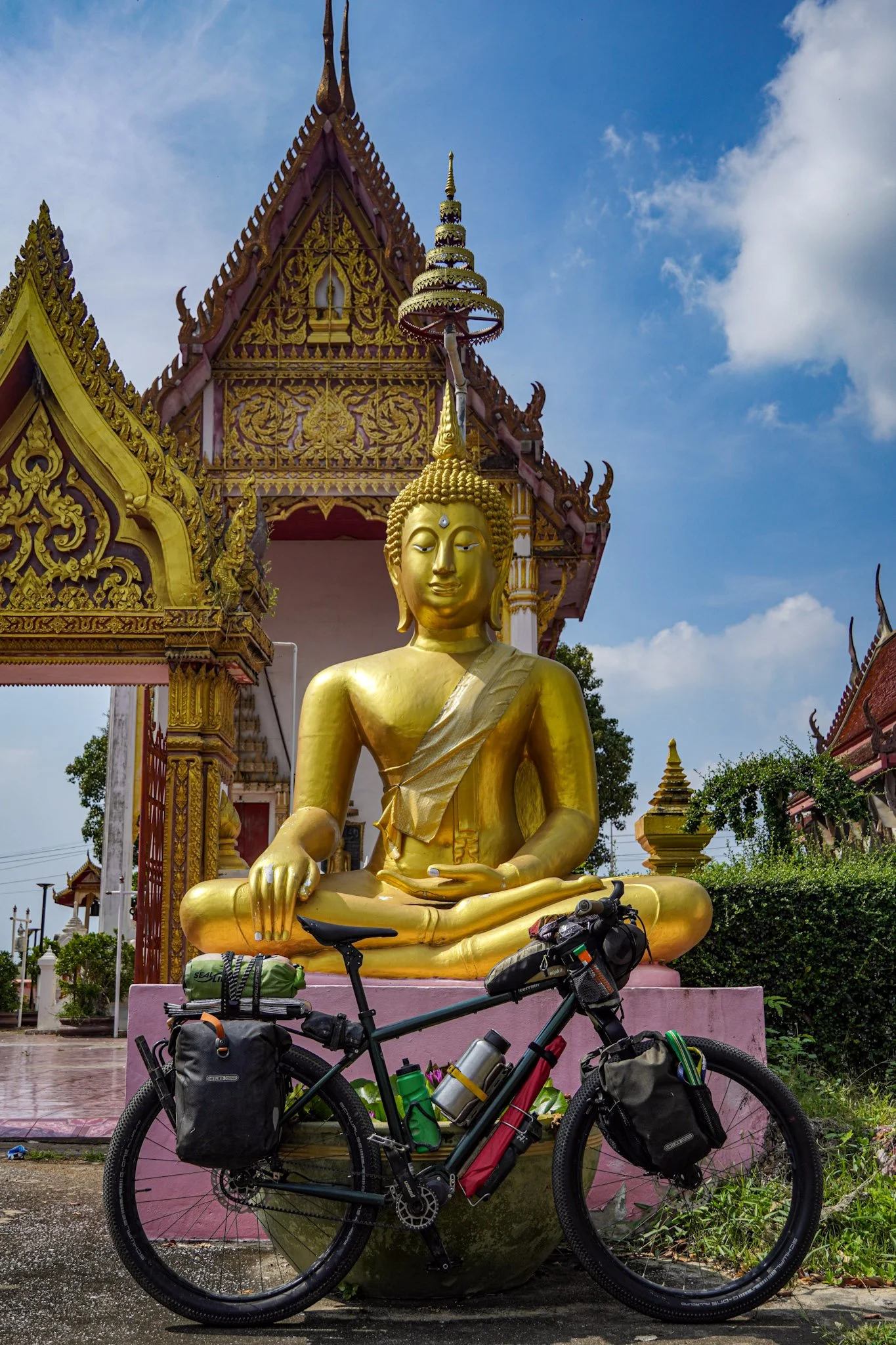
On this third trip to Thailand, some 20 years after my last, I realised I had more time to appreciate the temples here. Not in any deeply devout way - more just an interest and respect for the important part they play in Thai culture. Some were hundreds of years old; many others, like this one a short way out of Bangkok, much newer. I often stopped to appreciate, visit, rest and photograph them. They also provided a safe place to rest overnight, once I had asked permission from one of the monks.
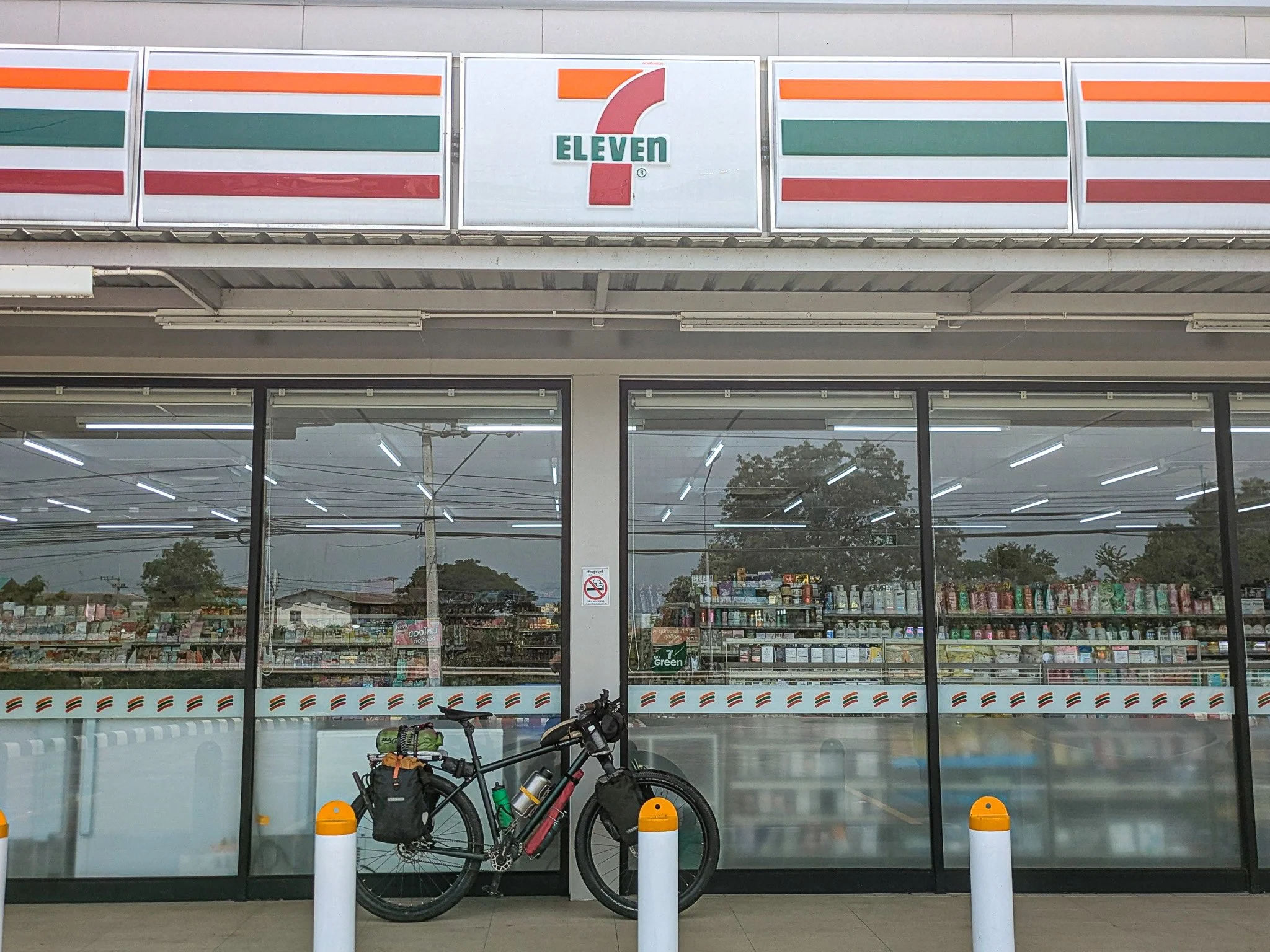
On a totally different, but equally important topic, I was quickly reminded of another important aspect of Thai culture - the ubiquitousness and popularity of the 7-11 convenience store. There were few days during my 11 weeks of cycling here when I didn’t step inside a clean, well-stocked and air-conditioned 7-11.
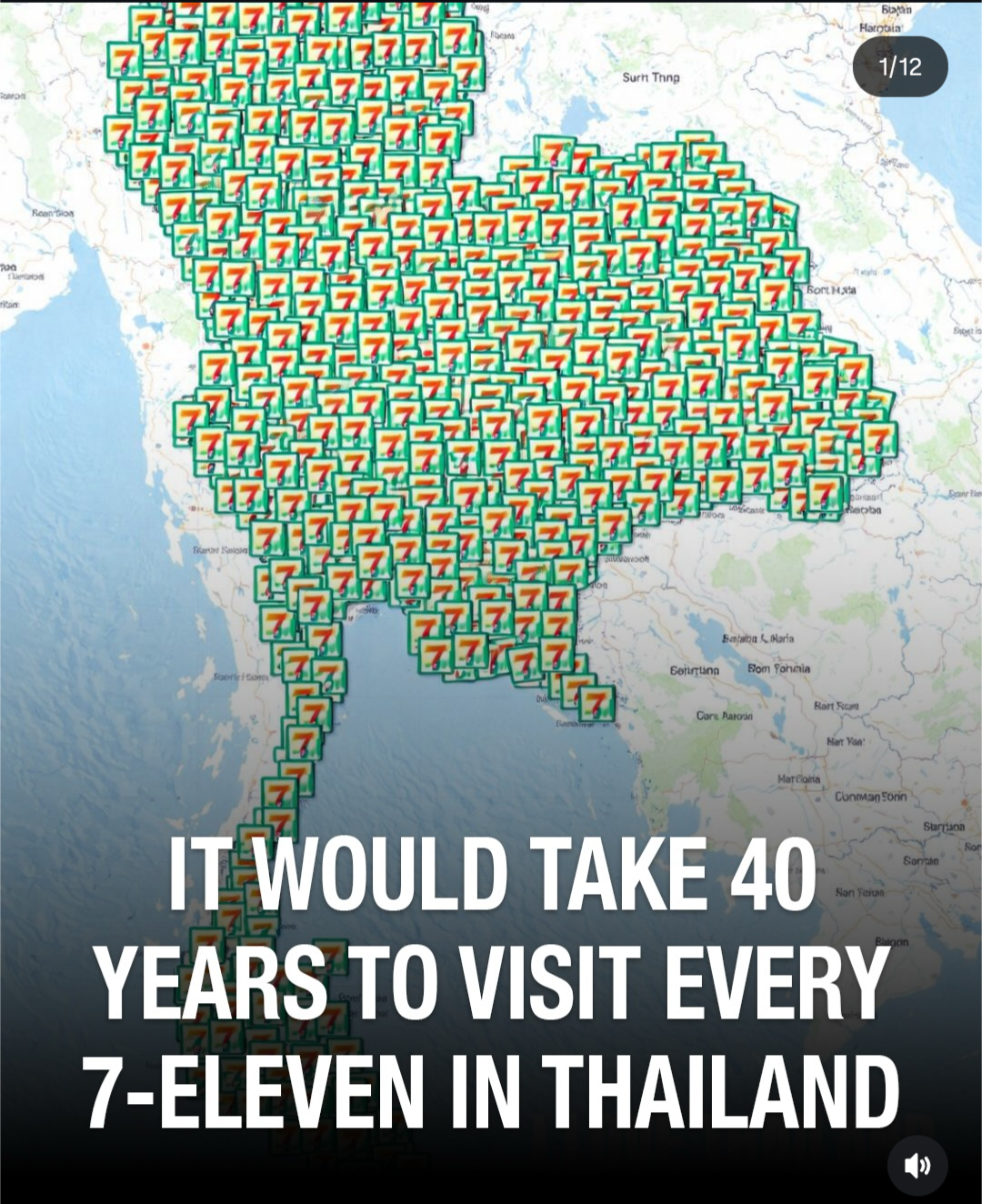
Thailand has over 15,000 7-11’s. Even when I was on a forest or farm track in what sometimes seemed a relatively remote part of the country, I was probably no more than 20km from a 7-11.
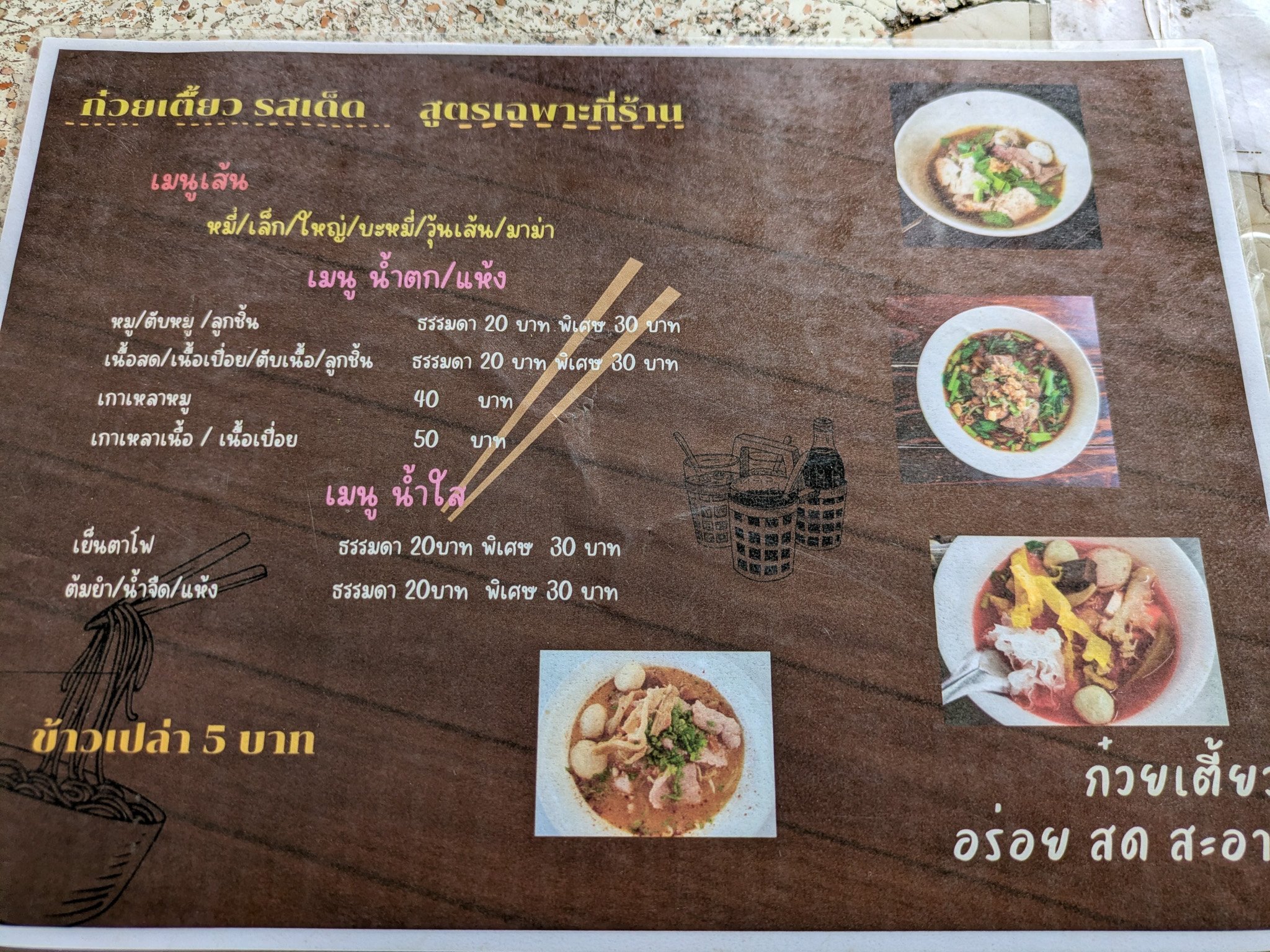
While Thailand is a relatively easy country to travel through, outside tourist spots there is little in the way of English, either spoken or written down. These days Google translate makes life a lot easier.
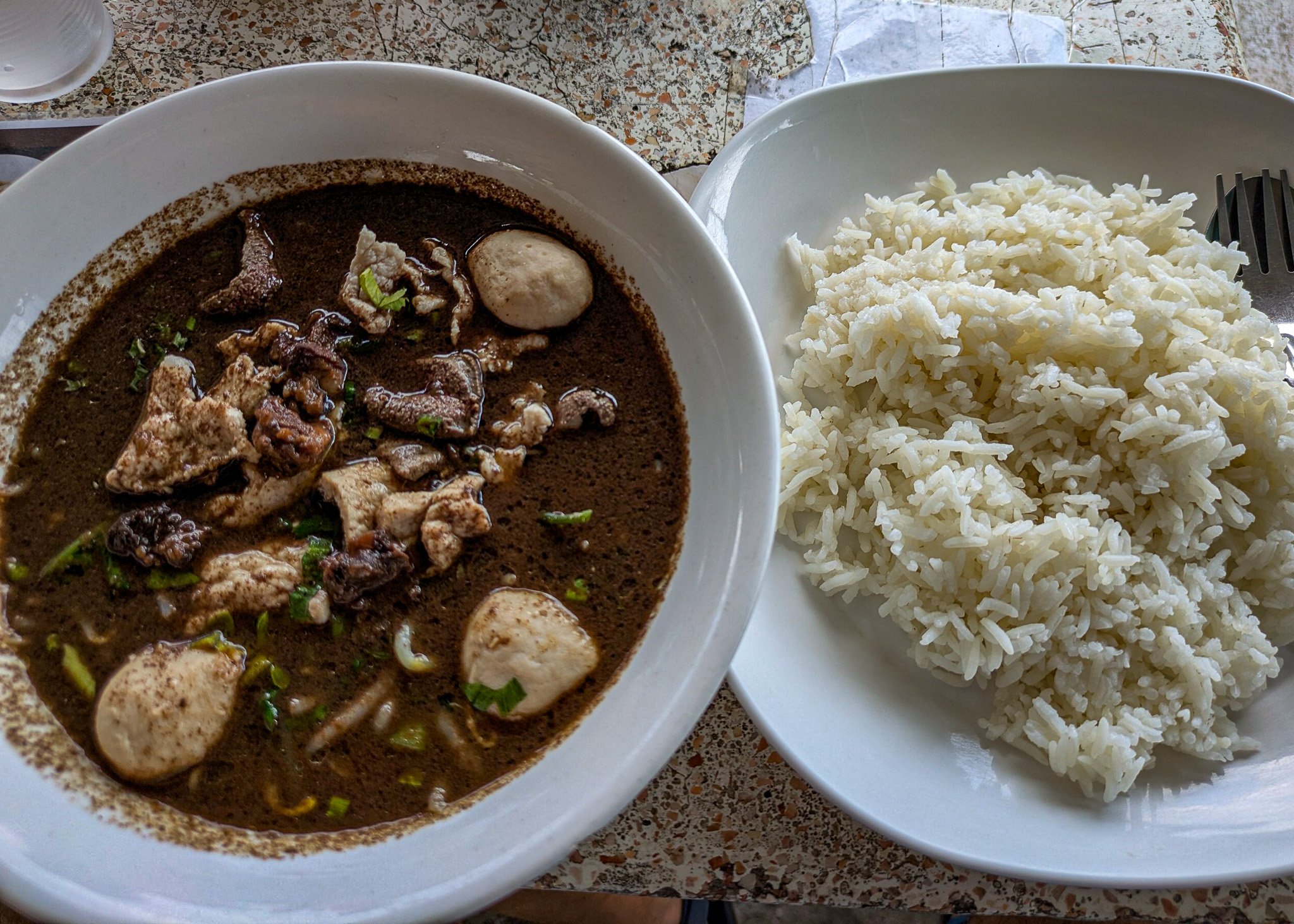
Fortunately I have no real dietary requirements - although try to stay clear of offal and chicken feet - both of which are quite common in Thailand.
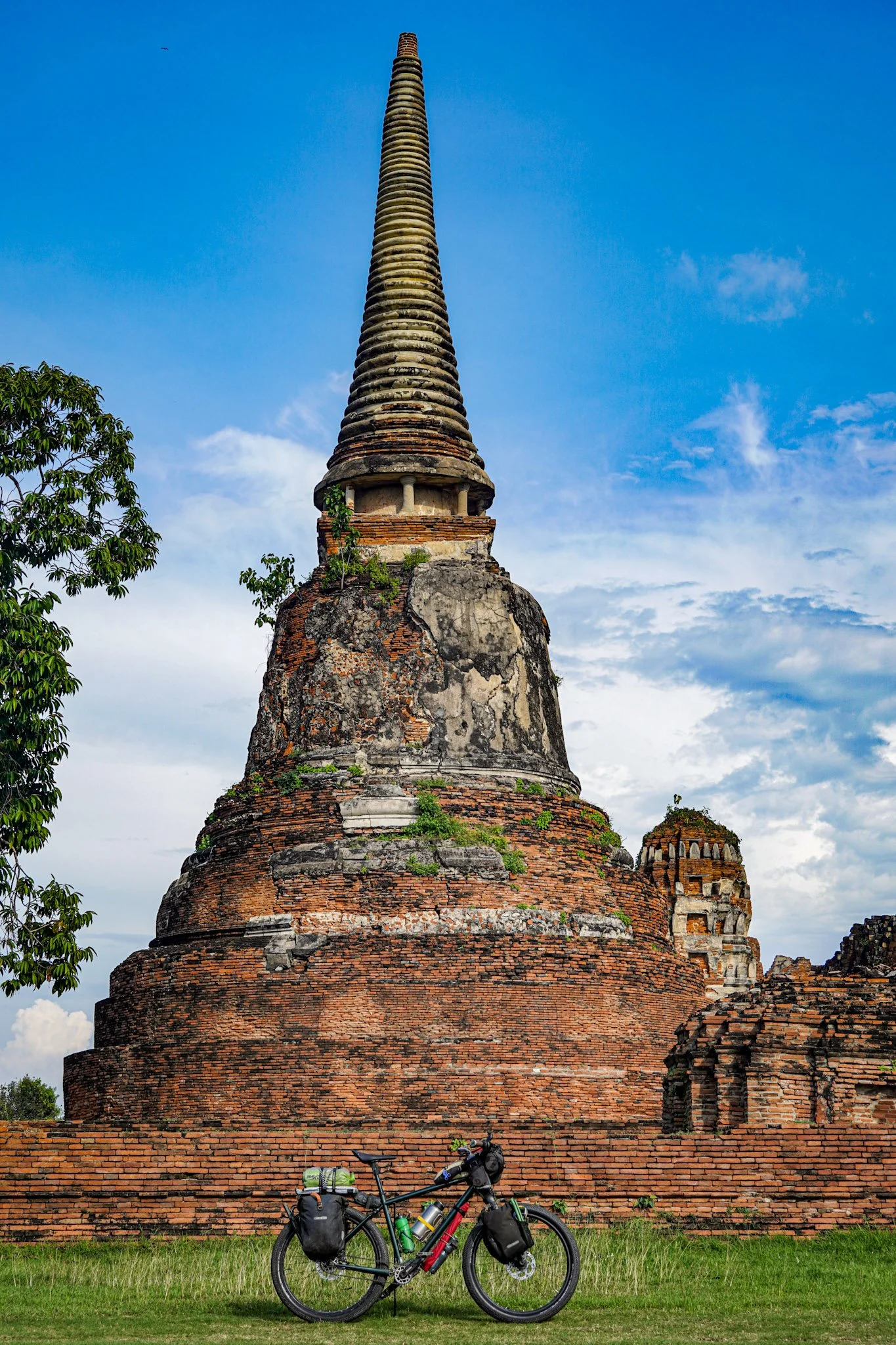
My first day on the road north from Bangkok takes me as far as the ancient capital of Ayuthhaya.
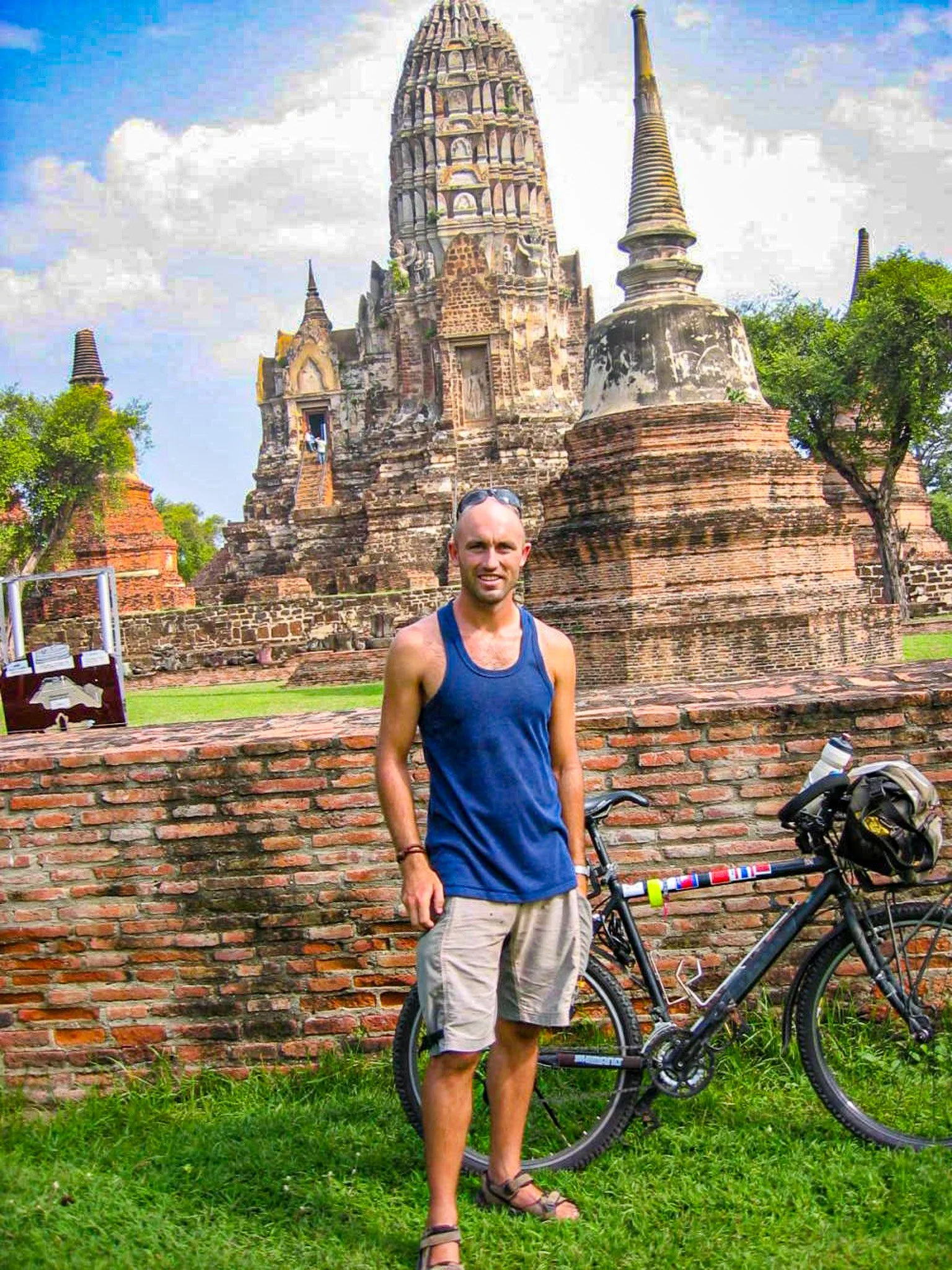
Not my first time in Ayutthaya. Rewind to 2006 here.
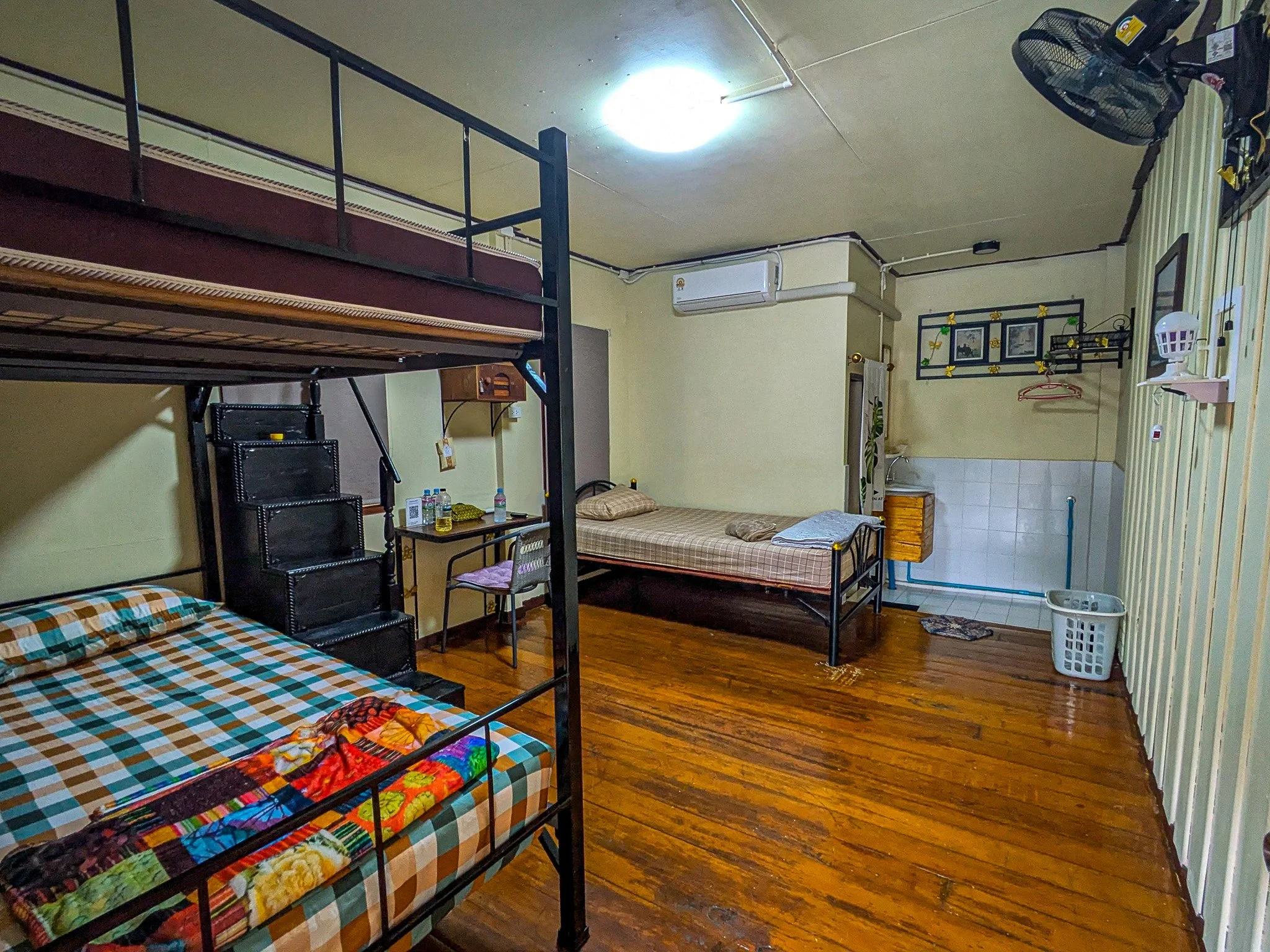
In popular tourist towns like Ayutthaya there is plenty of budget accommodation. This room 400 baht - around £9.
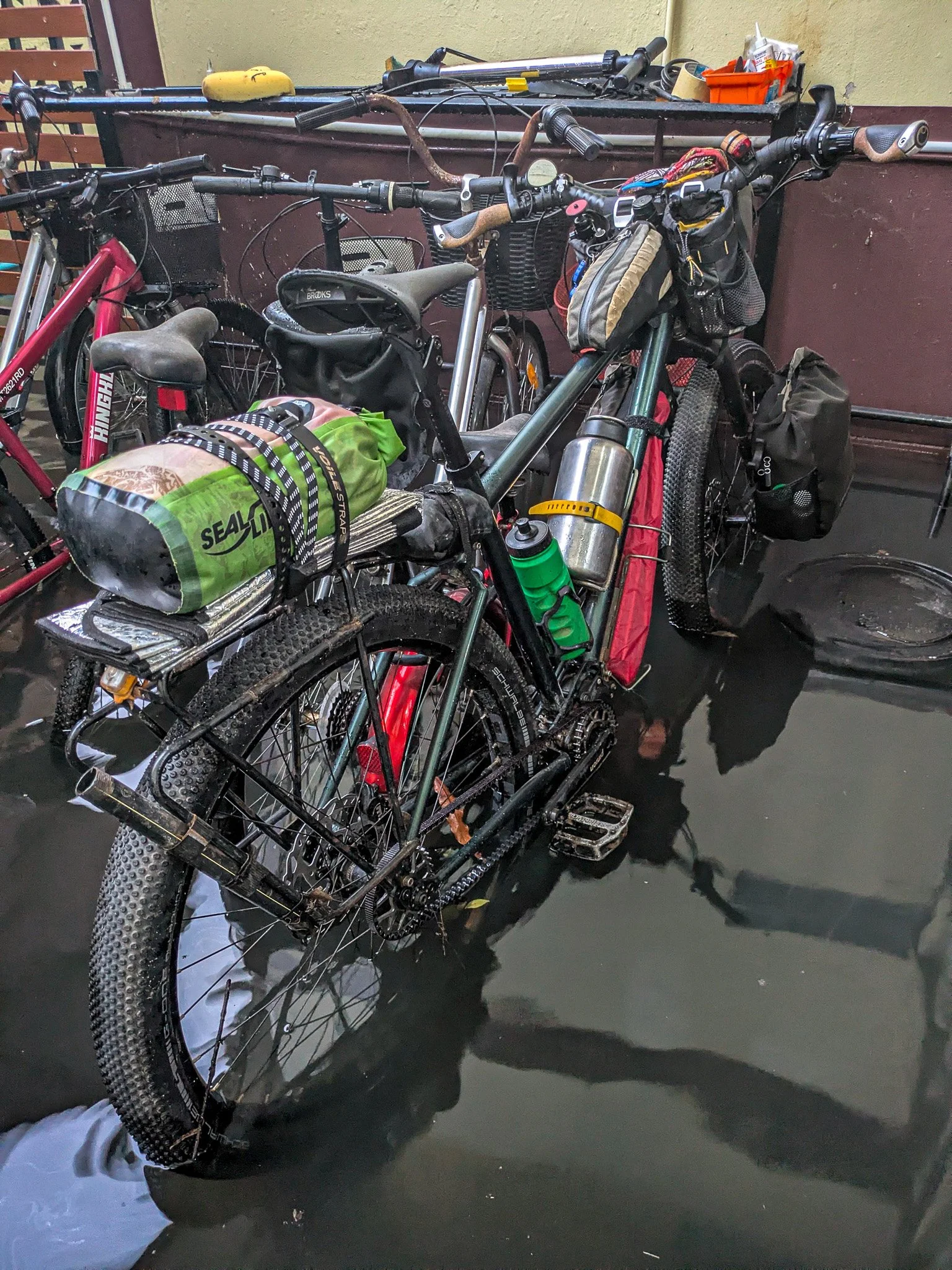
During the night the rain fell heavily. Ayutthaya sits on the banks of Thailand’s main river - the Chao Phraya, which was already flooded following weeks of heavy rains in October and early November. I’d left my bicycle on the ground floor of the guest house I stayed in. When I stepped outside my room and looked over the balcony, this was the sight below. Fortunately the water level hadn’t risen high enough to submerge the hubs of my wheels. Within a few hours the level had dropped. This rain was in fact the last to fall for the remainder of the trip.
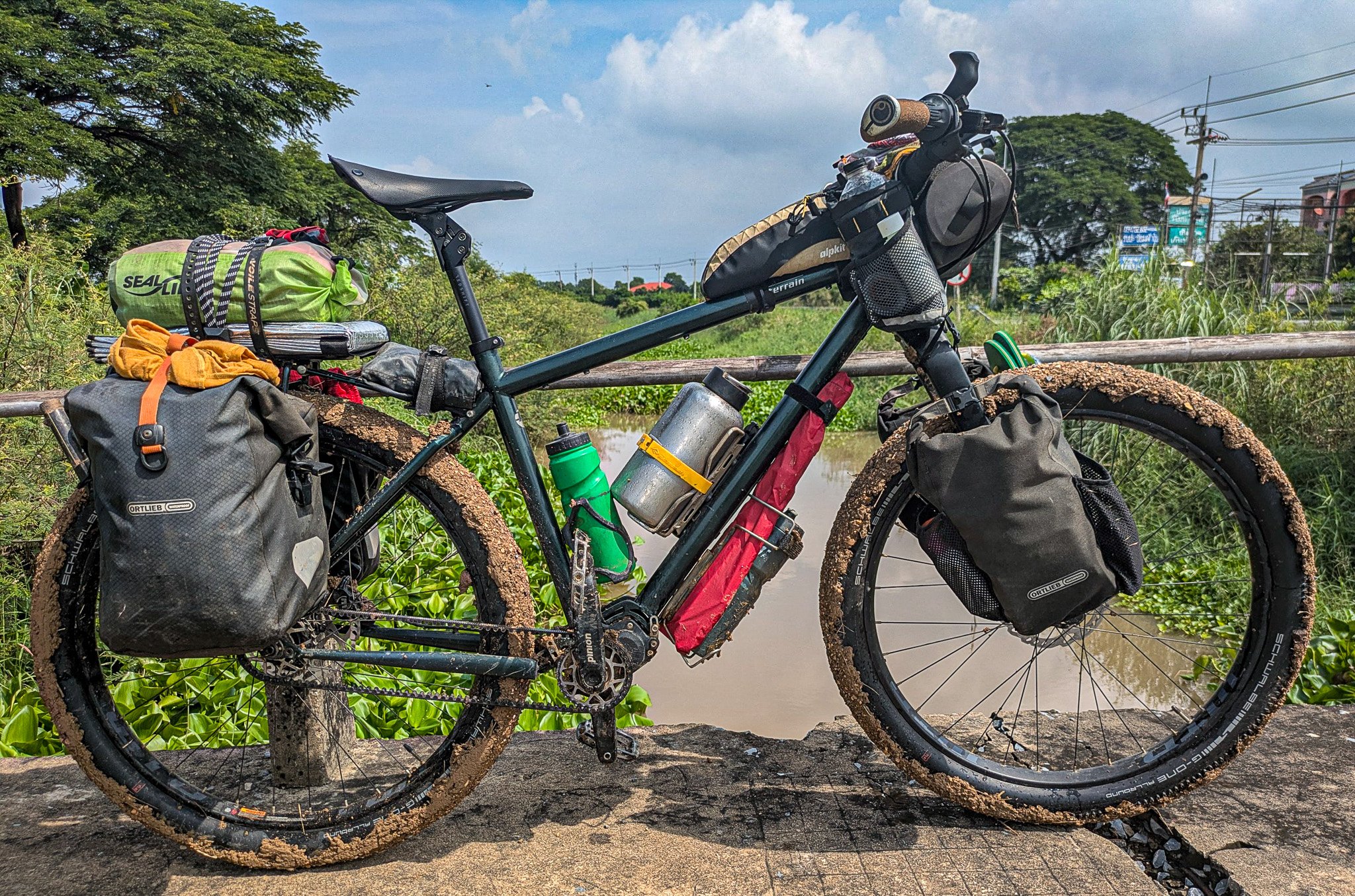
After that rain, following some dirt tracks on my second day of riding was a bad idea.
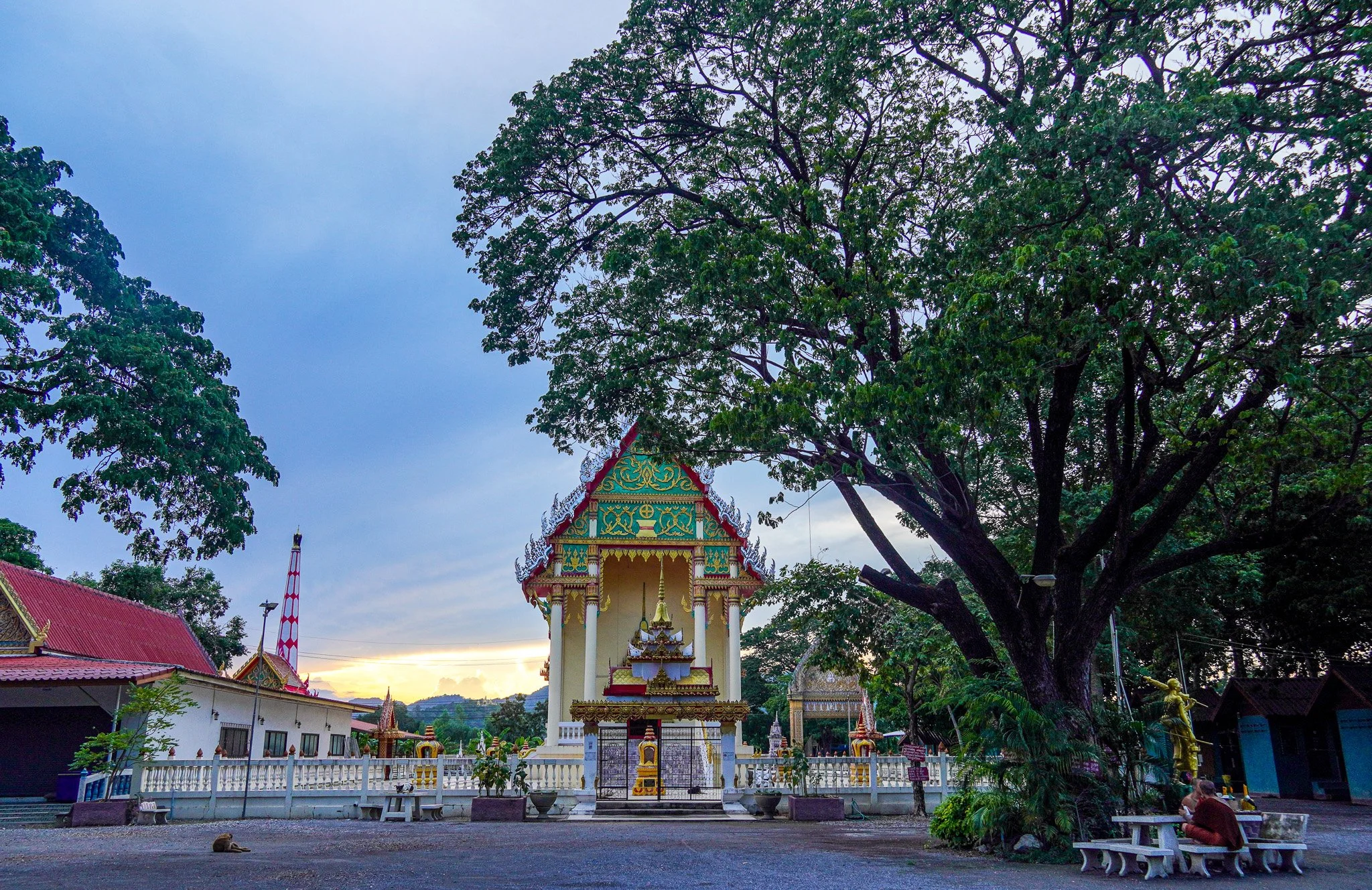
The end of Day 2 took me to a large temple on the edge of a village. I had read about cyclists camping in temples before, but had never done this on my previous trip to Thailand. I think I felt that Buddhist temples were sacred spaces only reserved for practicing Buddhists, which is totally wrong. So as the light was fading and I had made no other booking or plan for where to sleep, I rode into the temple grounds and identified a spot that would be ideal to pitch my tent.
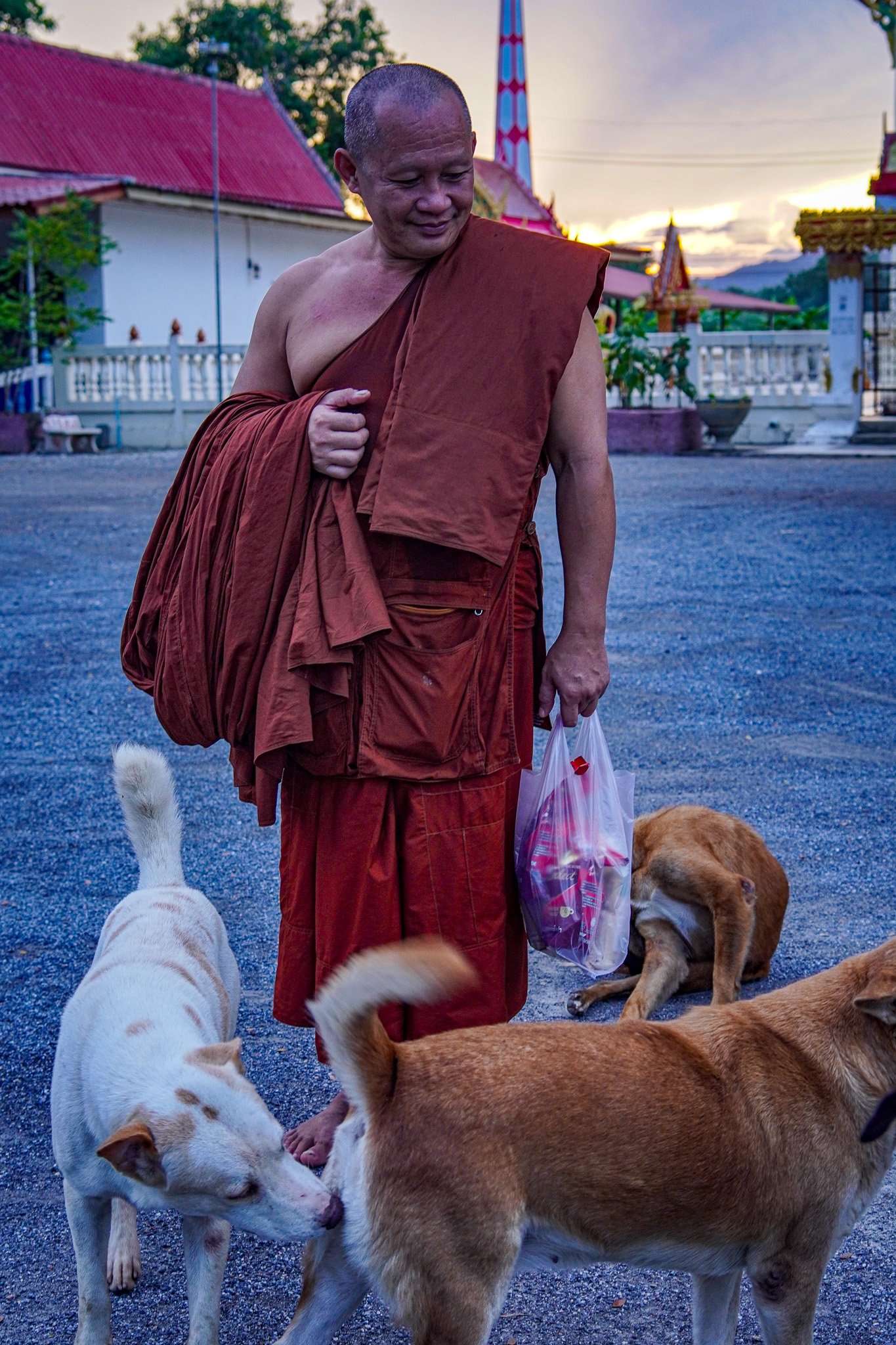
Thai temples are often home to numerous dogs, which are fed by monks and have a better life than they would roaming the streets. An elderly monk had seen me arrive and smiled. I then went to greet him and ask permission to camp. The toilets and shower block were pointed out to me. Once the dogs had got used to my presence they settled down and I pitched my tent.
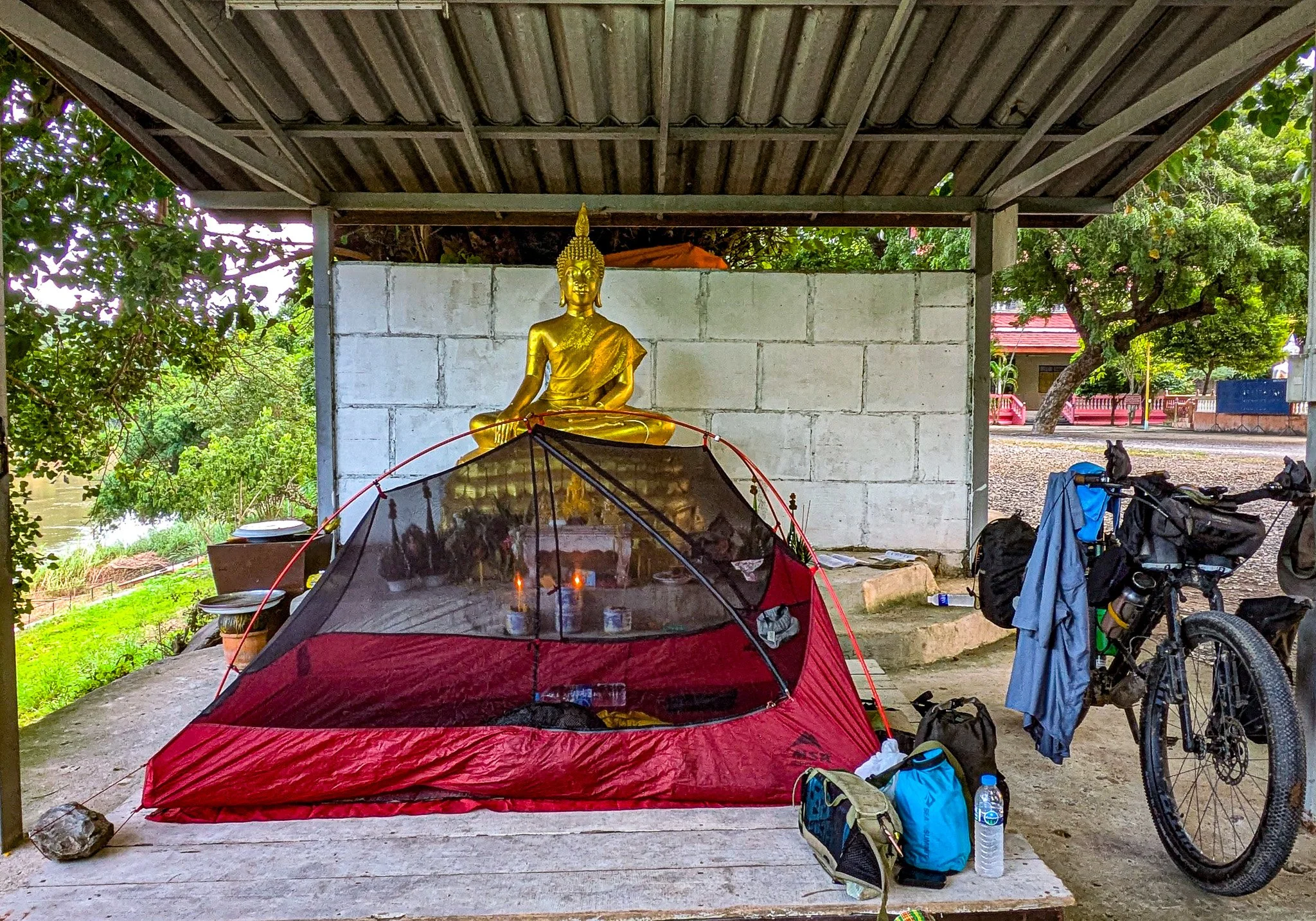
I had seen this wooden platform above the ground on one side of the temple grounds when I arrived. It was far enough away from the main temple and other buildings where monks stayed to not feel intrusive. I realised from this point onwards that I could probably camp most nights within a temple if I wanted, leaving a small donation in the morning before I left. The only downside to camping in Thai temples, aside from the occasional barking of dogs in the night, is that the day starts very early. Loud speakers crackle into sound at around 4-5am, playing a buddhist chant on repeat, and any lights nearby are usually switched on. While I would go on to camp in a number of more temples, I realised that they would never be the most relaxing of places to sleep.
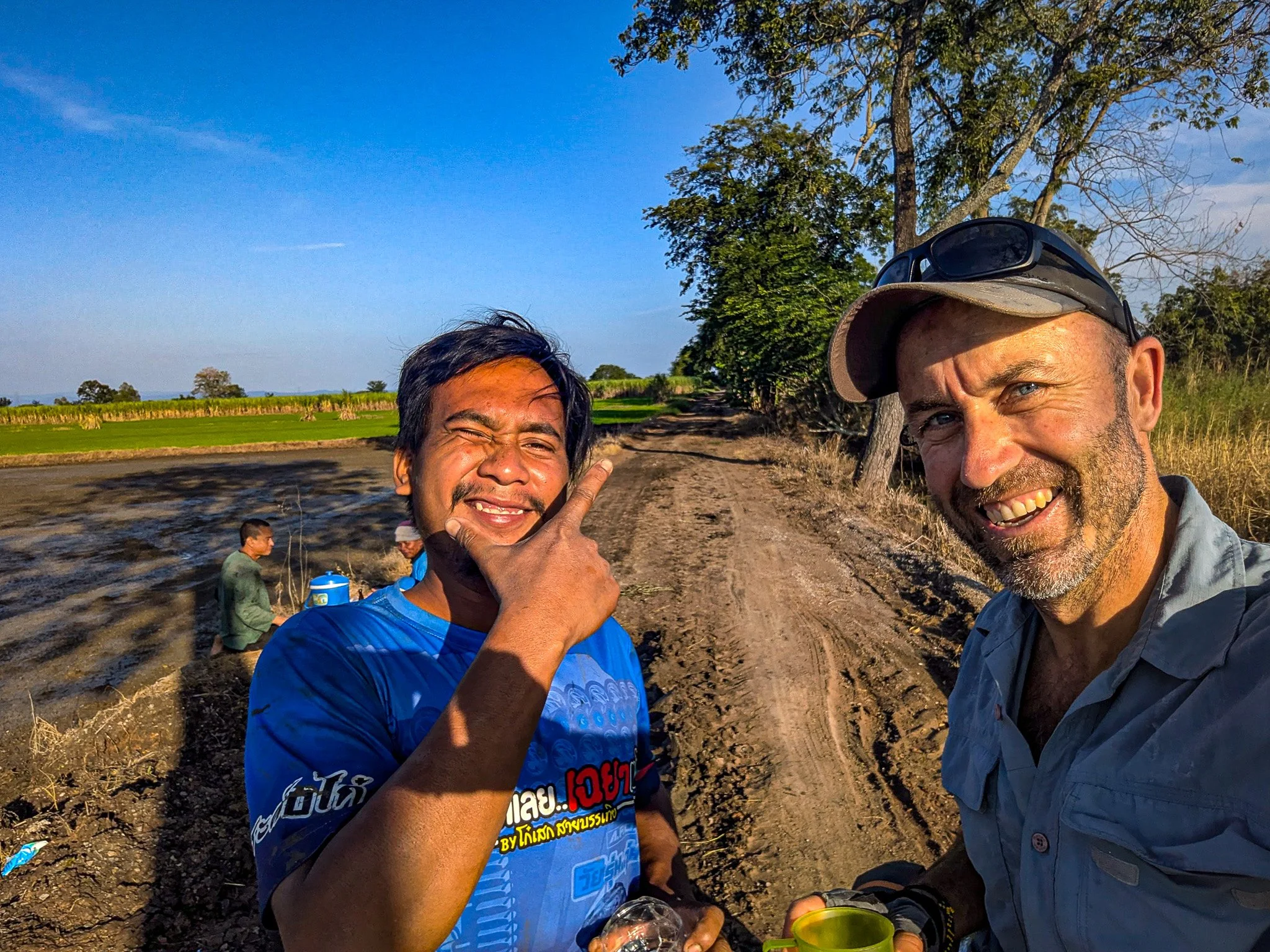
Day 3 and riding north on farm tracks between rice fields. This local farmer accosted me and handed me a cup of rice spirit. I never once had a problem with any Thai people during my time in the country.
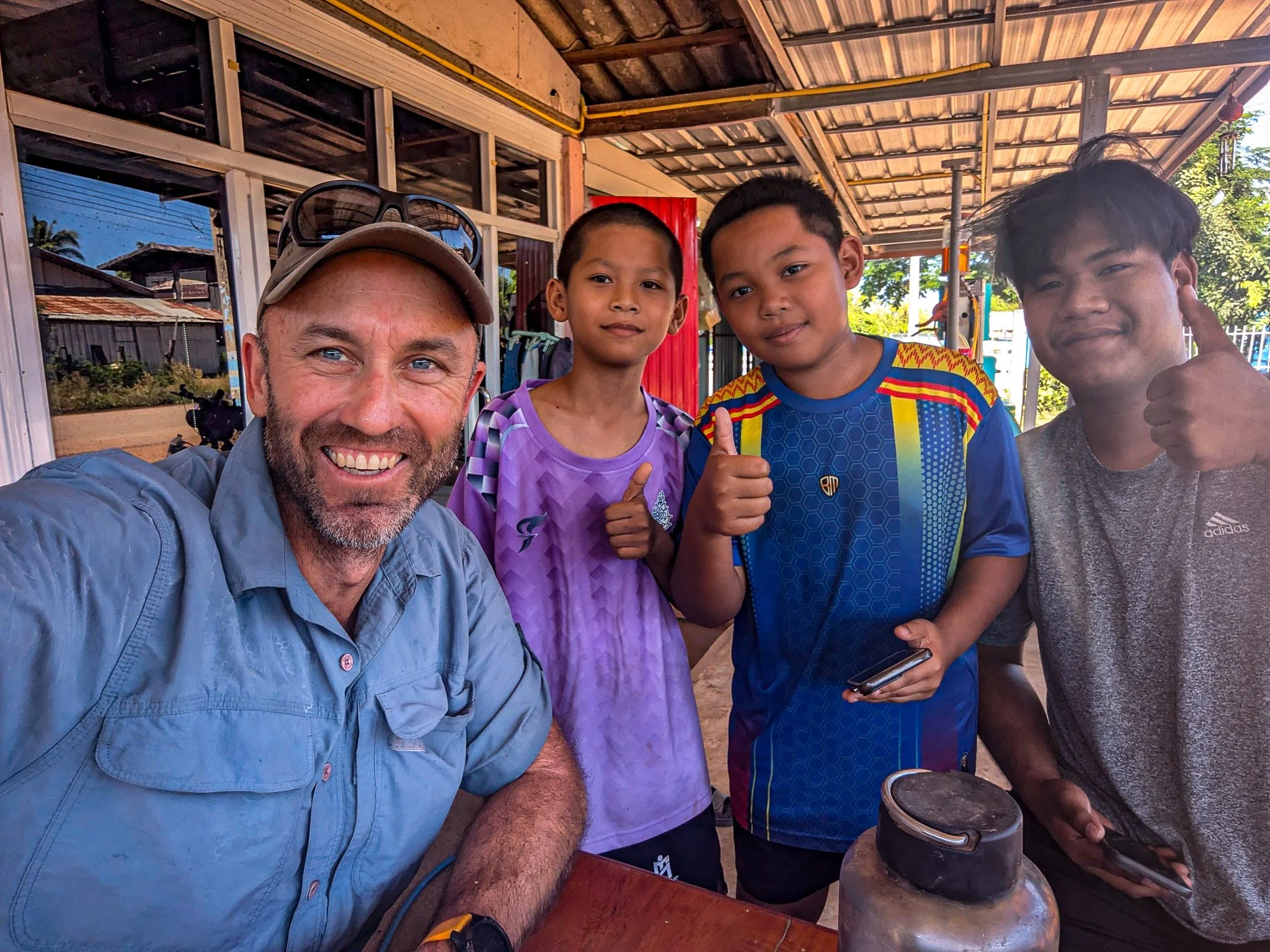
Thai teachers. Very few people in rural Thailand speak any English, so it was time to learn some basics from these kids - which really just meant greetings, numbers, some foods and how to ask for them. In the age of google translate doing all the work, learning languages requires more of an effort than it used to.
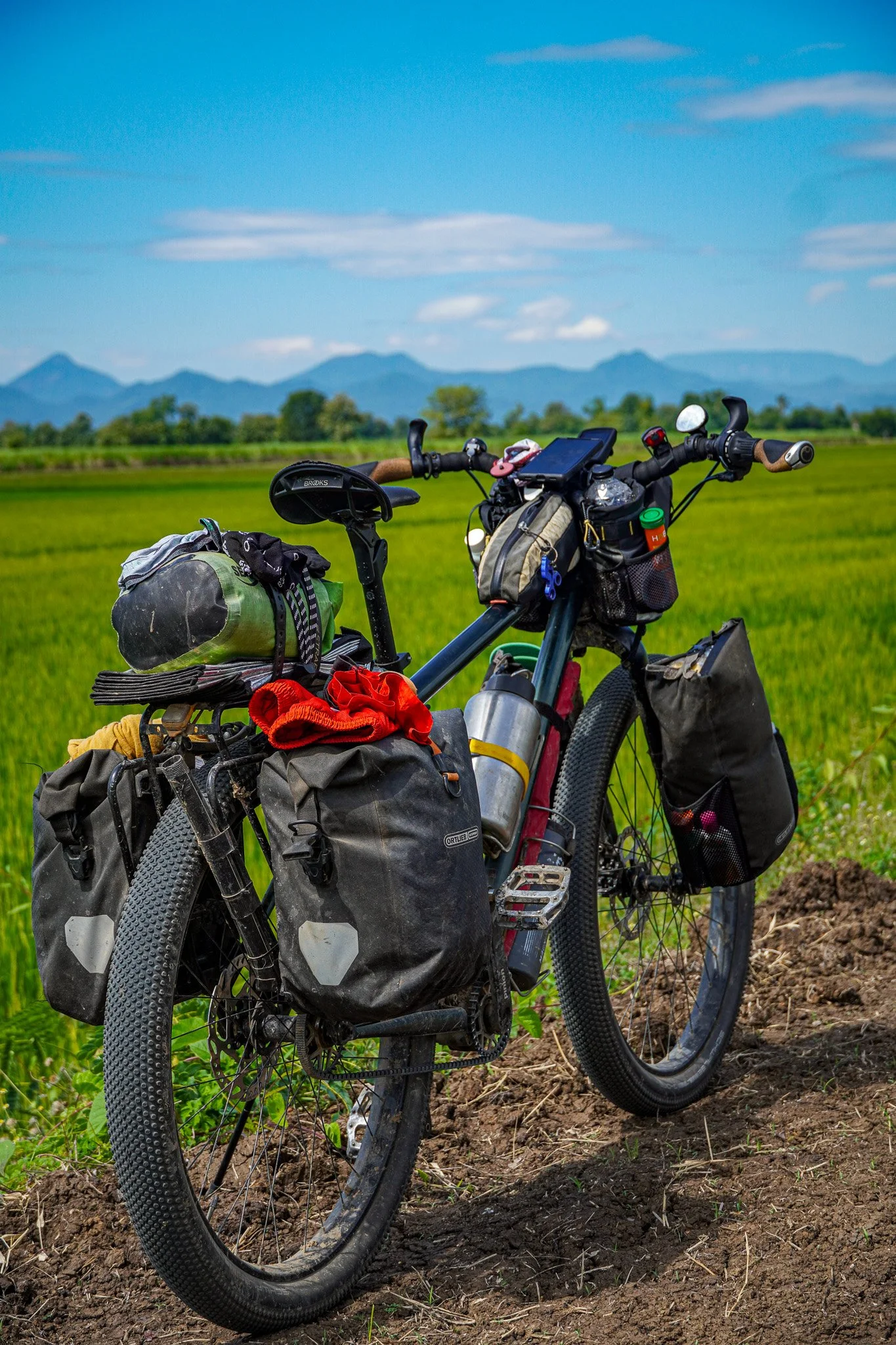
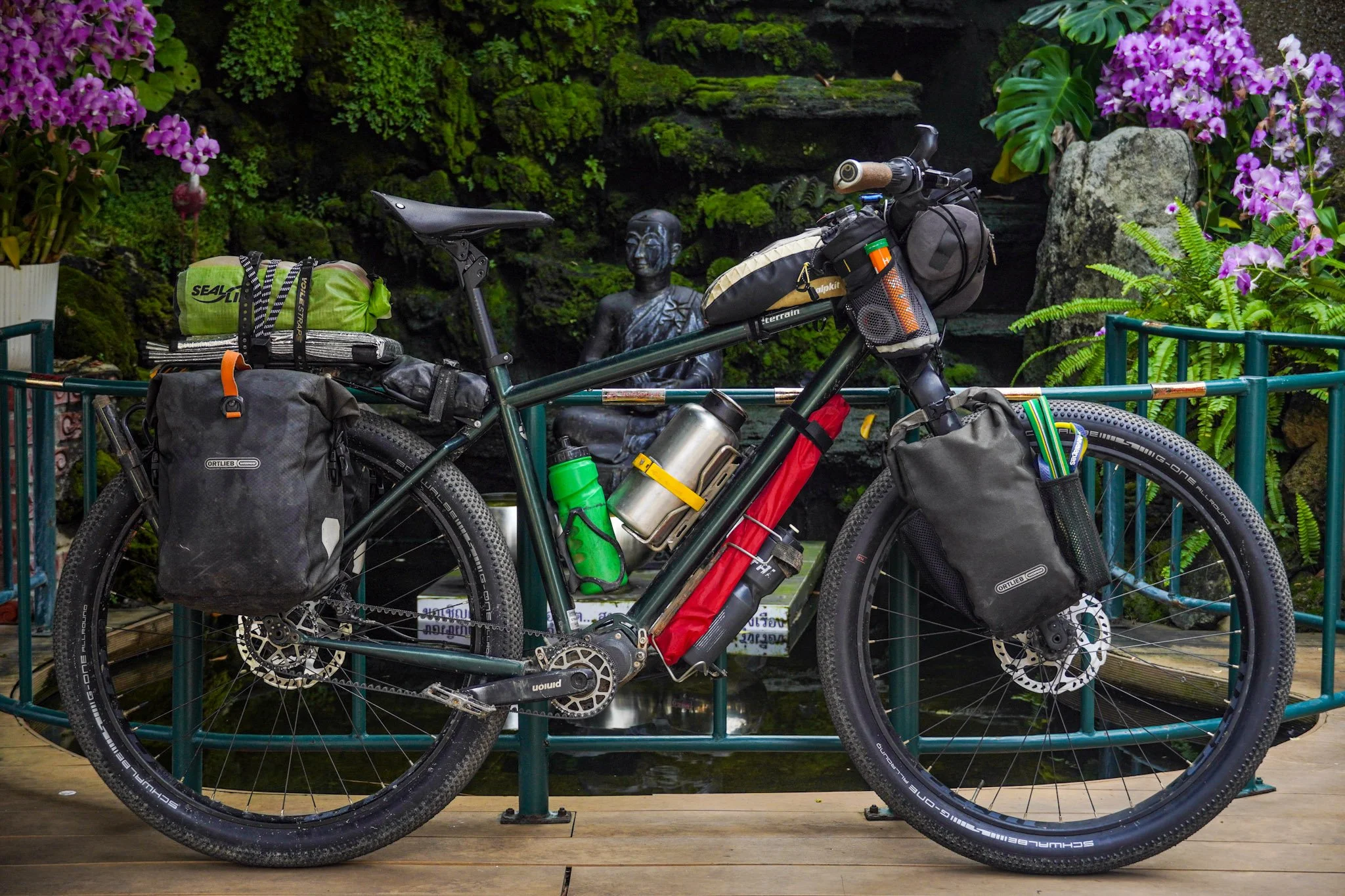
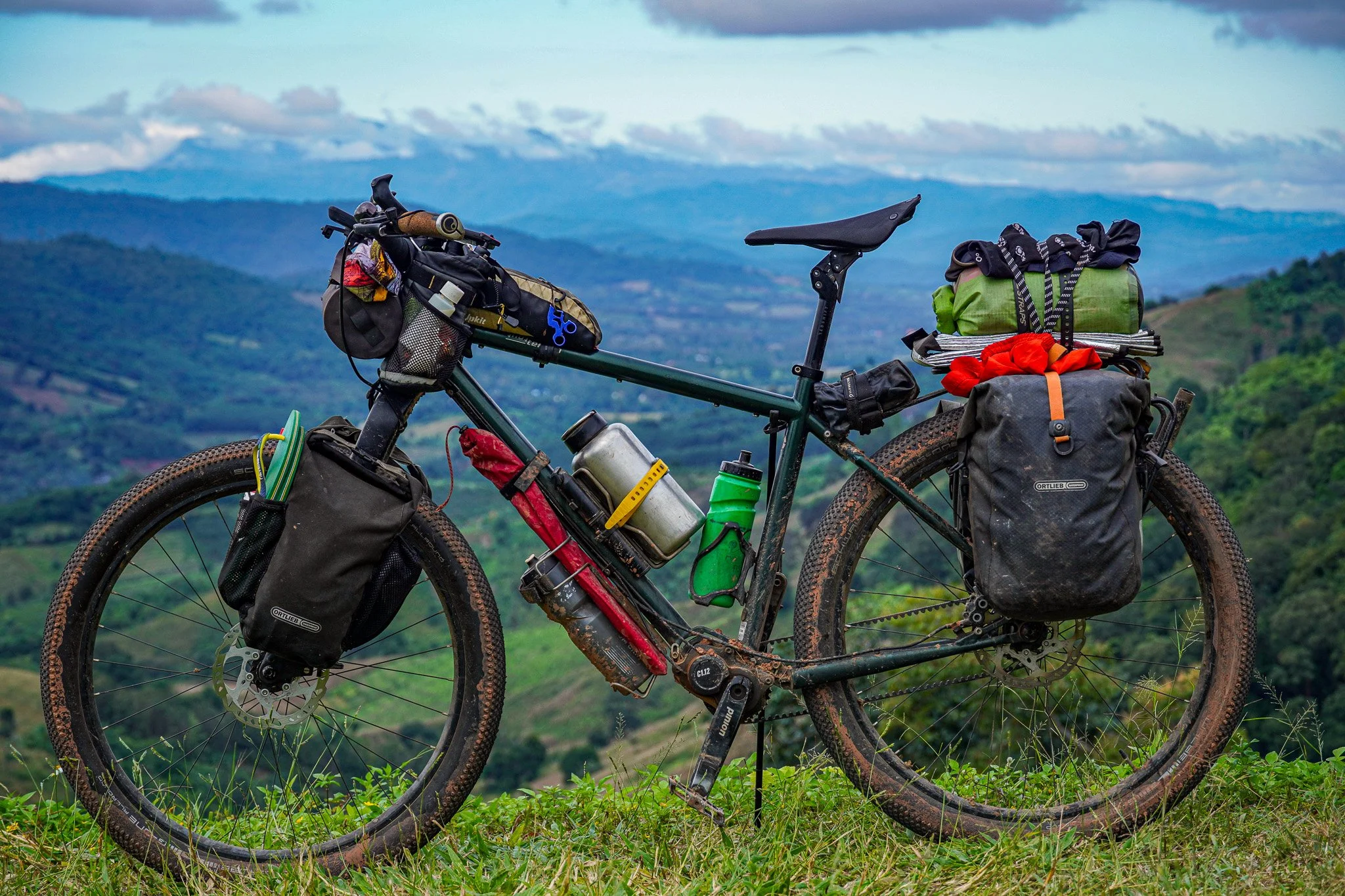
Mountains ahead. My first several days riding north were all on flat terrain. I mixed up riding on small rural tracks like these with paved secondary roads nearby. Occasionally the tracks would disappear into a field and I had to backtrack and re-route, but there were usually lots of tracks and roads nearby so that I never had to cycle far. With big wide tyres (Schwalbe All Round 27.5” x 2.8”) I felt the bike was really capable of riding on any terrain here.
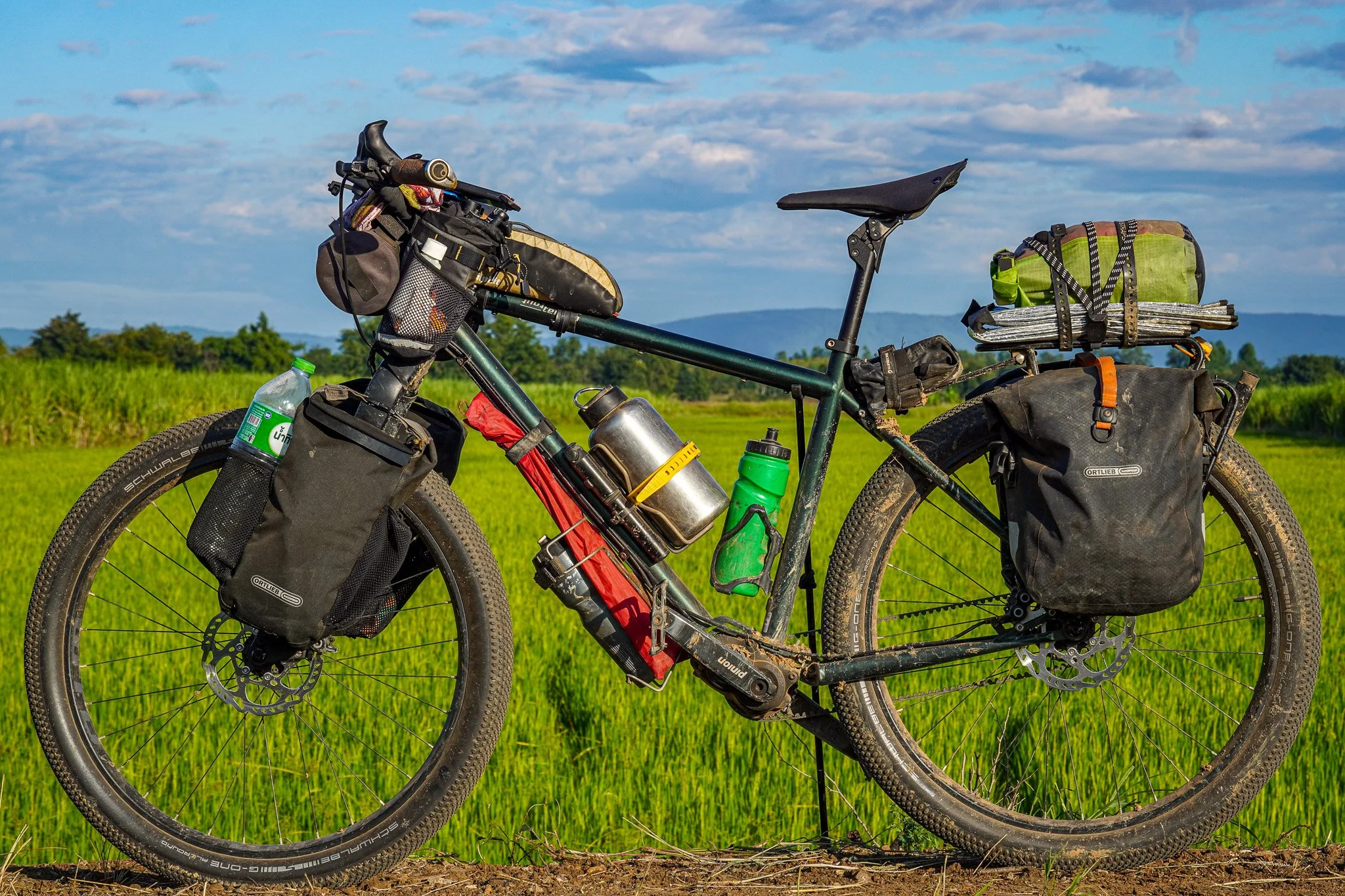
The Tout Terrain Outback has been with me for over 2 years now. It’s time to write up a review after 25,000km of almost problem-free use.
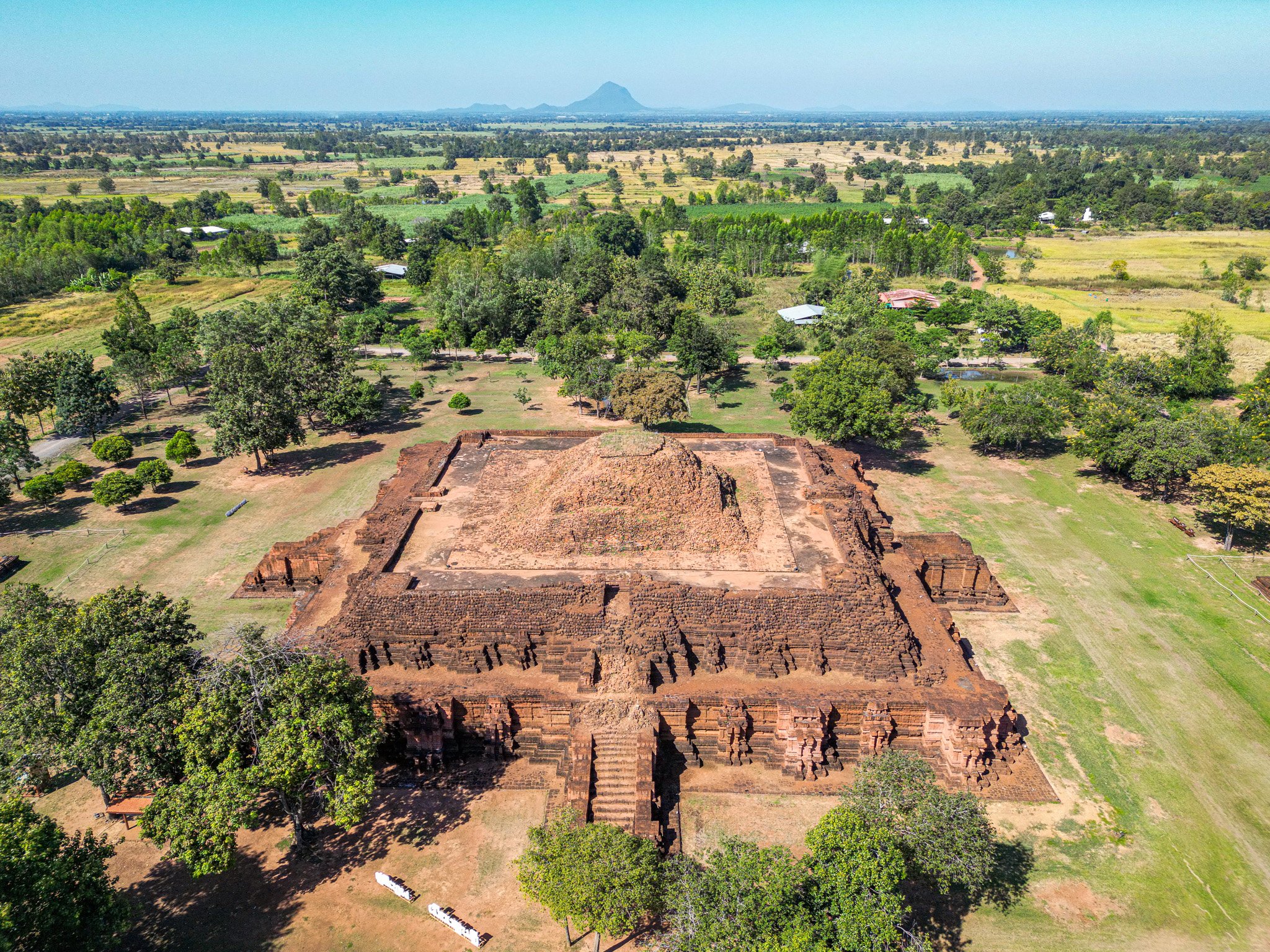
At the end of Day 3 I camped within the grounds of Si Thep, an ancient city that sees little in the way of tourists. I was a little hesitant to use my drone camera in Thailand. By law, using a drone requires registering with two aviation authorities, having annual insurance, and taking a drone exam. It all sounded like a lot of hassle, so I just flew the drone in mostly quiet and remote places rather than built-up areas and tourist sites where it might have gained attention from police authorities.
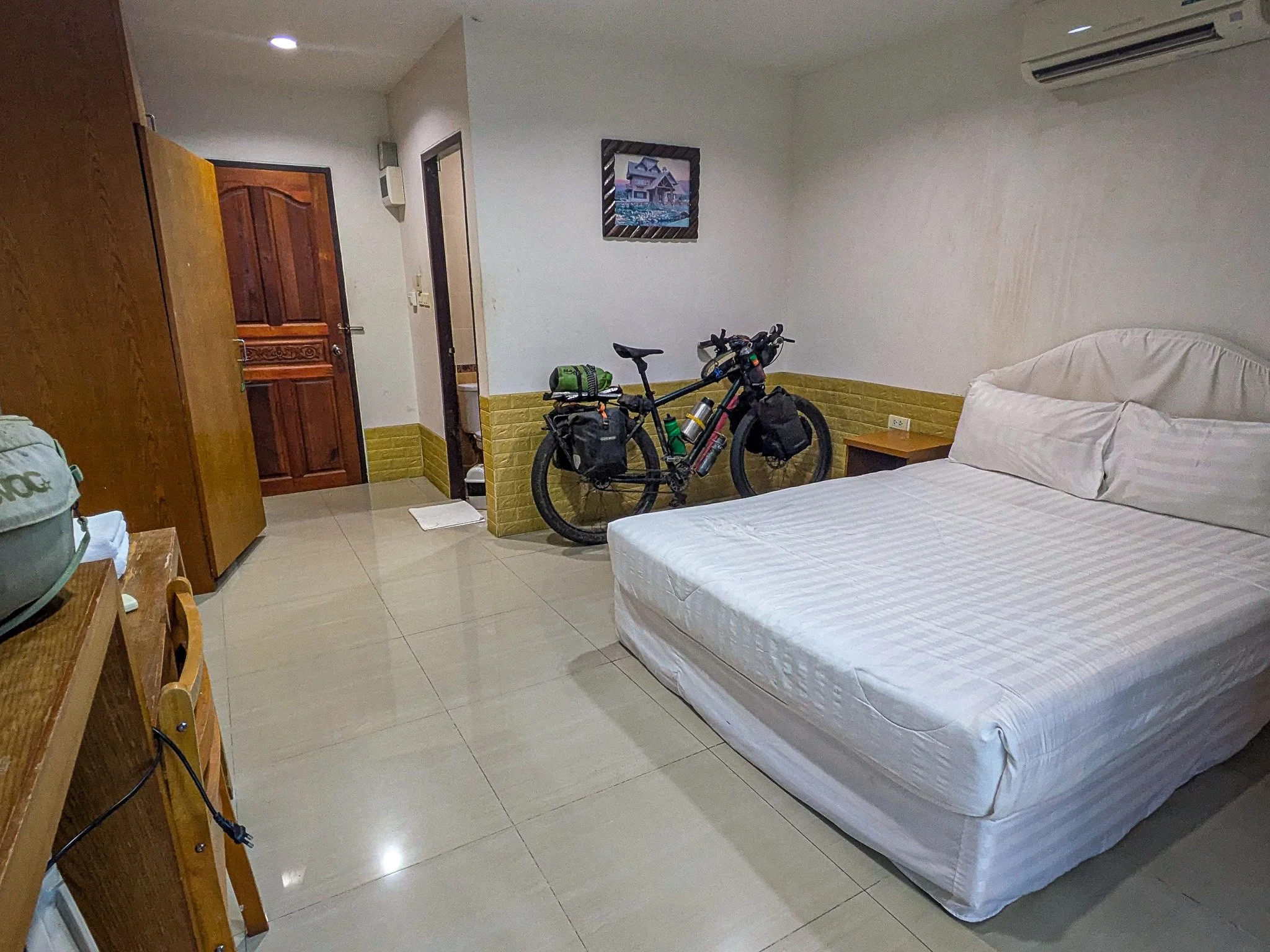
Another 400 Baht guest house at the end of Day 4. Most places like this are on Google maps, so I always looked at the reviews for pics and prices, and rarely booked in advance.
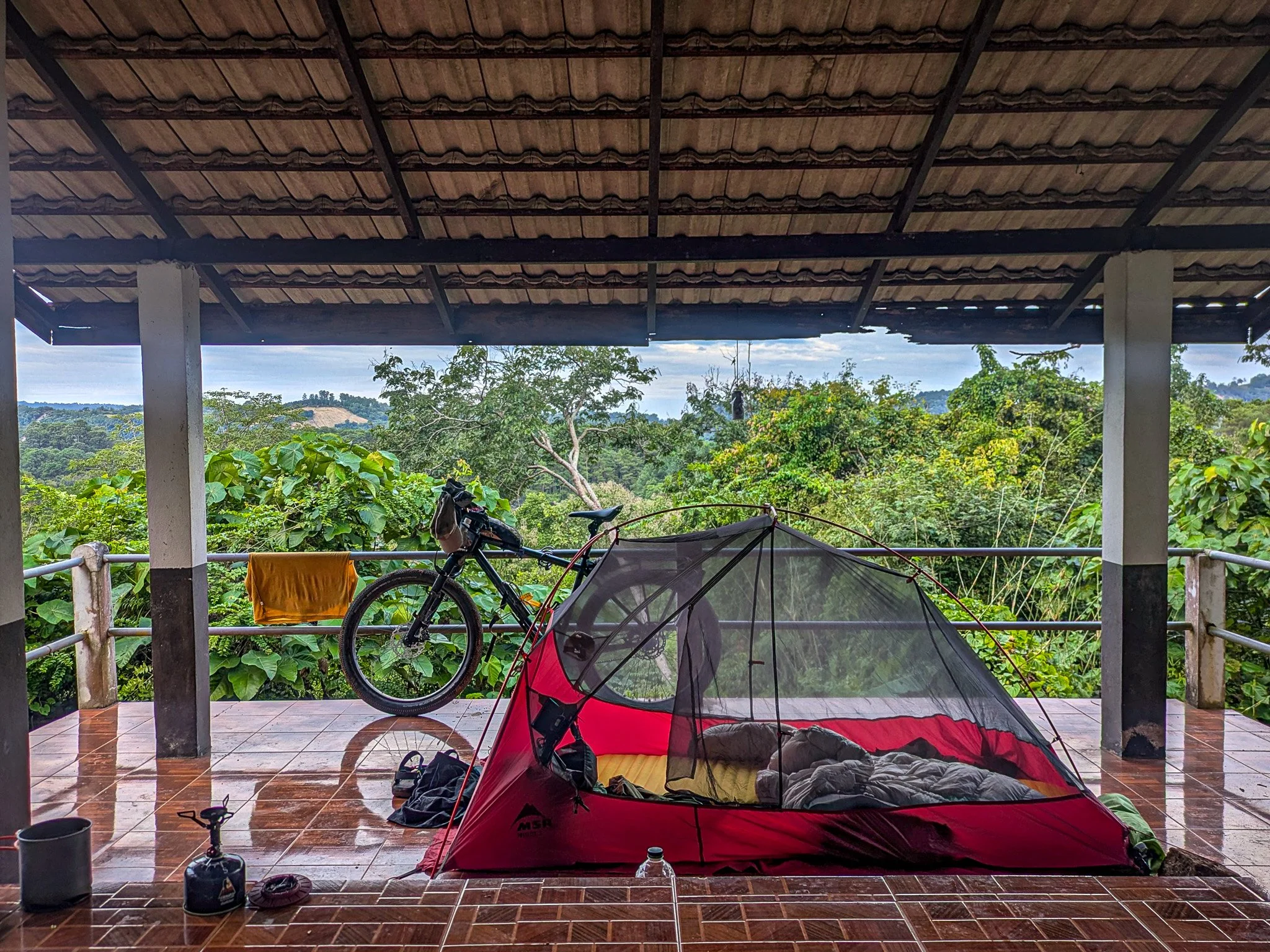
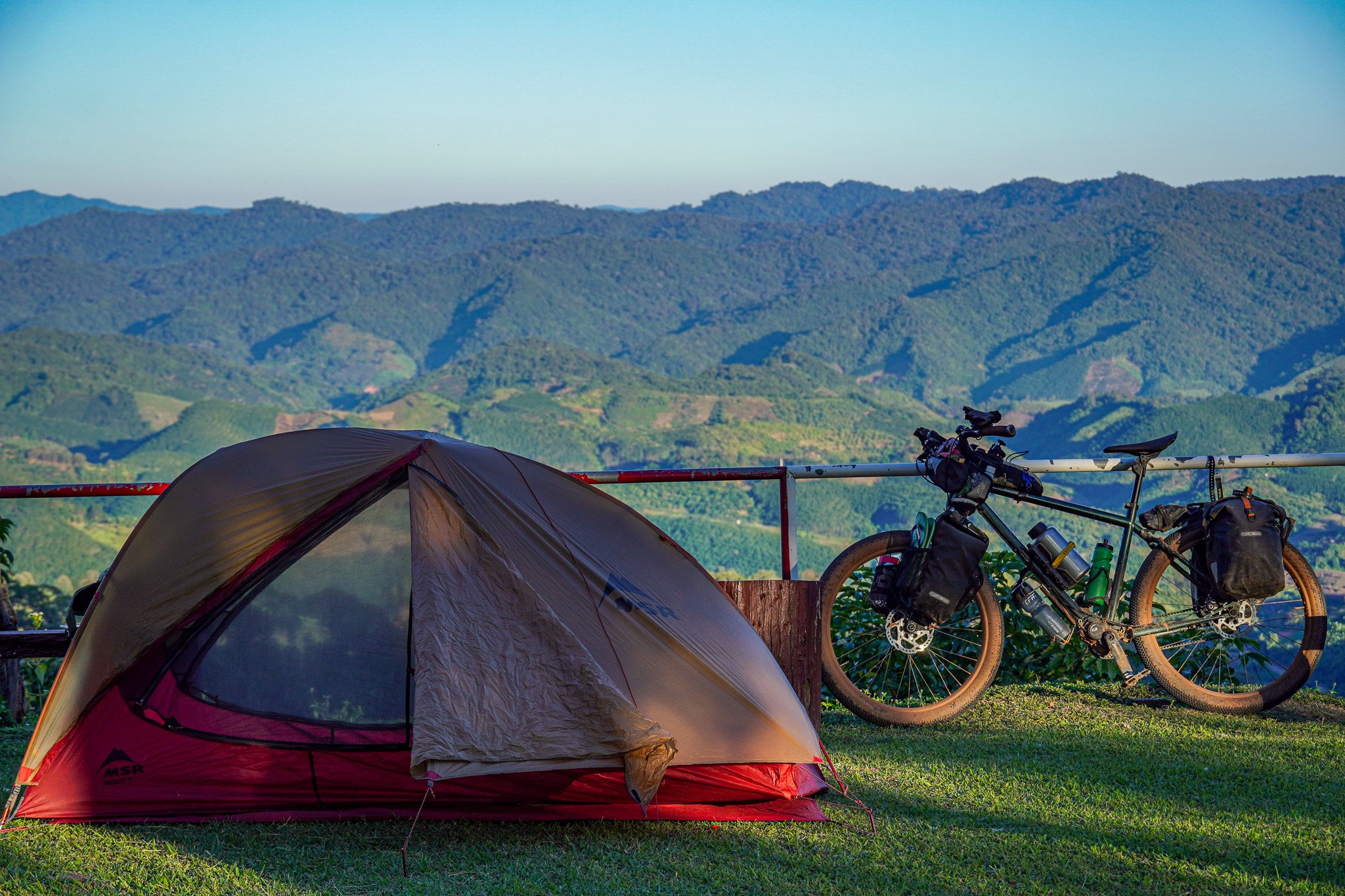
Before coming on this trip I was uncertain about how much I would use the tent. Budget accommodation is easy to find throughout Thailand, which means that carrying camping gear isn’t a necessity. Yet travelling through a country and not sleeping outside often feels, at least to me, as if I haven’t really connected with the place in the way I want to. I enjoy waking up with the sunrise and hearing the birds. Bringing a tent also brings with it much more freedom, so when I saw this covered pavilion close to a Buddhist stupa, it looked like a perfect camp spot. I usually wait around a short time to get a feel for a place, and then intuition tells me whether it will be OK to sleep here or not. I never felt in danger when camping in Thailand, so as much as I attempted to be discreet and somewhat hidden, I didn’t care if someone saw me.
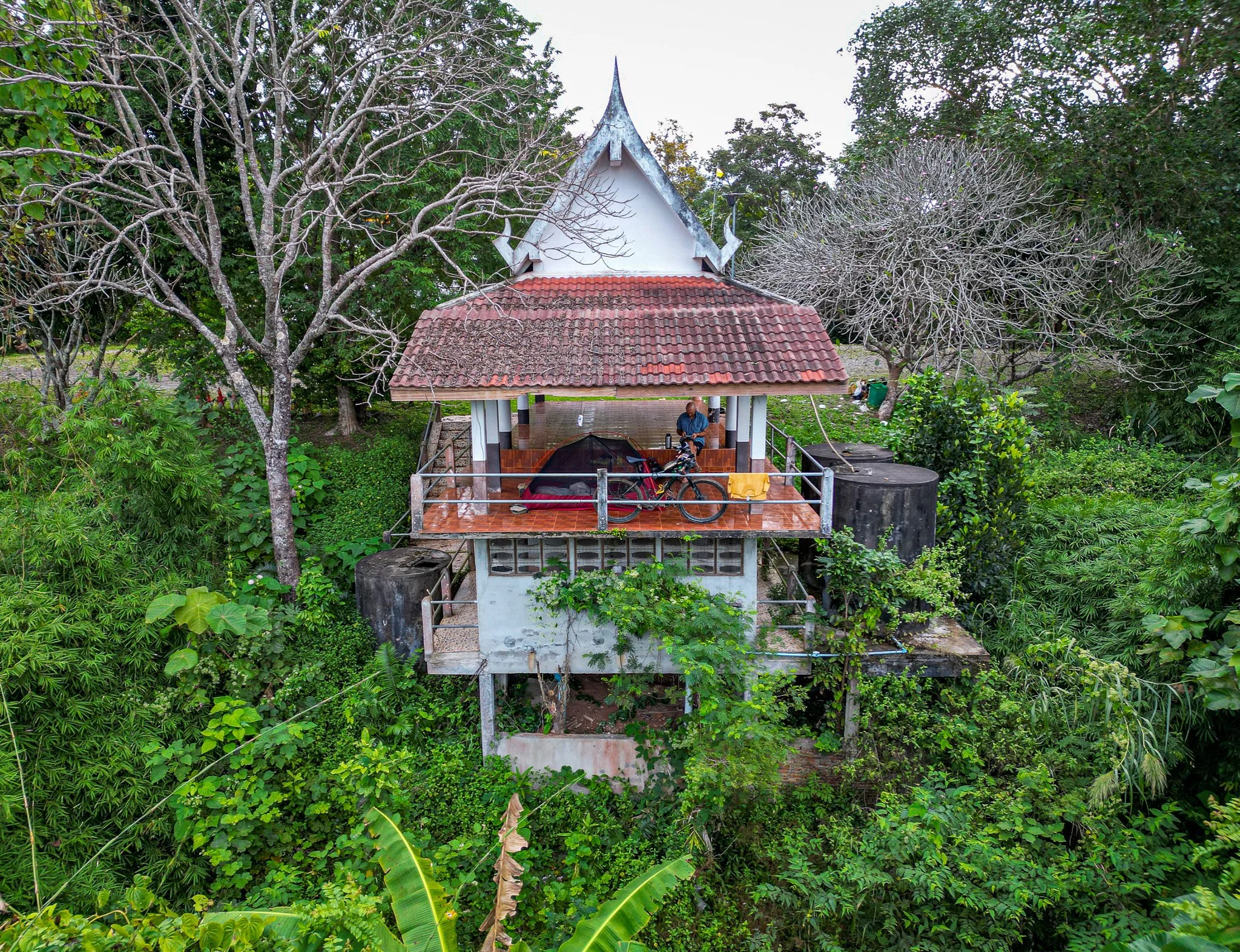
Far more memorable than many of the budget rooms I checked into.
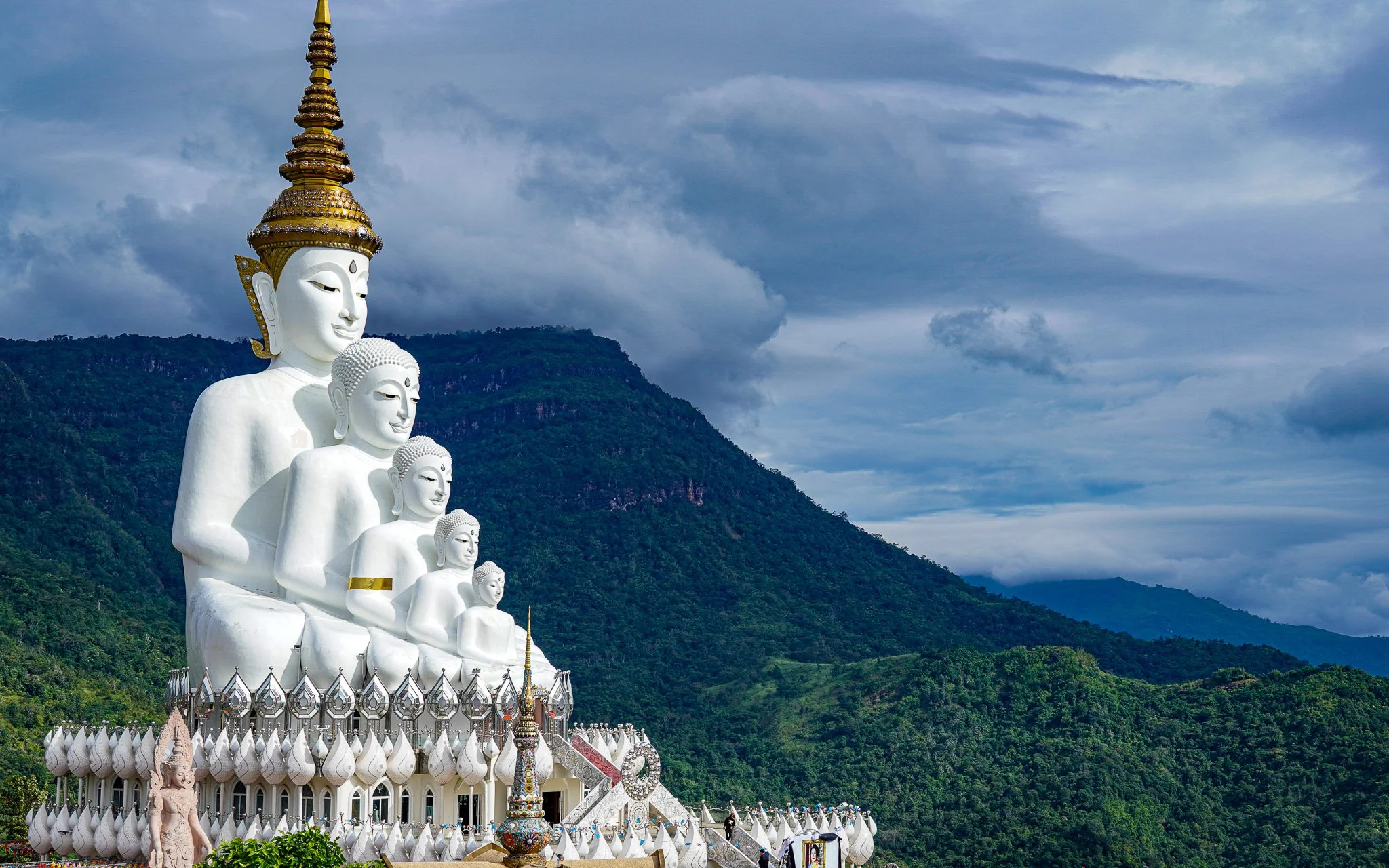
One of the more impressive temple structures I passed on Day 6 was this temple.
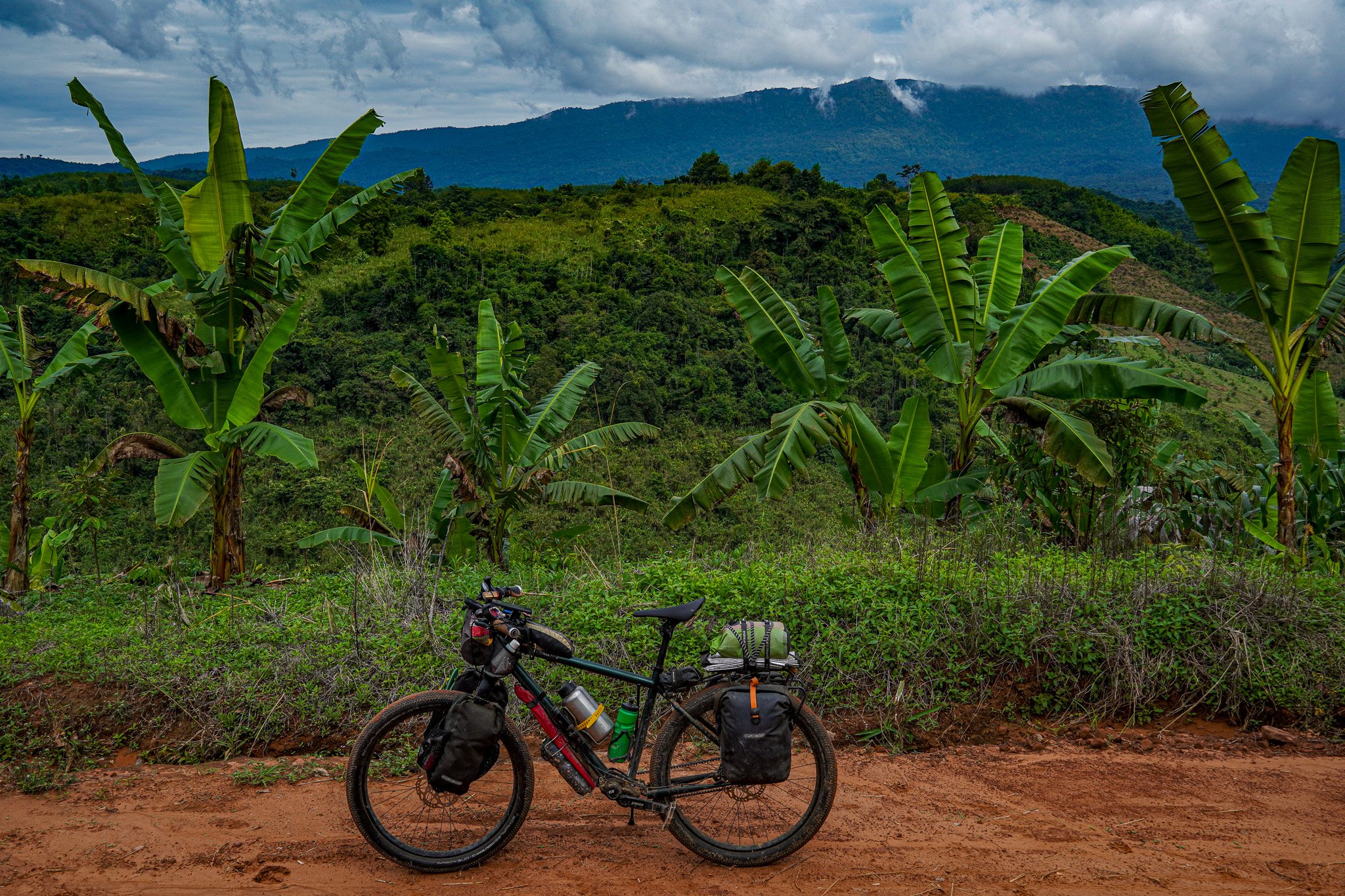
More mountains and dirt tracks as I continue north towards the border with Laos. The tracks had dried out now that the rains were over.
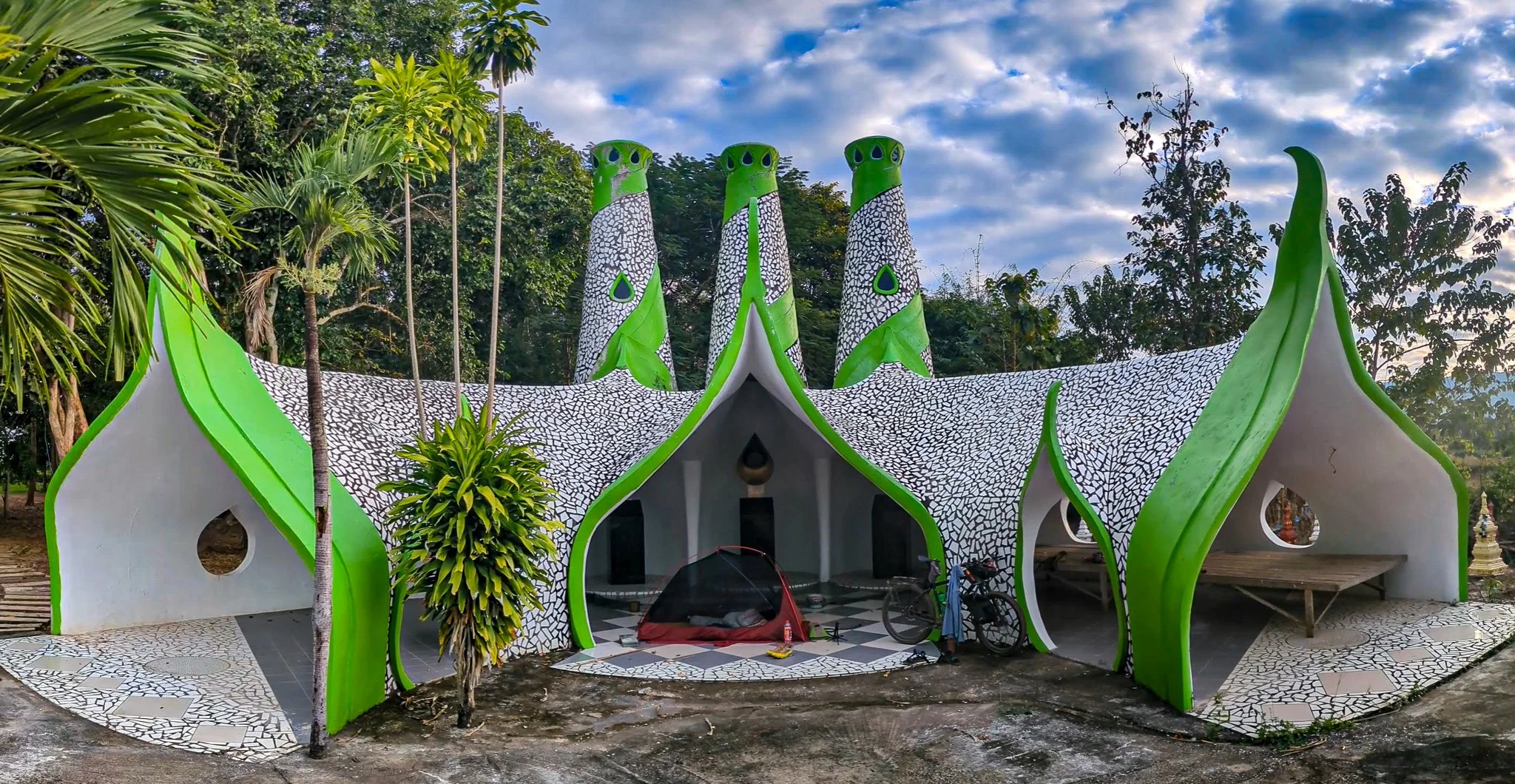
I sometimes used Google maps to identify temples where it might be possible to camp, especially if the temple had been tagged with photos, which many have. This particular temple was architecturally unique. I saw no other like it in Thailand.
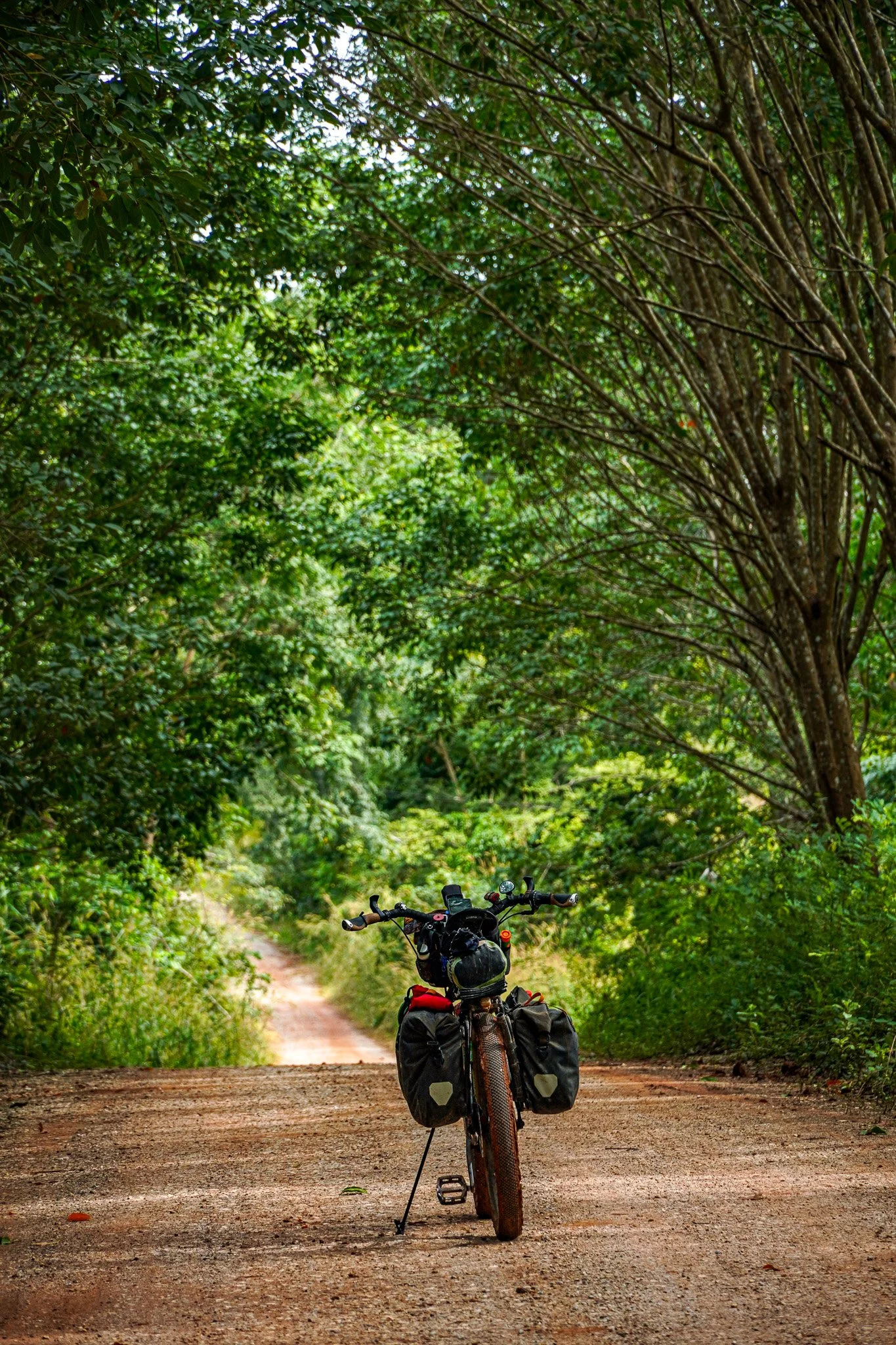
Perfect gravel. Further north the rice and sugar cane fields were largely replaced by rubber tree plantations.
Approaching the border with Laos on Day 8.
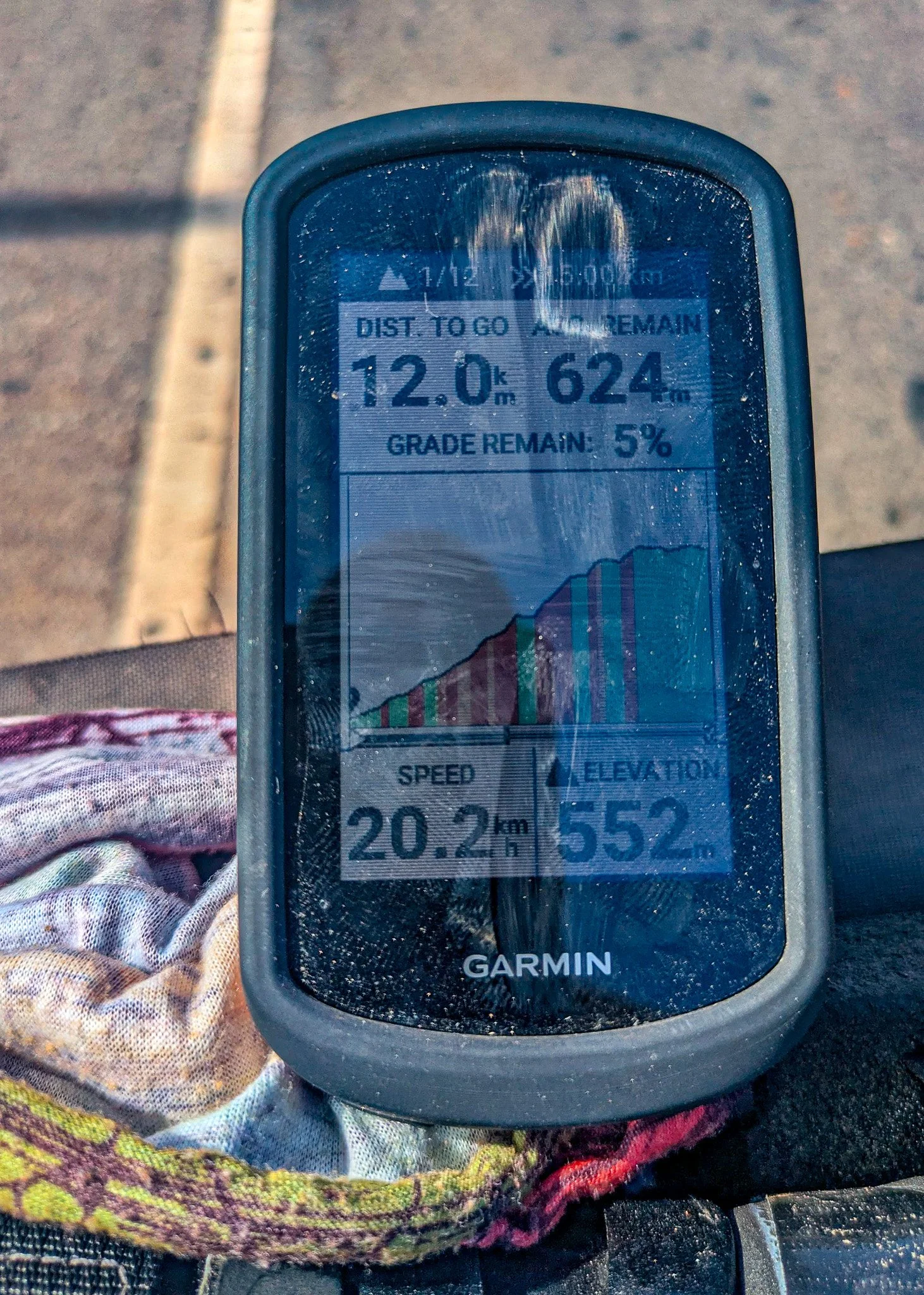
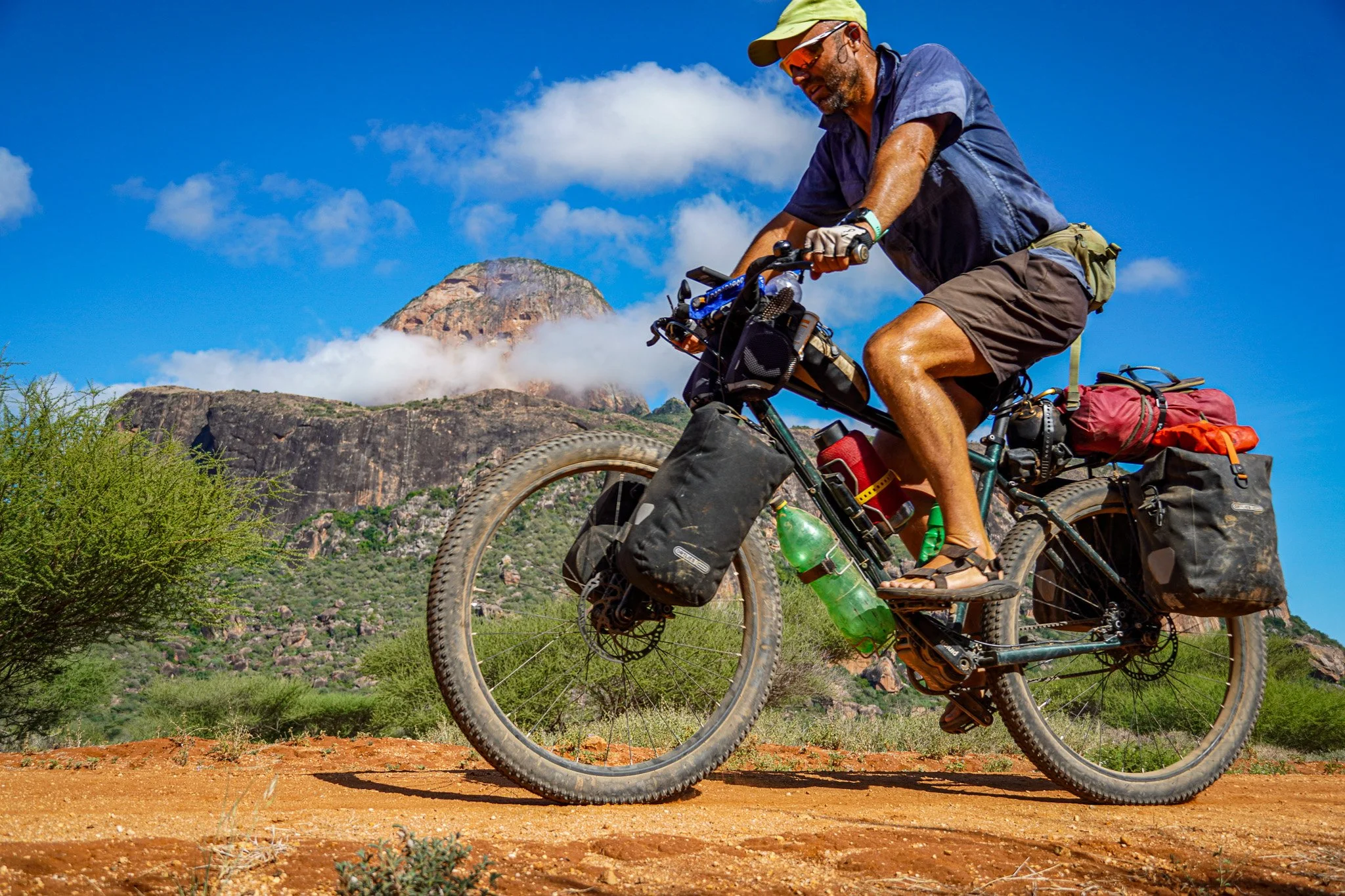
Most days now involved a fair amount of climbing - 1000-2000+ metre of elevation gain.
Thailand left, Laos across the river to the right. I cycled through Laos in 2006 and would happily return, but was conscious of time, and decided to just stay within Thailand. To cross over would require a visa ($50 I think) which didn’t really seem worth it unless I was going to stay some weeks.
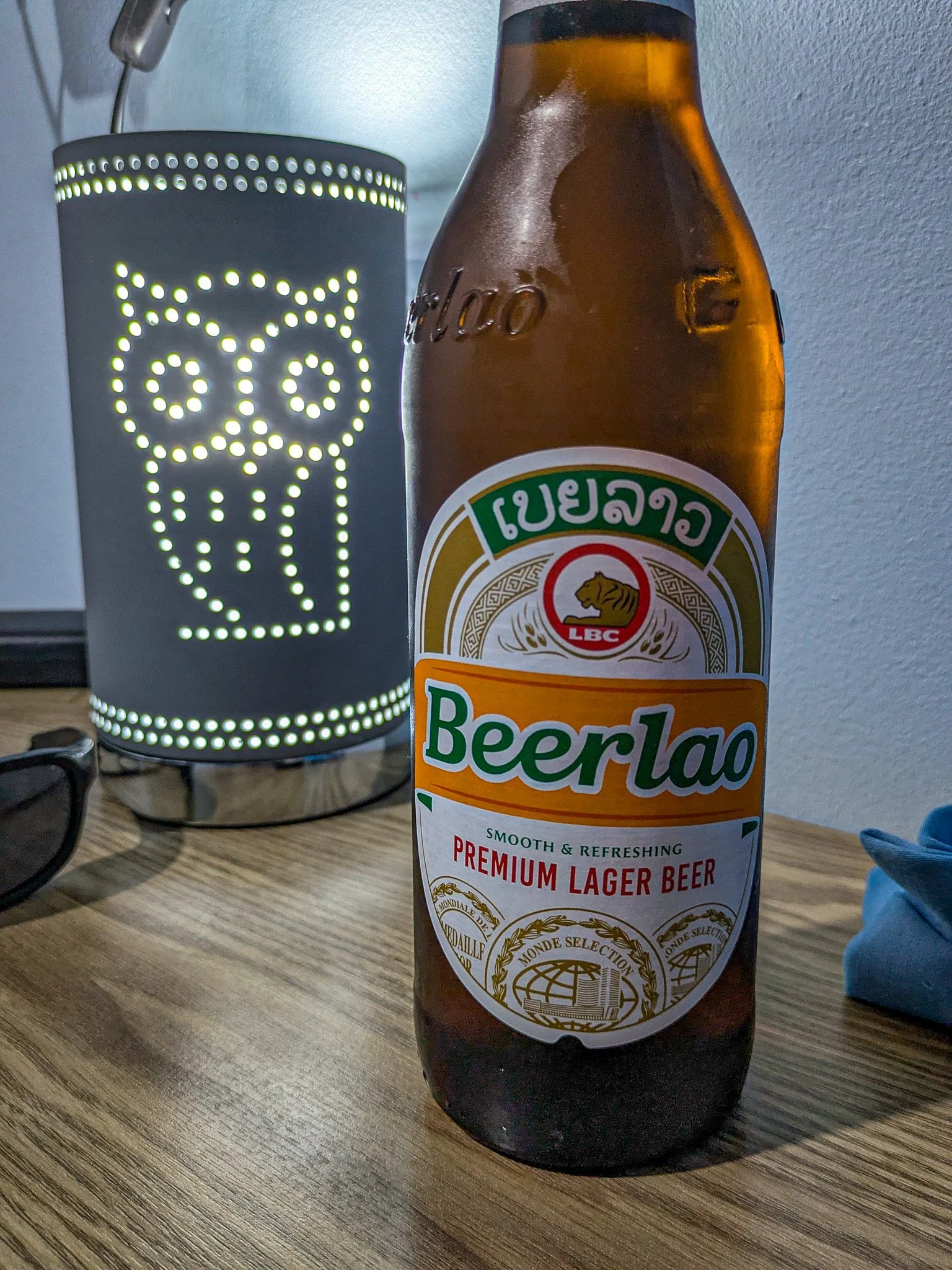
Although I was able to get someone to cross the river and purchase a couple of bottles of what is probably one of Asia’s best beers. Cheaper than Thai beer too.
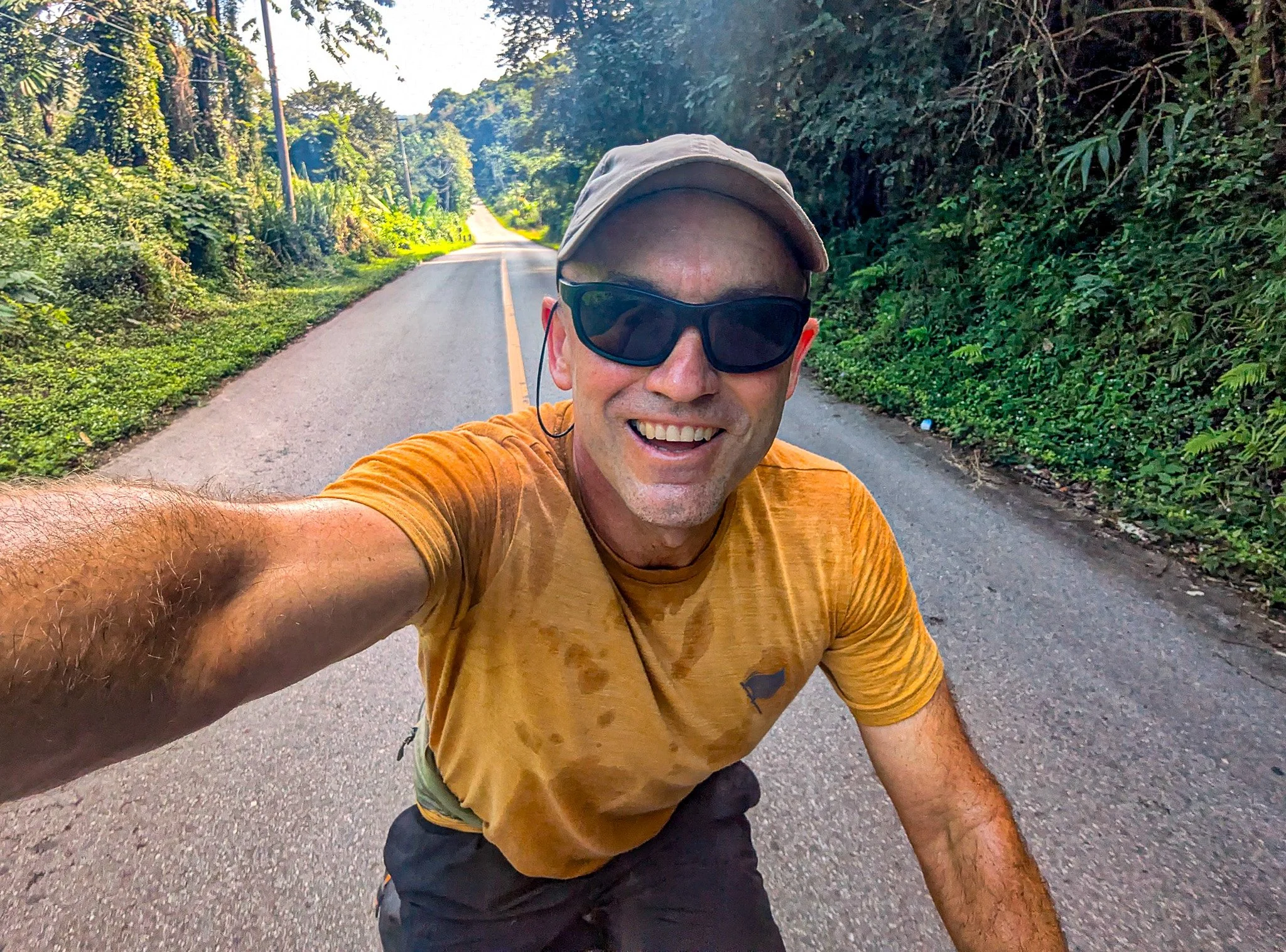
Steep inclines never look so steep in pics. Many of the climbs in northern Thailand have inclines of 10-20%+. Most days I was soaked in sweat, although the temperatures up here in the north were never that high (15-25C).
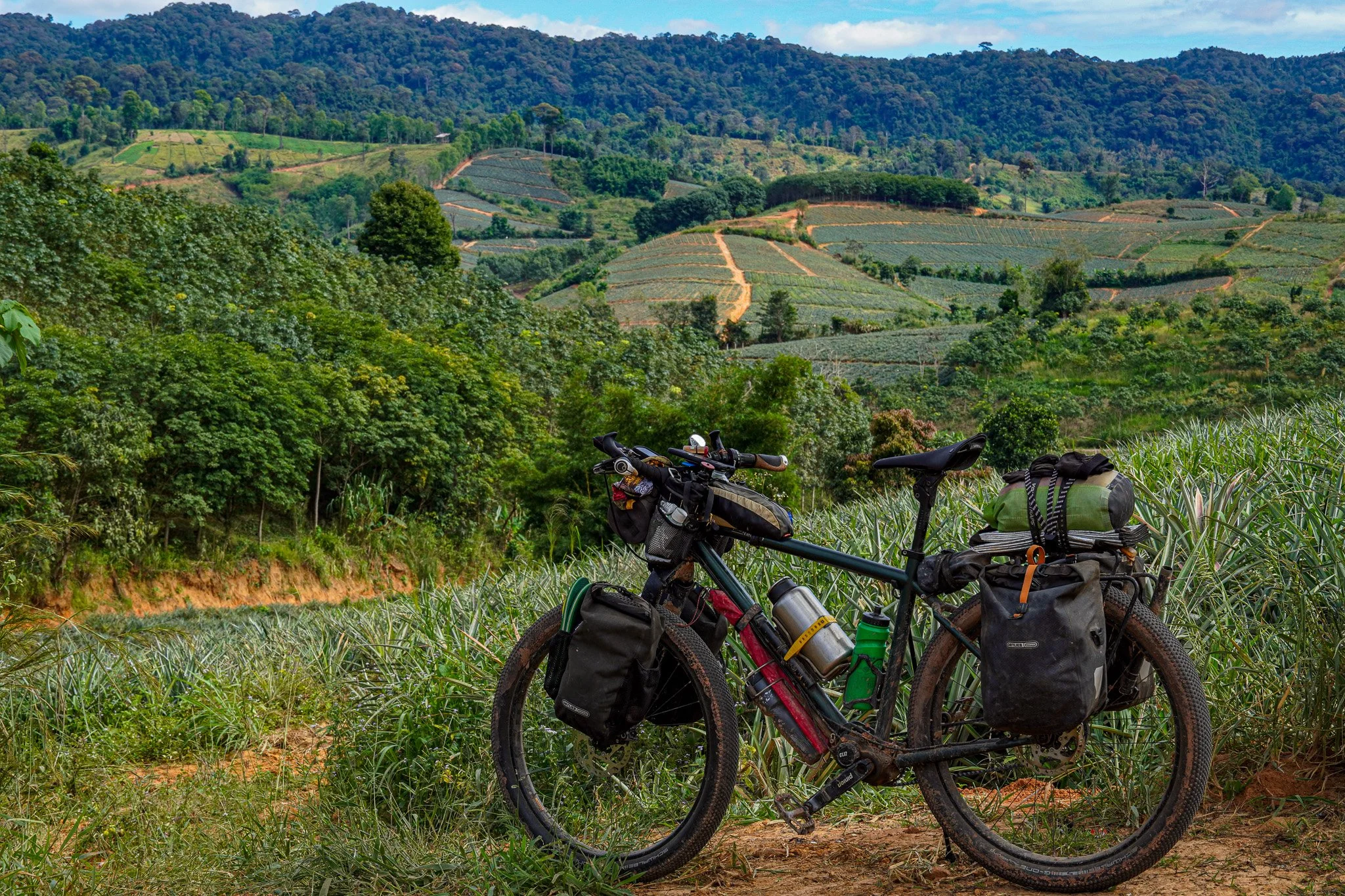
If land isn’t protected in Thailand, it will almost certainly be cultivated. Expanses of pineapple plantations here.
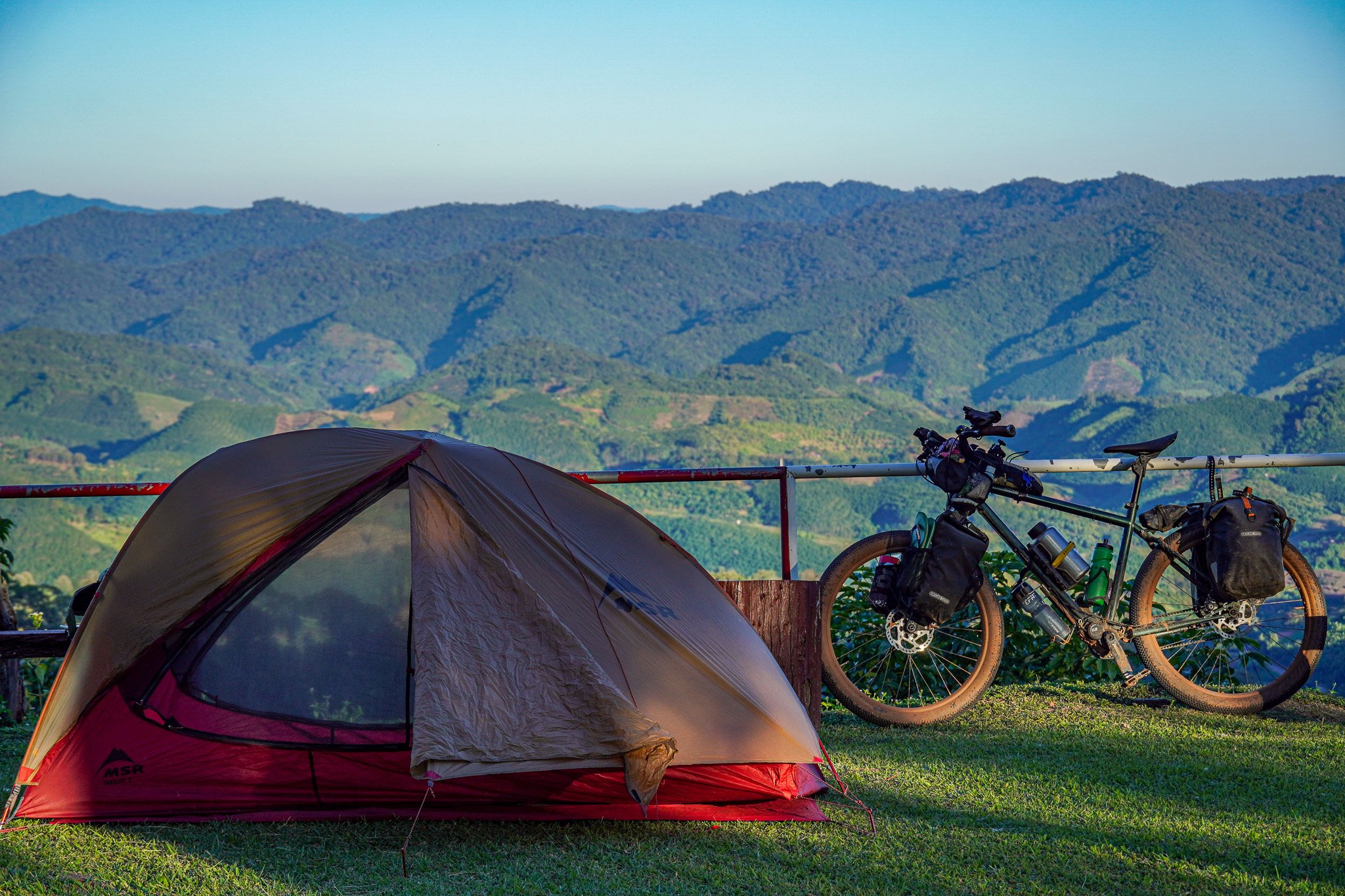
One of the best camp spots in northern Thailand with views over Laos. The campsite was marked on Google maps. A caretaker looked after what was a beautiful location. I paid £2.50 to camp here at the end of Day 10.
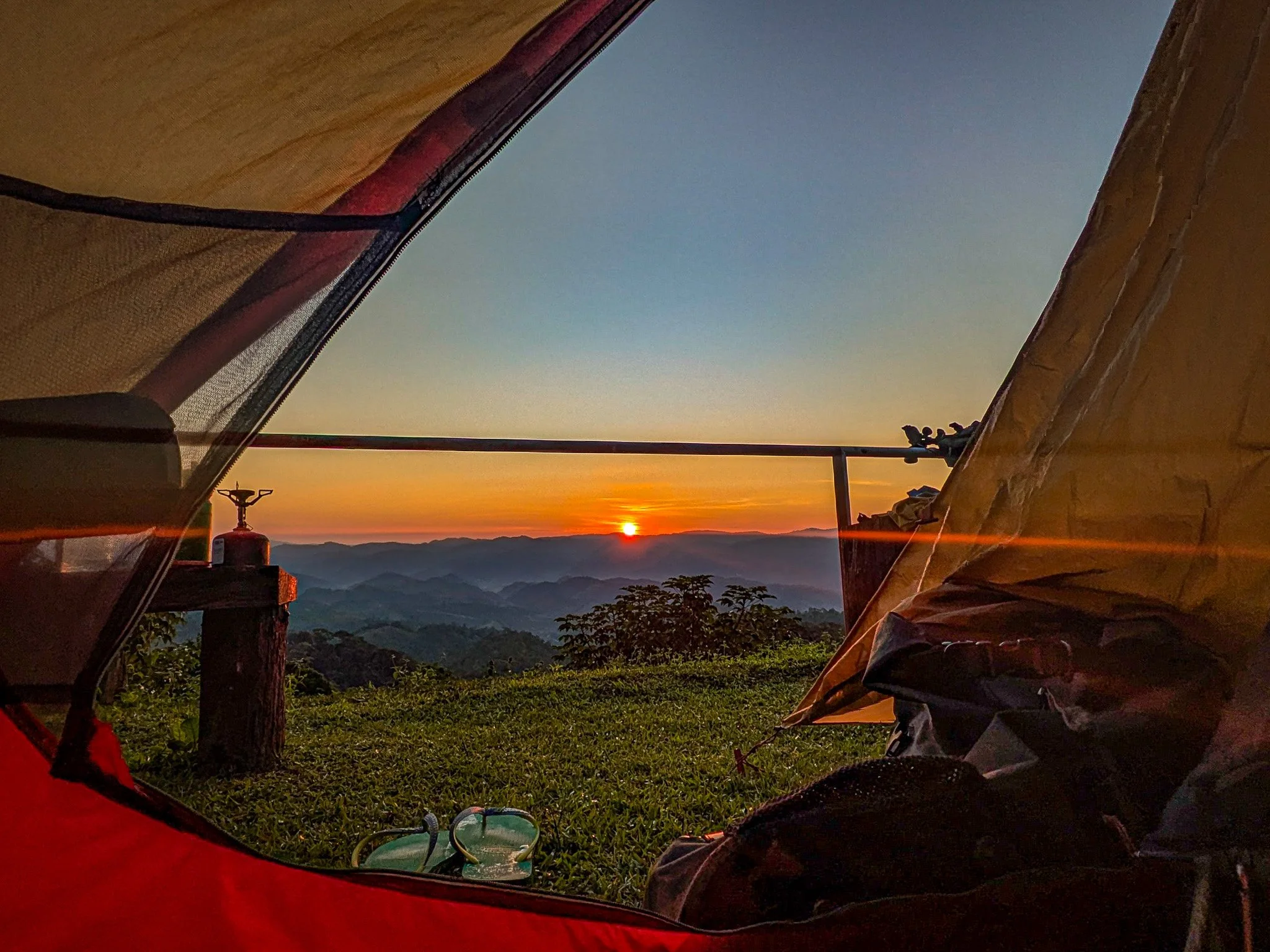
Morning alarm clock.
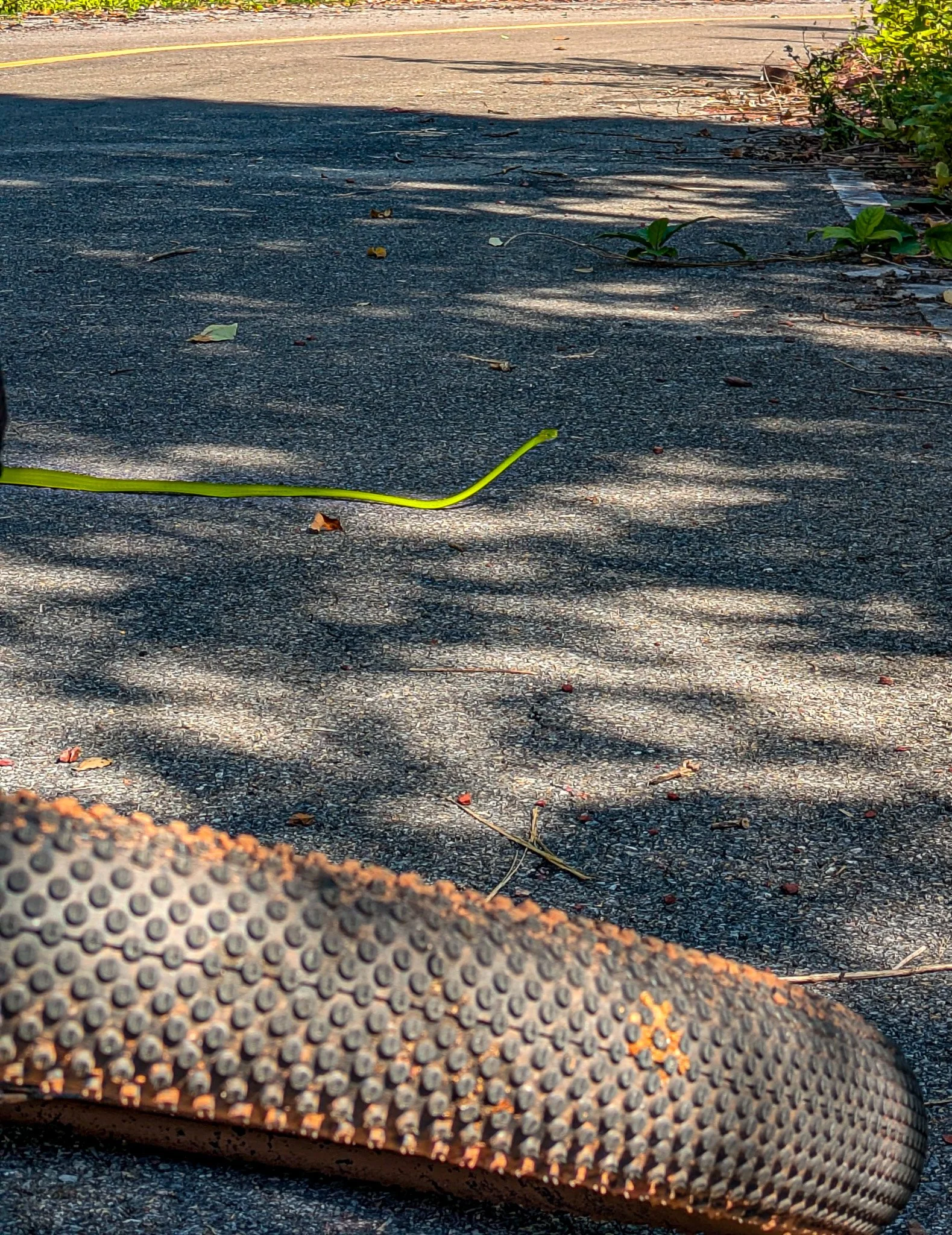
I saw far more snakes (dead and alive) in Thailand than I have done in most other countries I’ve cycled. This green snake wasn’t dangerous (didn’t actually know at the time) and just stayed stationary on the road.
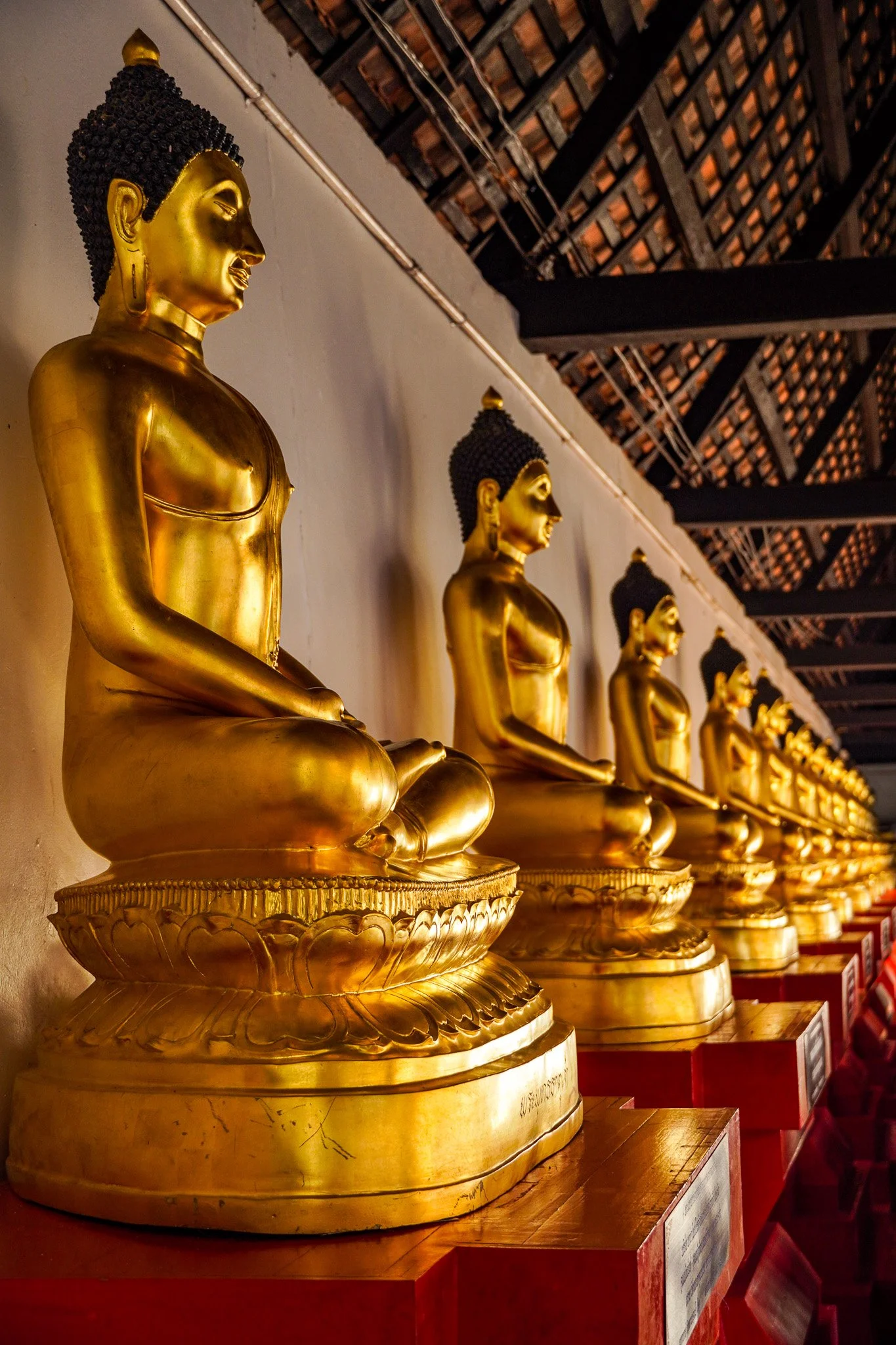
Daily dose of Buddhism in the town of Nan.
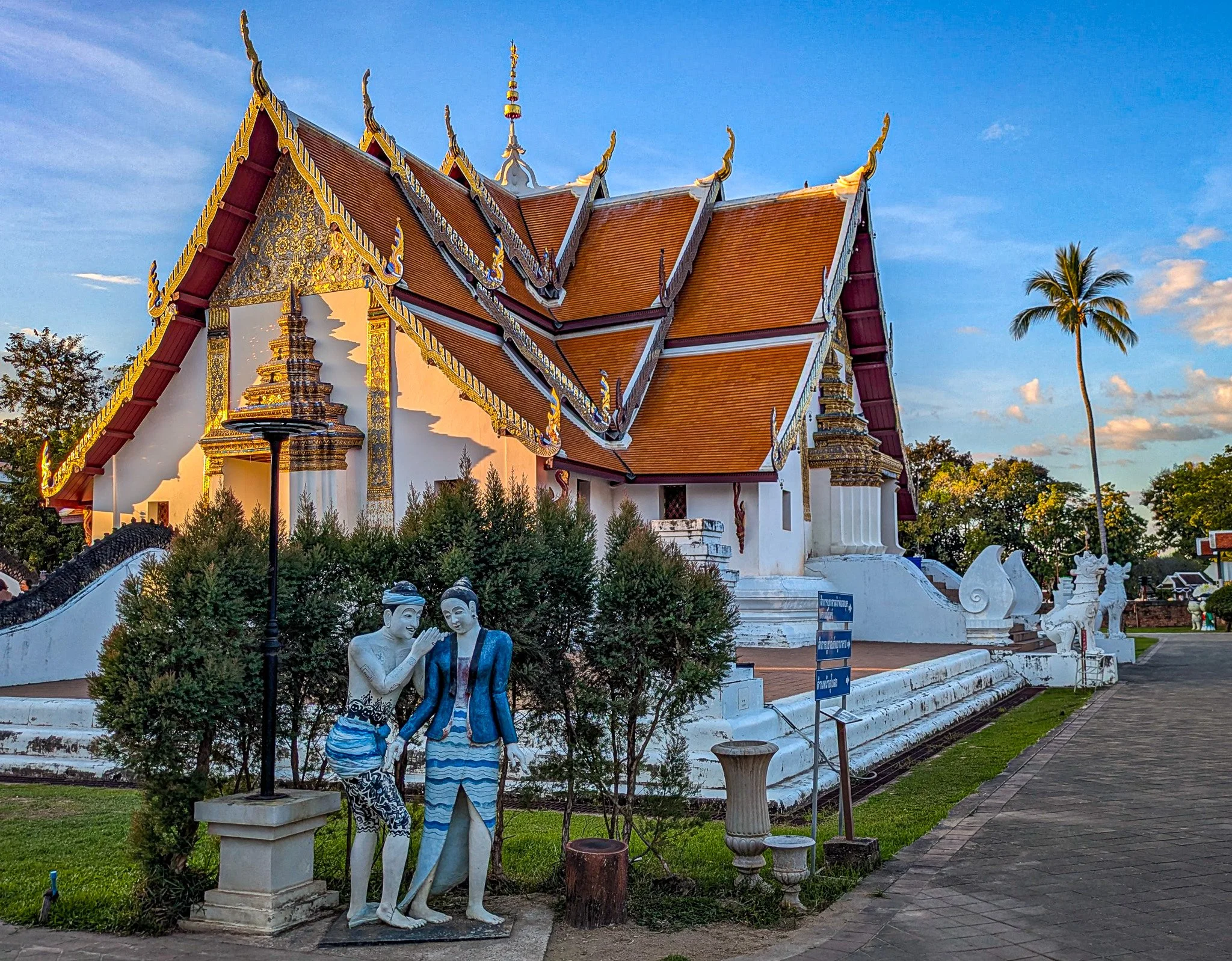
Decided to take a rest day here and visit a few famous temples.
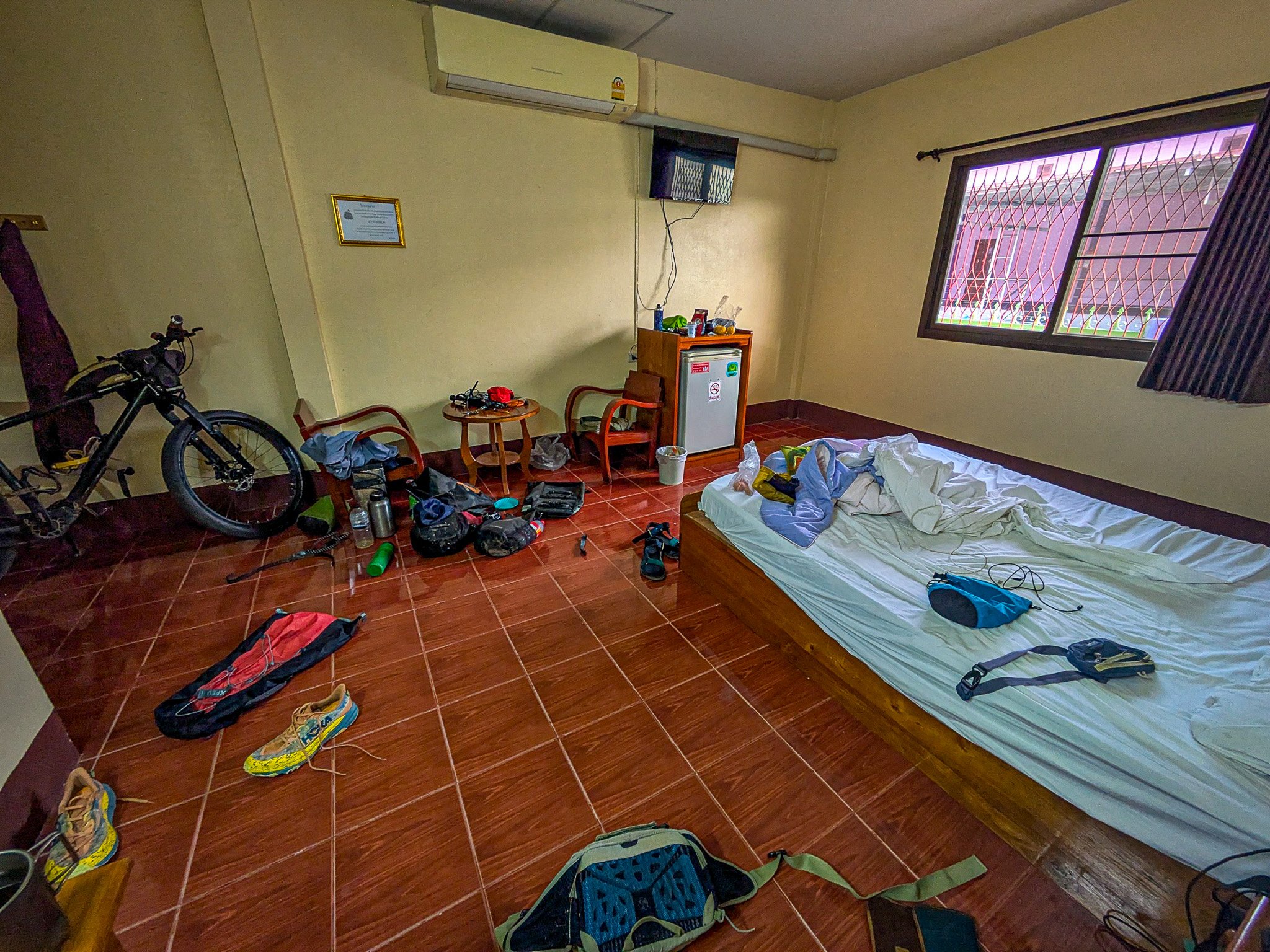
Lots of accommodation options as usual. In almost all rooms I stayed in Thailand I was able to wheel my bicycle inside the room with no issues.
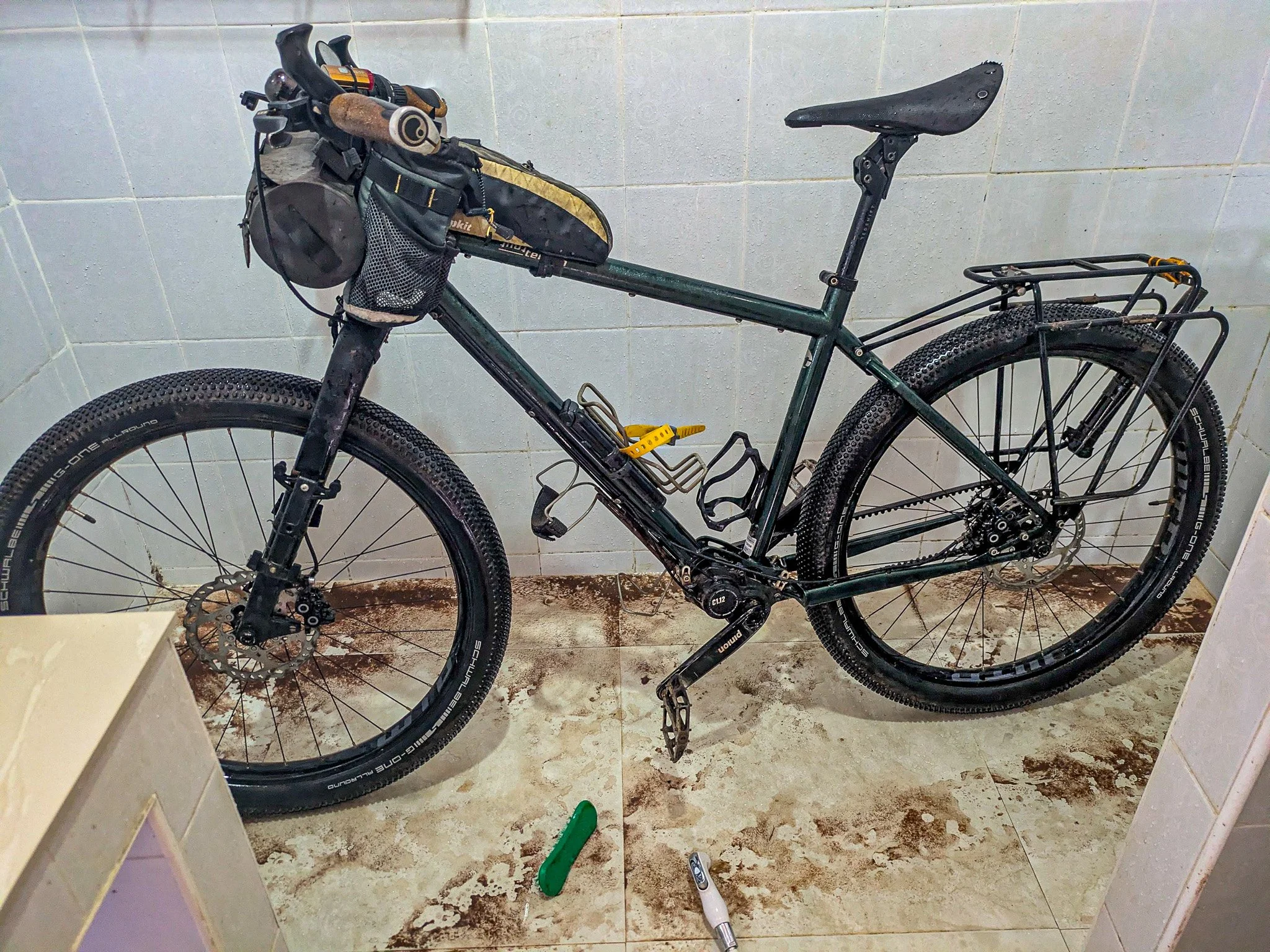
So when there was a large bathroom there was space for a jet wash using the bum gun.
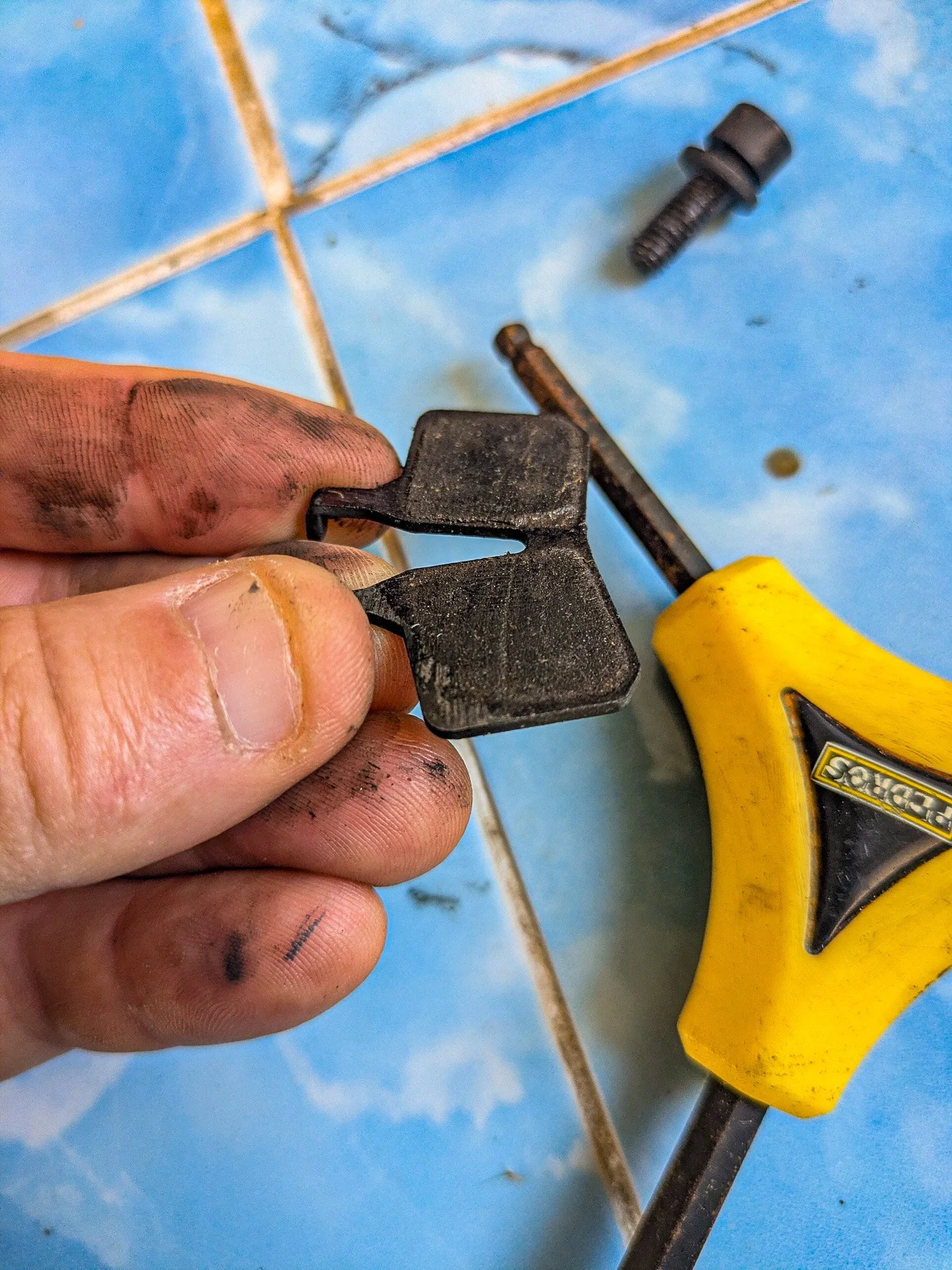
With all the descent in the first 10 days I had already gone through a pair of brake pads. I had one spare set with me, but wished I had packed more. This particular pad is hard to find in regular bike shops, so I organised ordering some online to be sent ahead.
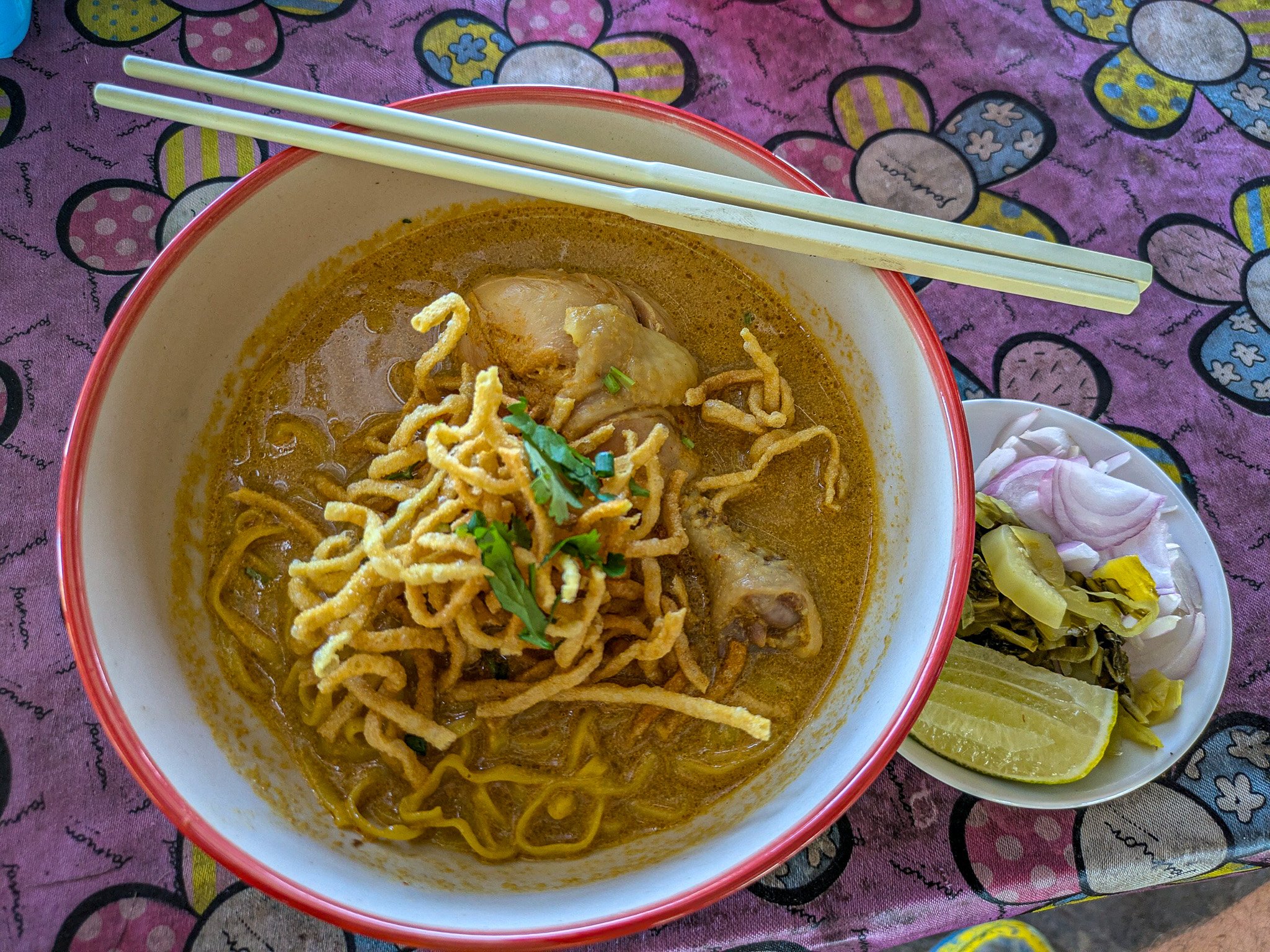
Now that I was in Northern Thailand I noticed some differences in the food. Khao Soi is a popular coconut-based chicken noodle soup in a curry-flavoured broth, served with lime and onion on the side. Price around £1.50.
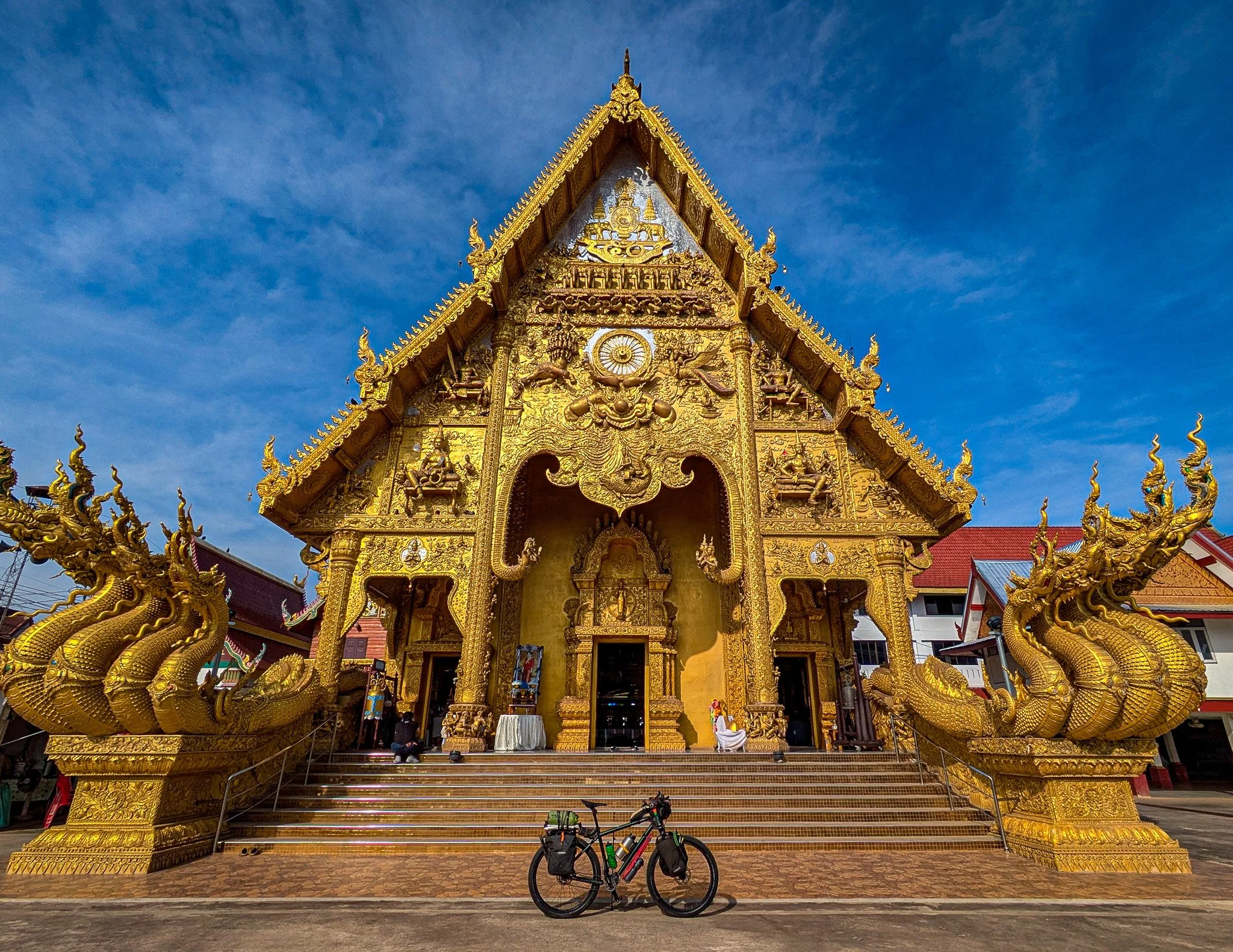
Leaving Nan and another temple.
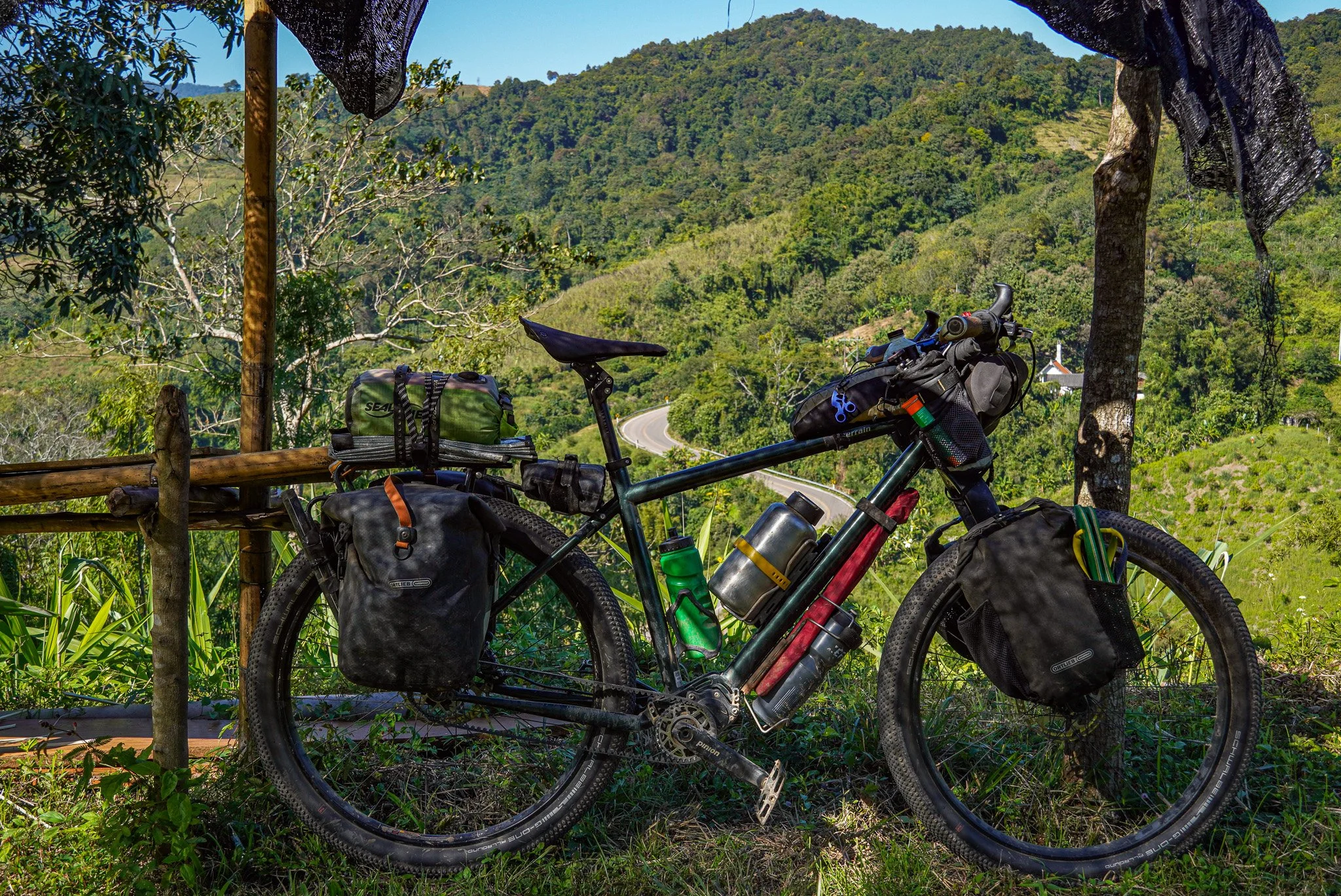
Lots more climbing on quiet paved roads.
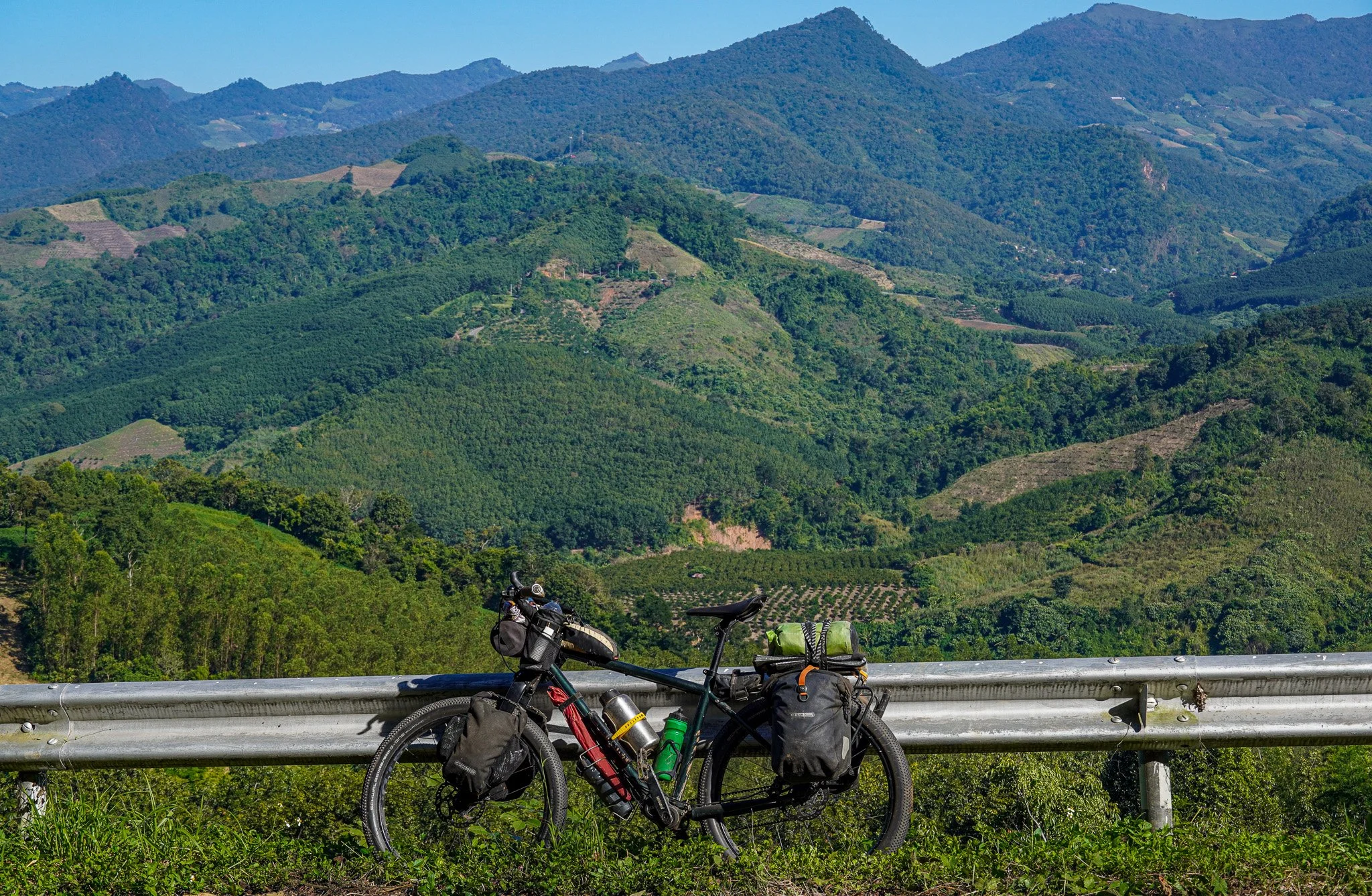
With great views east as I followed the border with Laos.
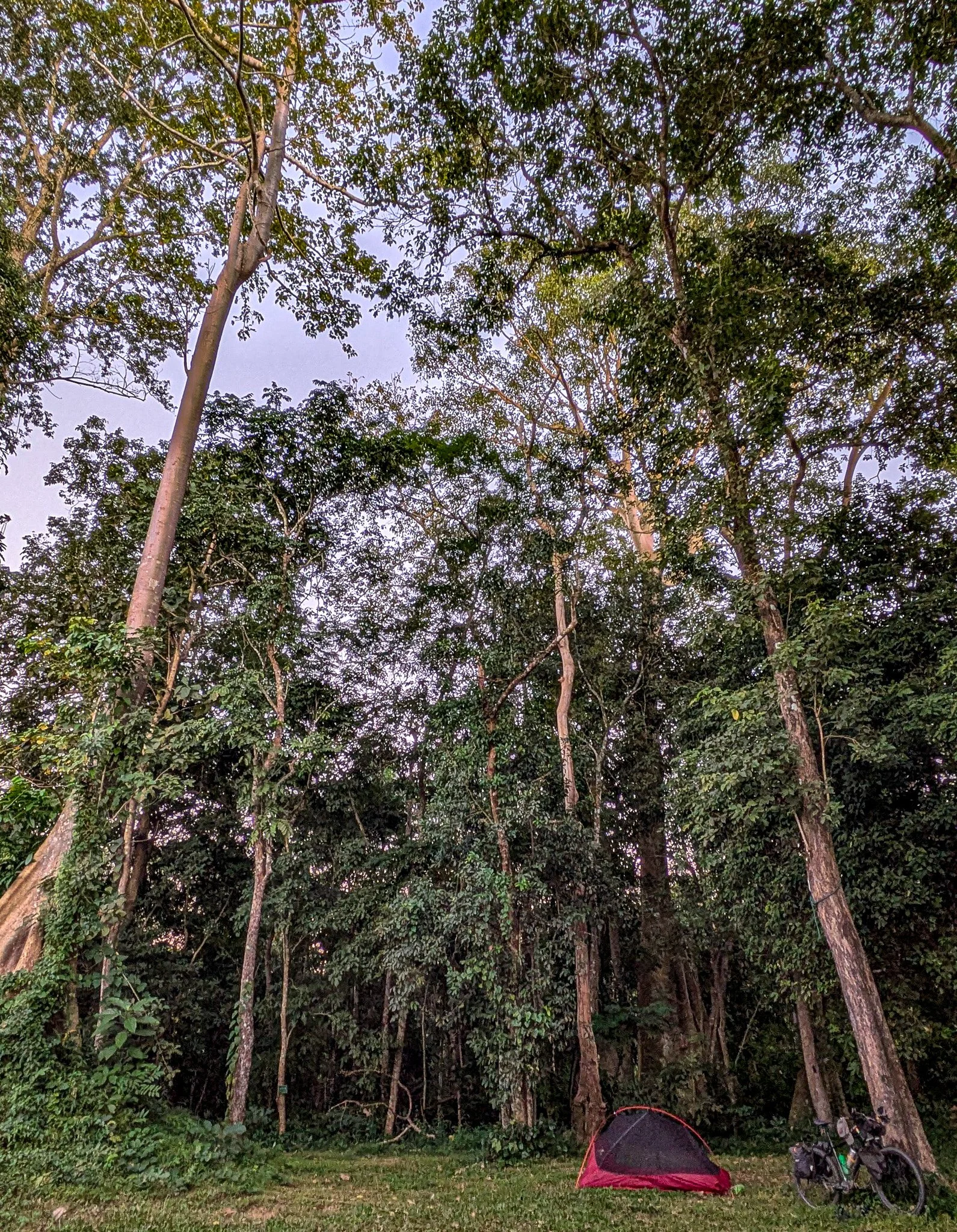
Google maps showed an area of forest with a temple structure within it. I decided to ride up here on Day 14 and pitched my tent a short distance from the temple. The temple wasn’t active - so no pre-dawn wake up call, and surprisingly no dogs. A peaceful night.
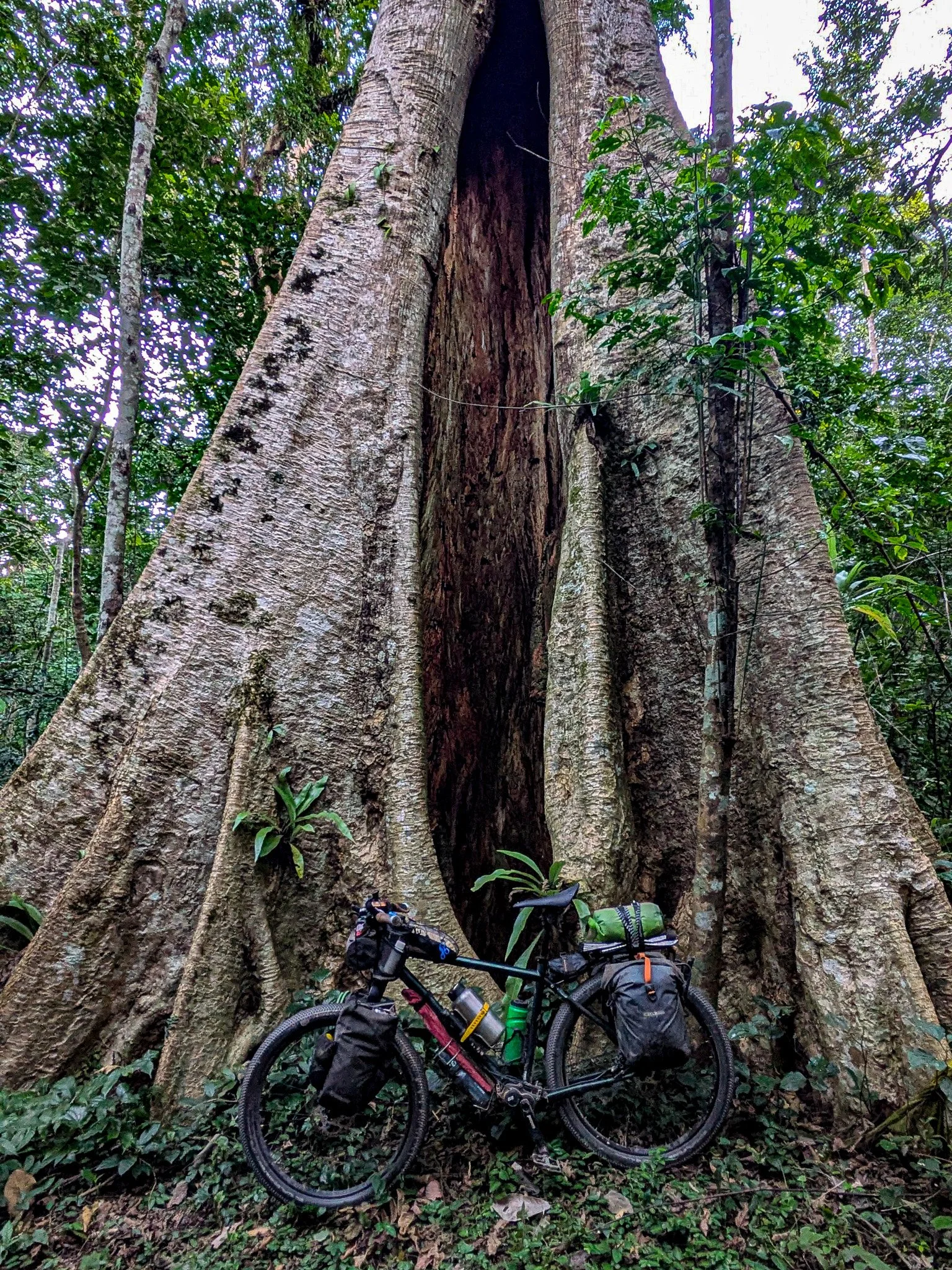
The forest had some beautiful old trees.
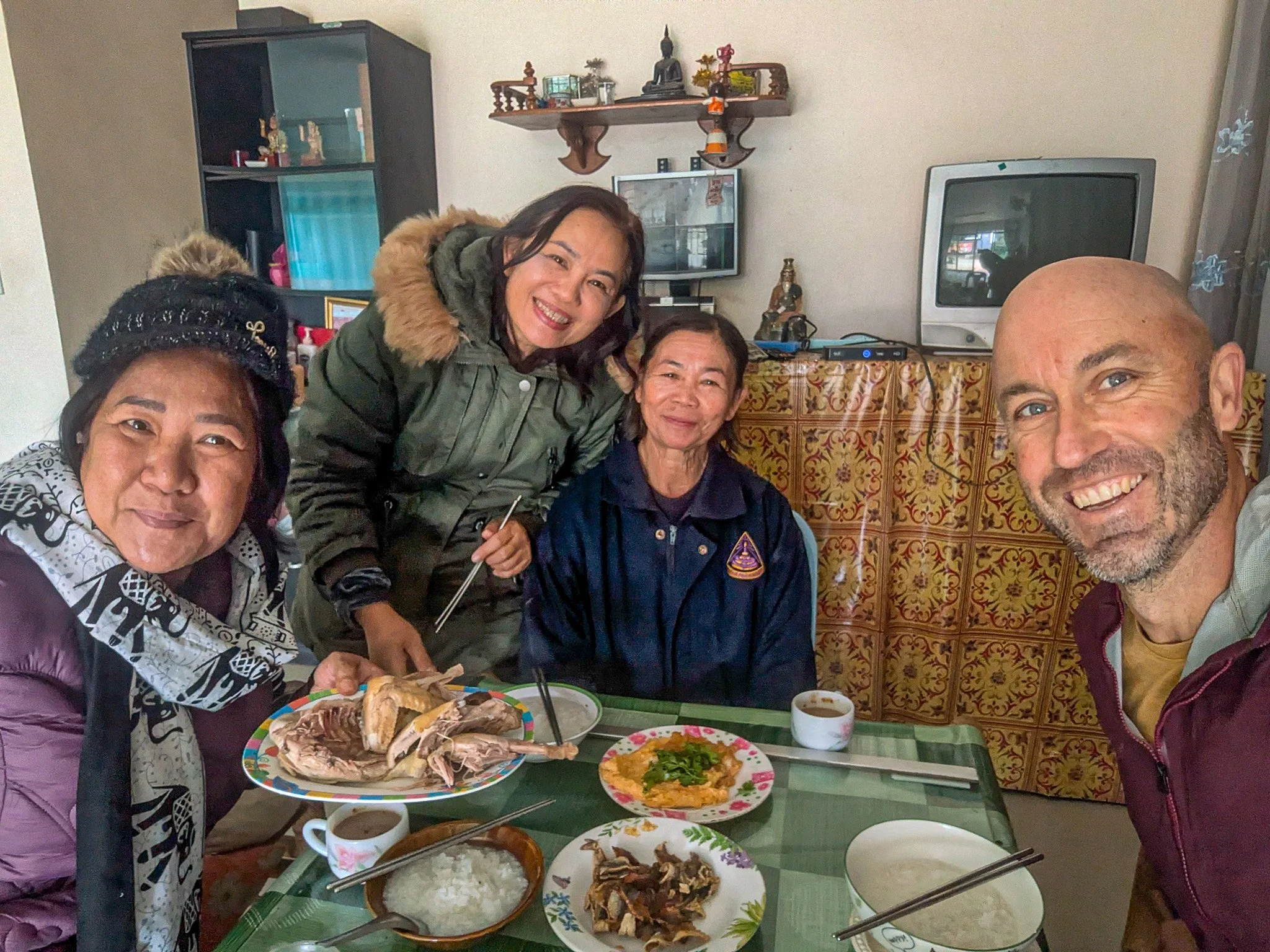
The morning after camping these three women found me packing up. They had come to the temple to provide an offering. An invite for breakfast followed, so I kindly accepted.
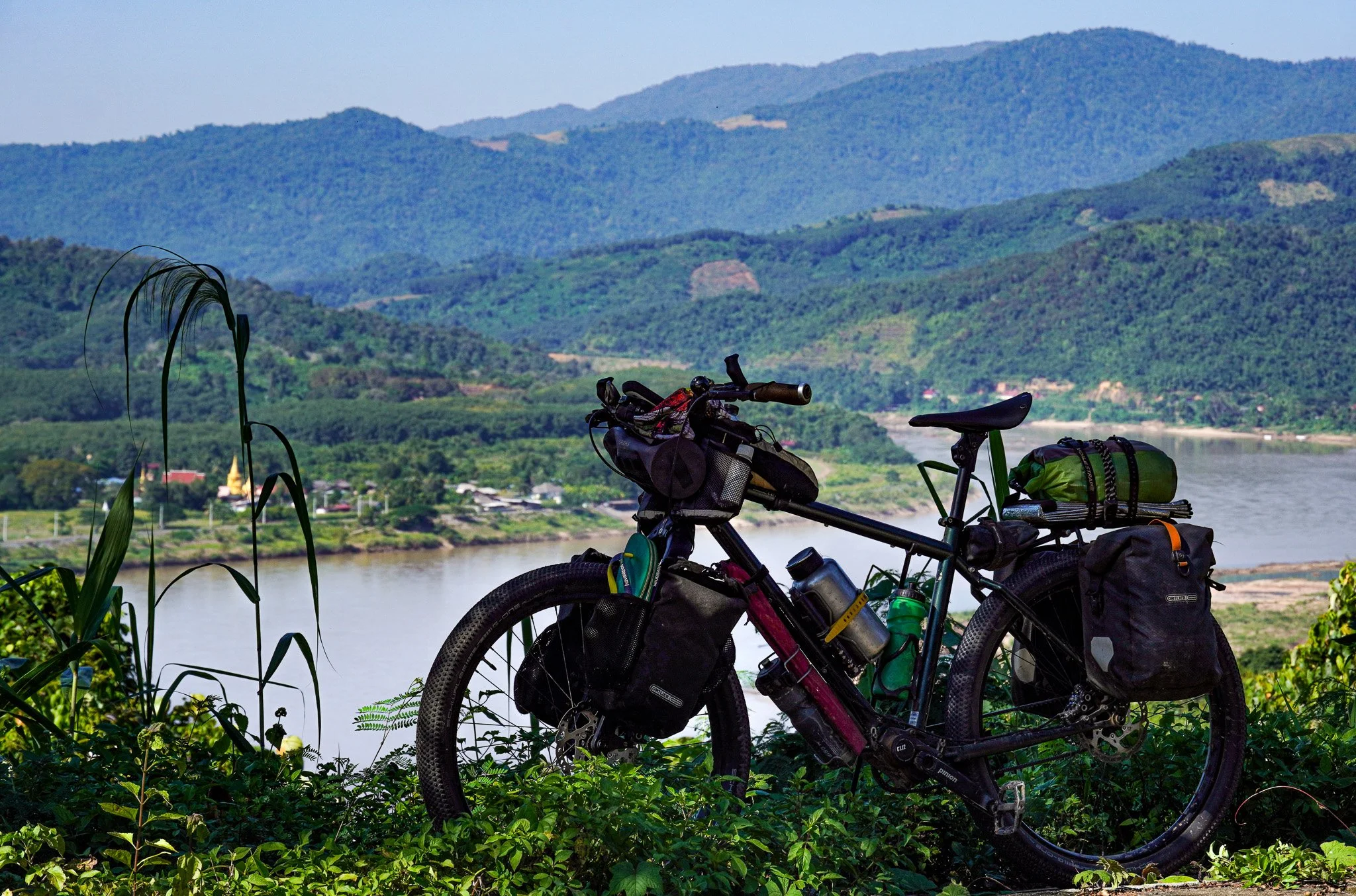
The mighty Mekong. South East Asia’s longest river provides a natural border with parts of Thailand as it flows south. My journey over the following week would now turn west along the northern Thai border with Myanmar.
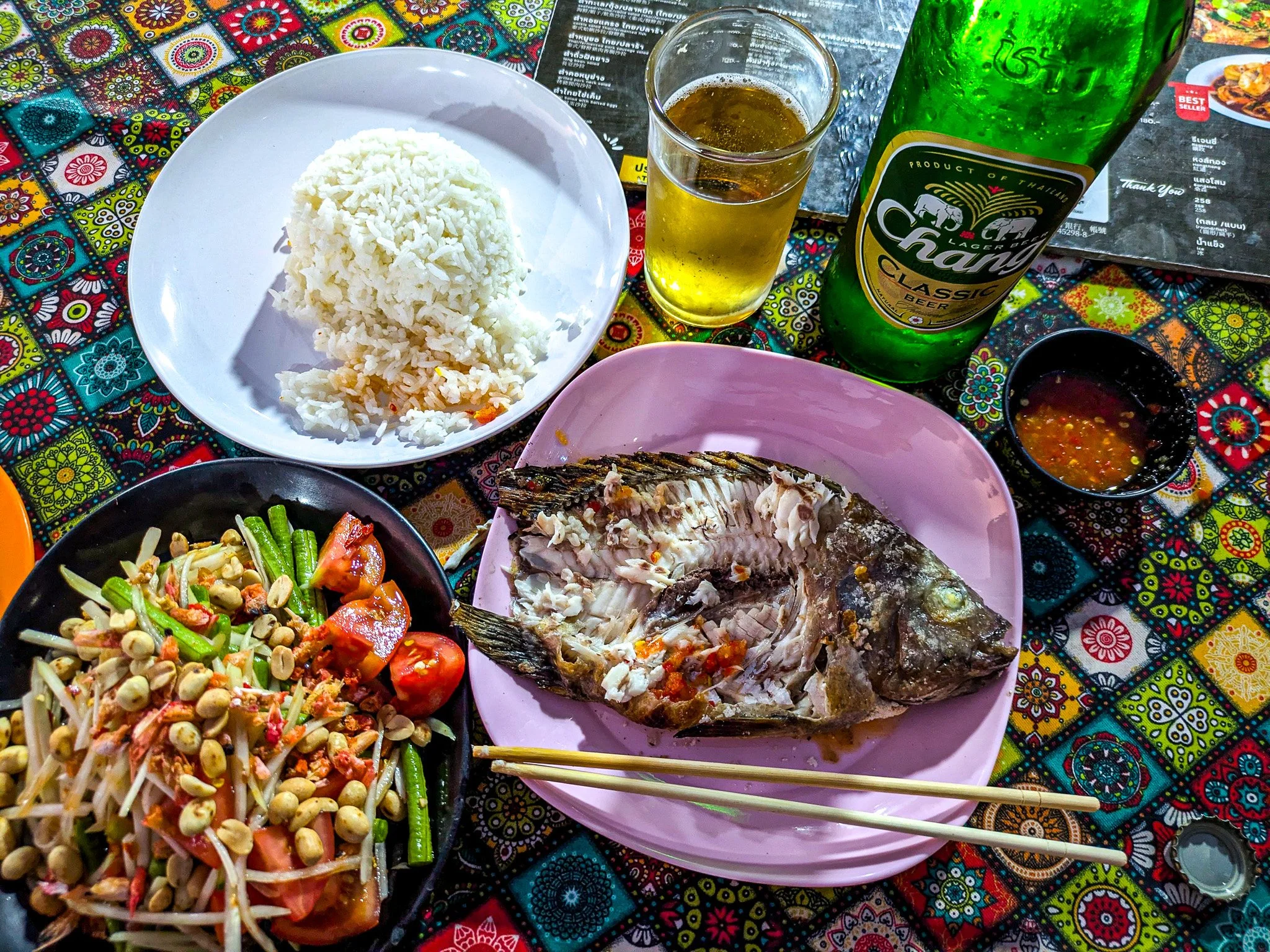
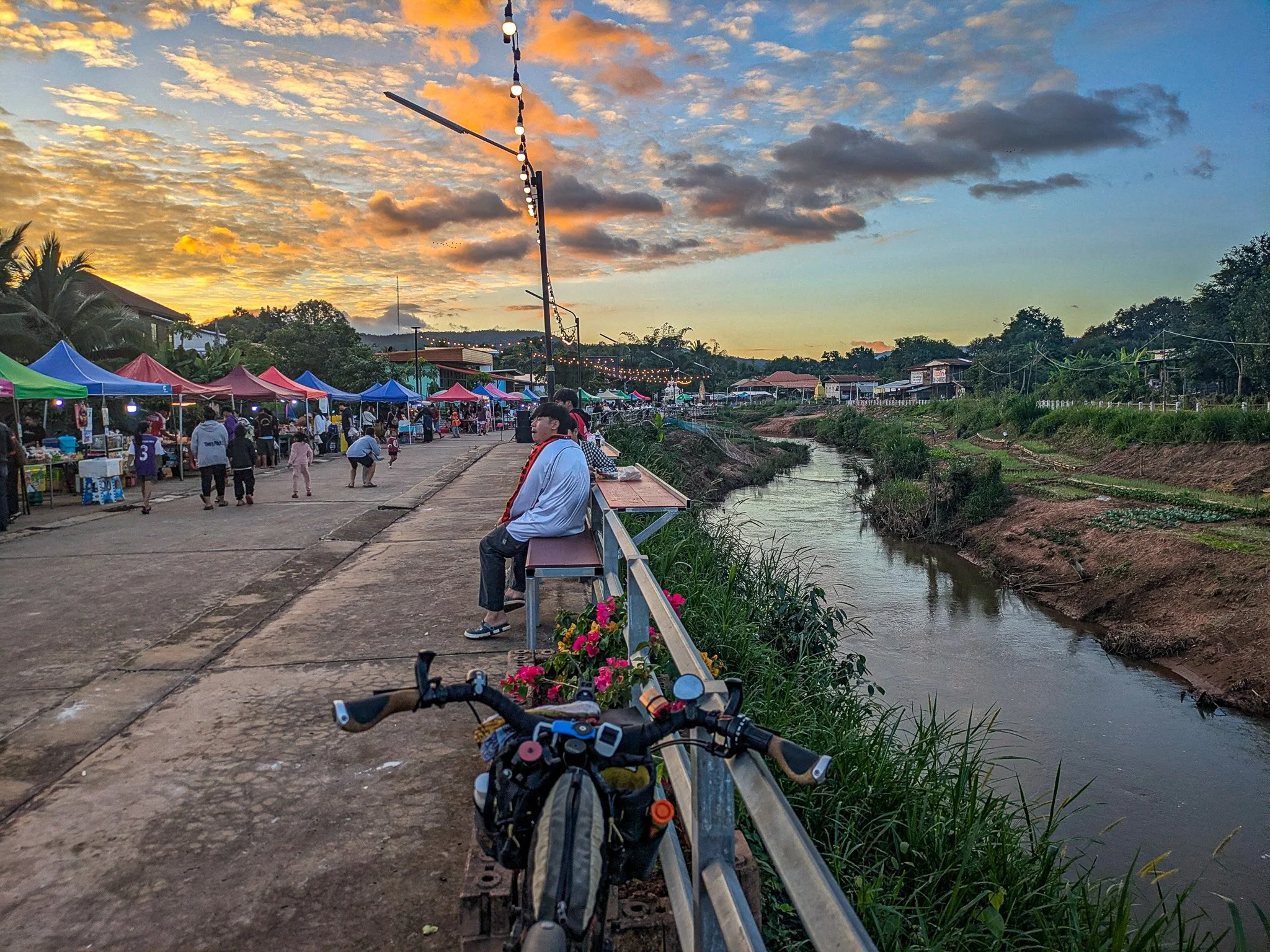
Dinner beside the Mekong in Chiang Saen. The cost of eating out here is a fraction of what it costs in the UK.
If you enjoyed this post please consider supporting the site and ongoing content creation by clicking on the link below.