Thailasia Tour Part 6: Tailwinds and Beach Camps. Khiri Khan - Betong.
I got lucky with the weather in Thailand. When I arrived in November, the country’s southern provinces were experiencing their worst rainfall and flooding in decades. A few months later, the clear skies I had experienced throughout most of my time in the northwest of the country, also came to define the weather as I cycled south towards the Malaysian border.
Better still, monsoon trade winds typically blow from the northeast between November and March, so most days during my final few weeks in Thailand came with a strong tailwind—hard work if you’re heading north, effortless going south.
Thailand’s beaches, and more specifically its islands, are arguably what make the country such a popular tourist destination. Koh Samui and Koh Phangan on the east coast - Phuket, Koh Phi Phi, and Koh Lanta on the west, are just some of the well-known island destinations for millions of foreign tourists who visit Thailand each year. I’d managed to navigate through the country without visiting too many tourist-filled destinations, so had no plans to ferry out to any of the popular islands, instead choosing to stay on the mainland, where beaches are more likely visited by local tourists, or none at all.
Days 40-53 on the map below were predominantly coastal, before turning inland to cross the border and ride towards the west coast of Malaysia.
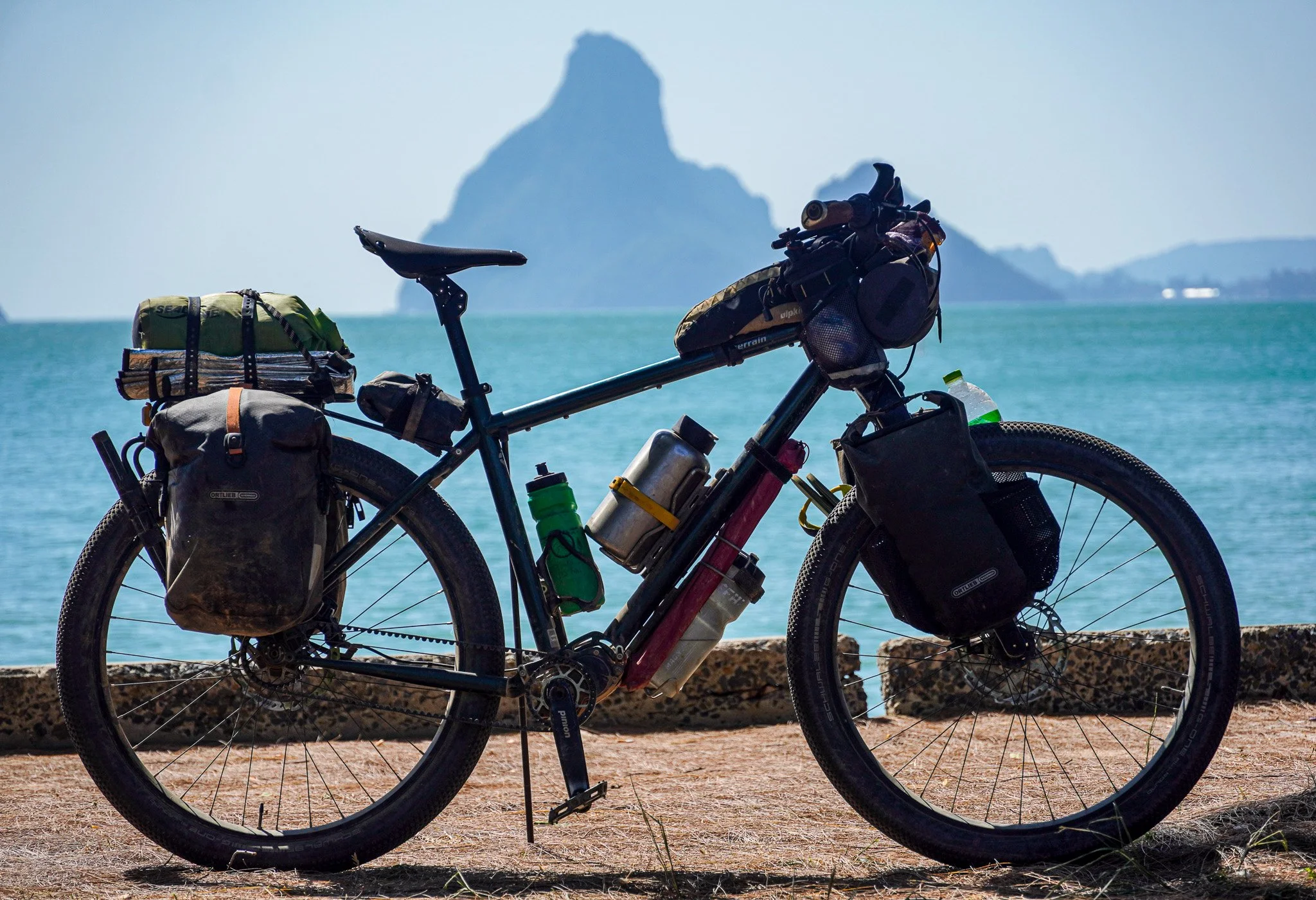
Coastline beside Prachuap Khiri Khan. I could have happily spent a few more days here. The campsite at the end of the previous blog post was perfectly located to explore the area.
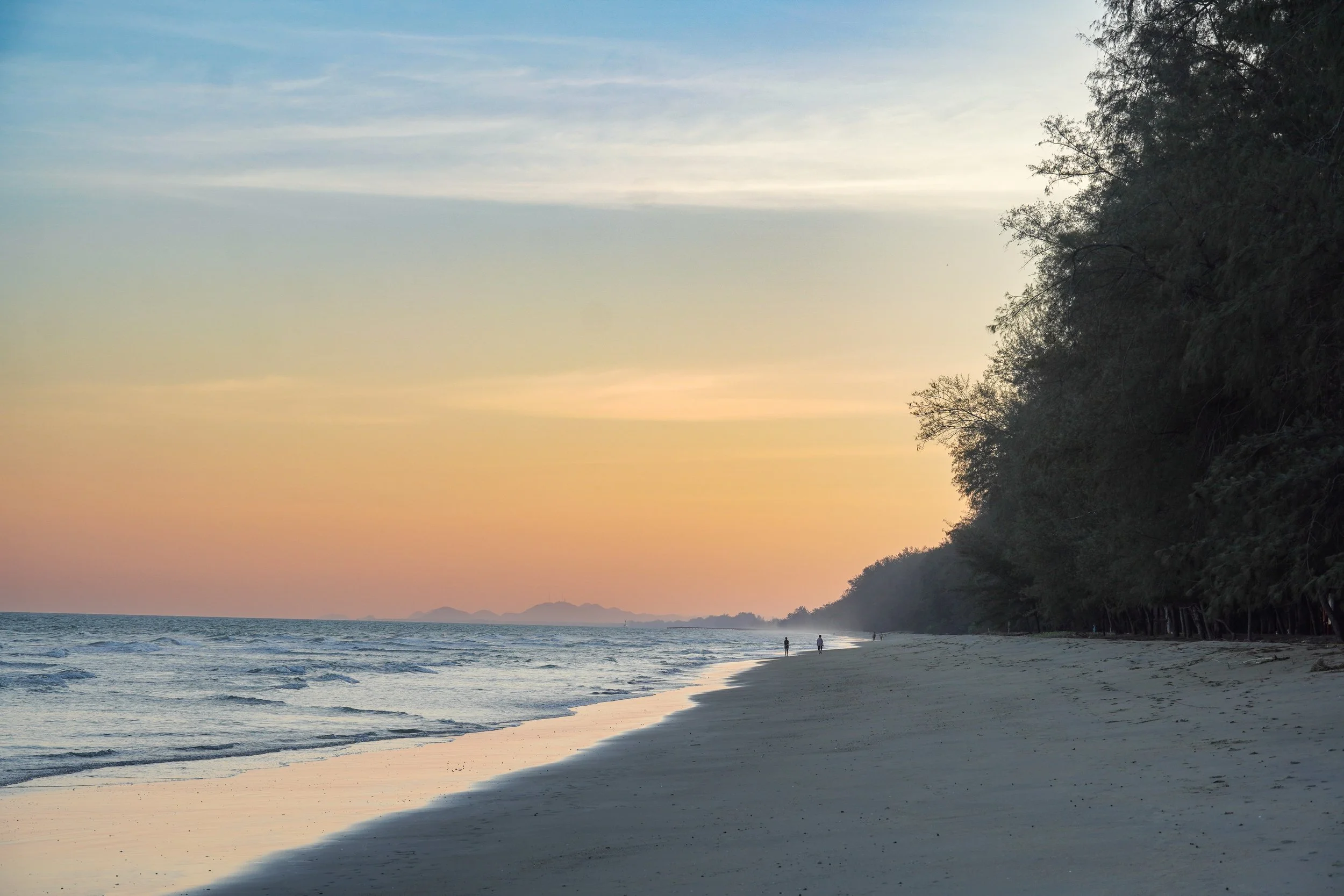
Wanakon National Park - a short distance south from Prachuap Khiri Khan lies this beautiful sandy beach.
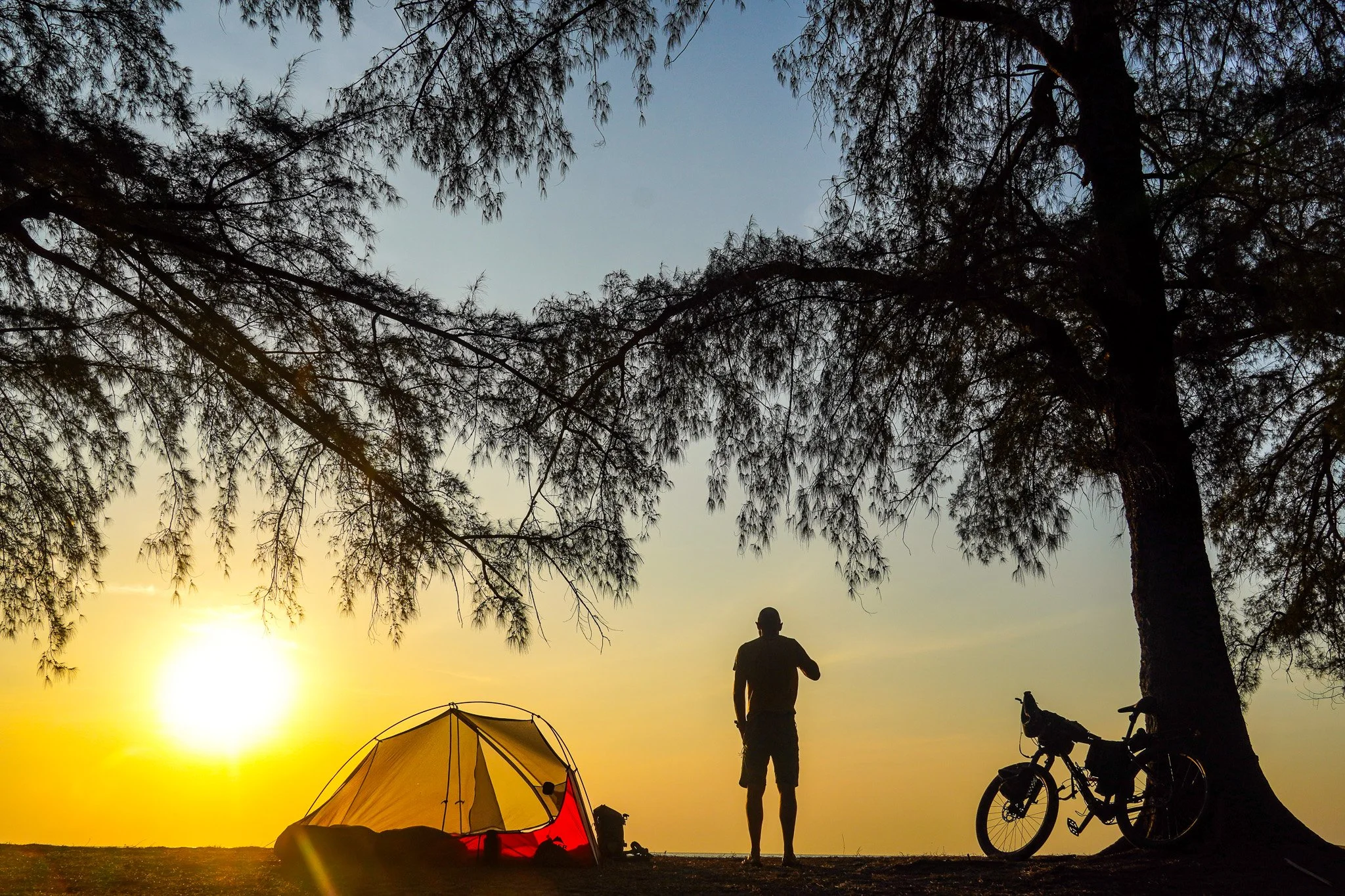
Another great place to camp, although options to buy food were limited. Initially I thought it would be too hot to camp on the beaches in Thailand, but January temps are the coolest in the year - around 15-20°C overnight.
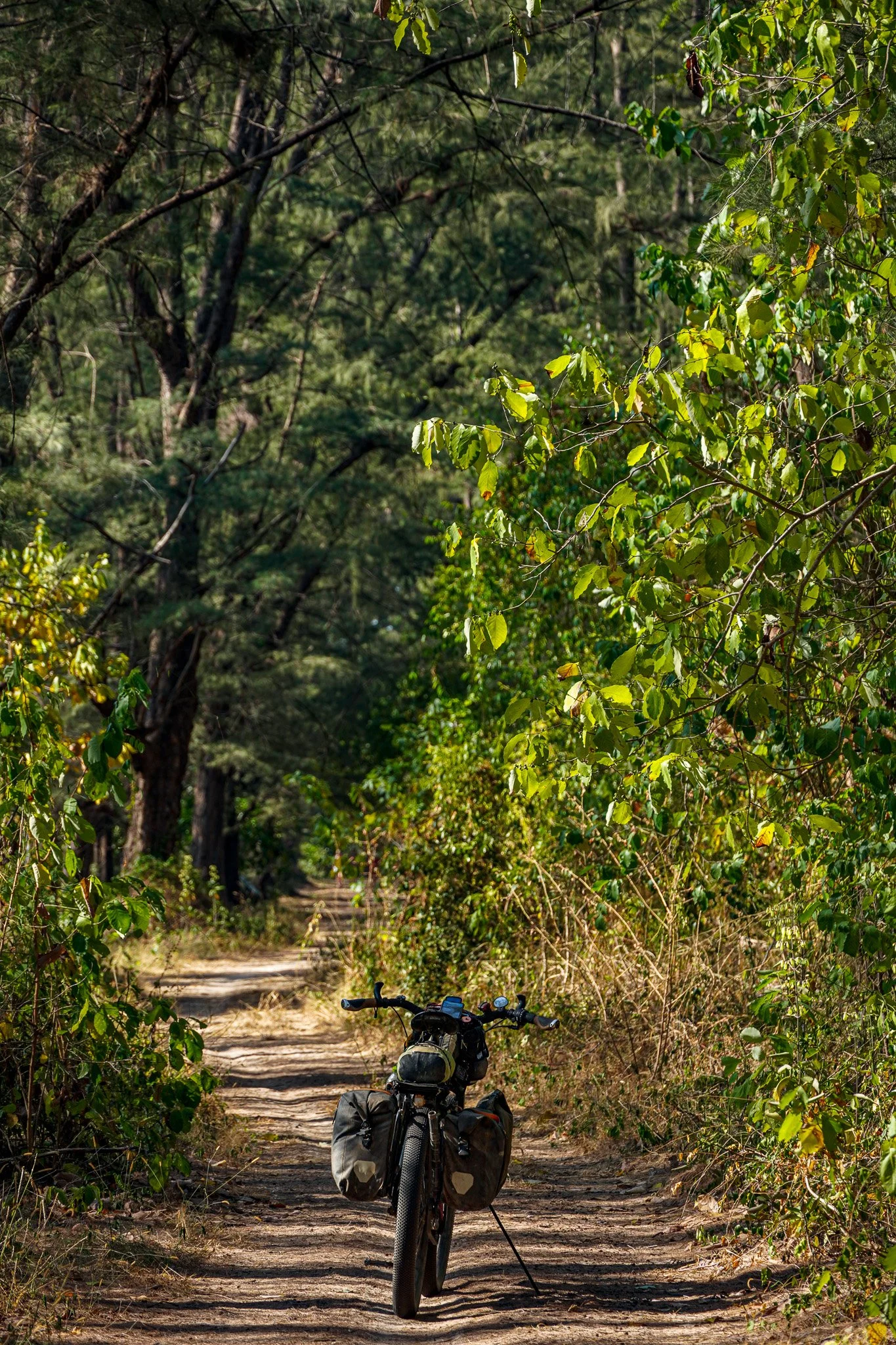
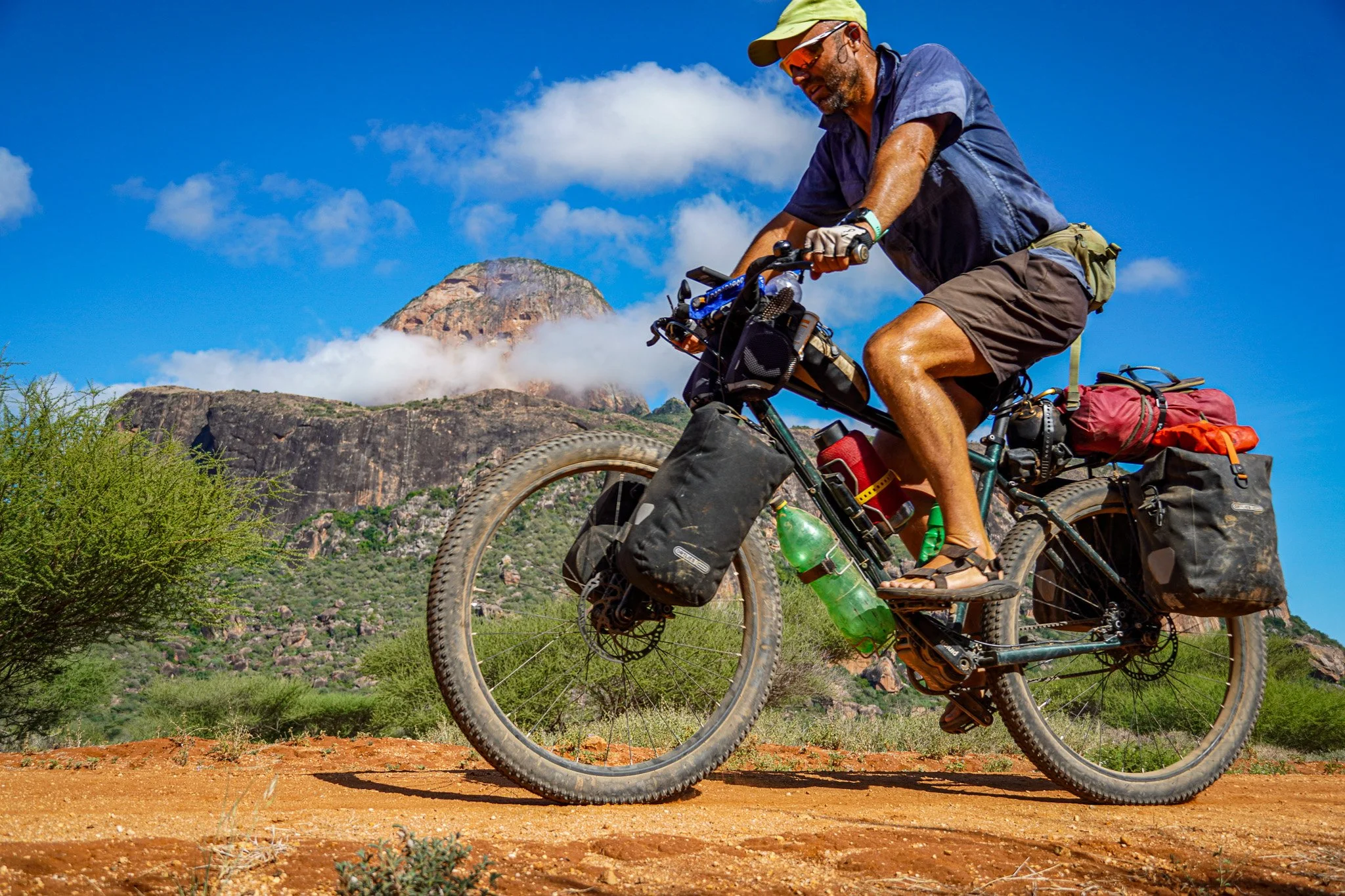
Cycling out of Wanakon National Park. Happy to have wide tyres for sandy stretches like this.
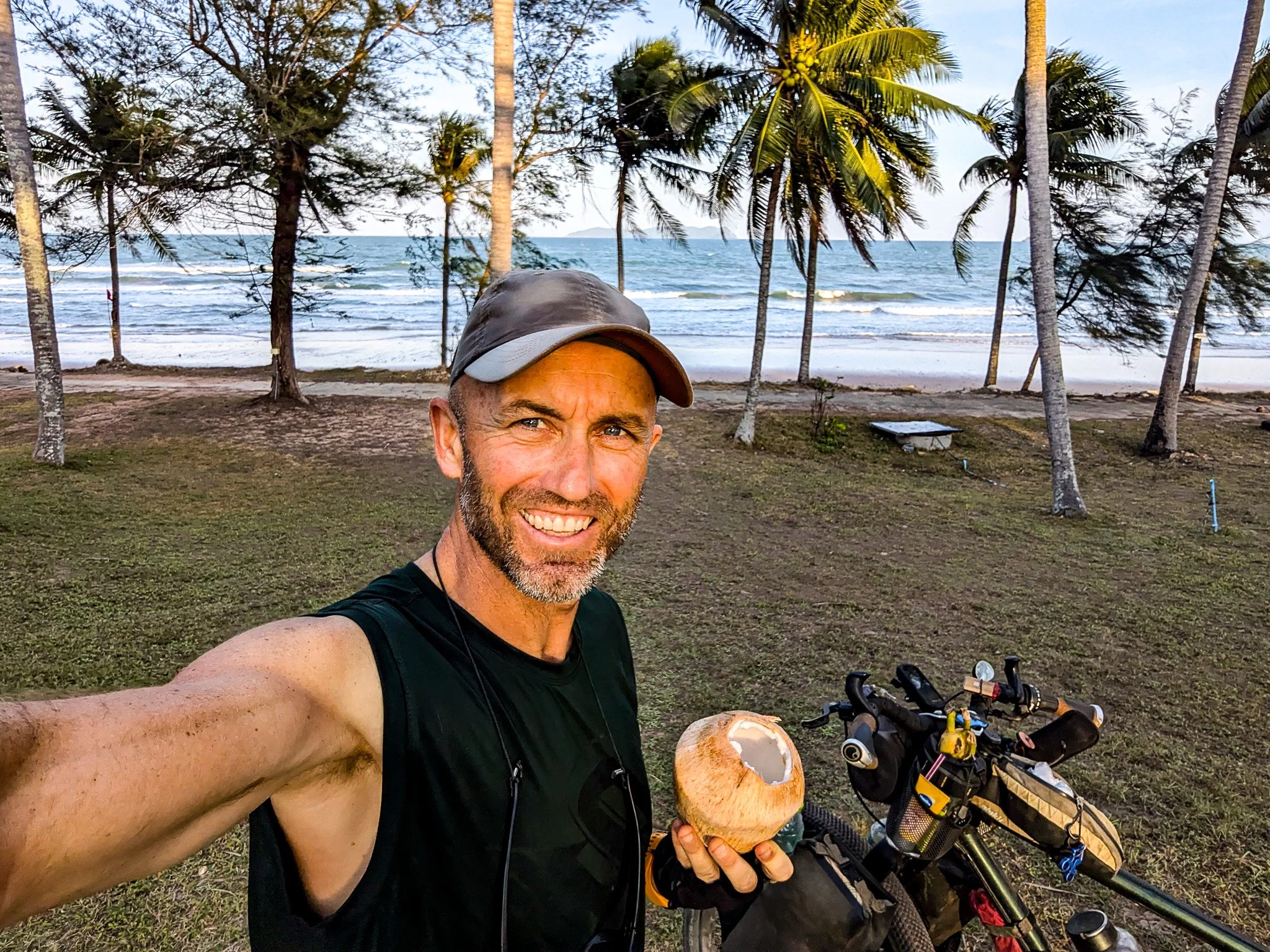
Next beach camp on Day 41. I arrived and the owner greeted me with a complimentary coconut.
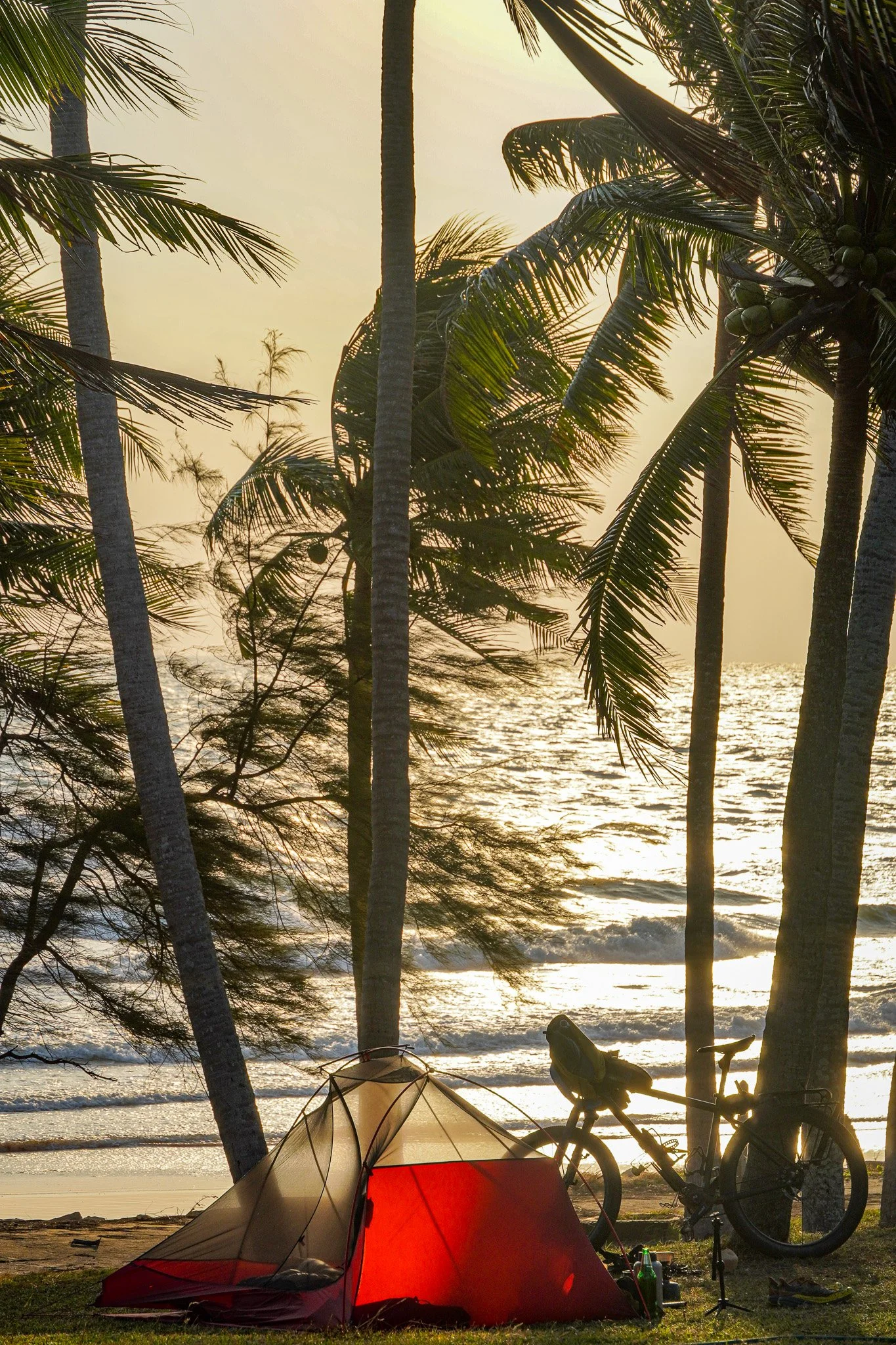
The winds picked up here, blowing strongly through the night and for the next few days.
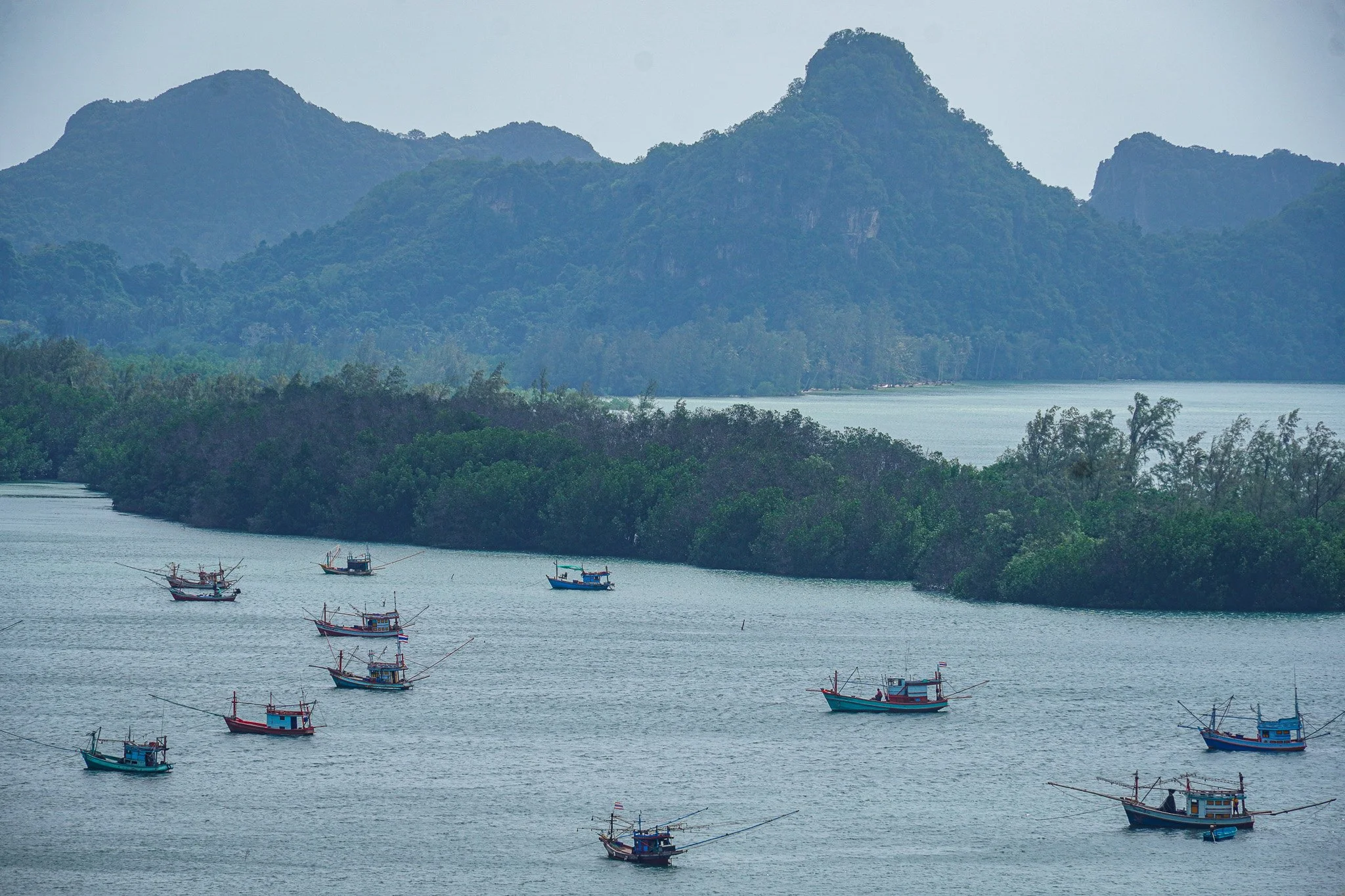
Fishing boats sheltered from the strong winds.
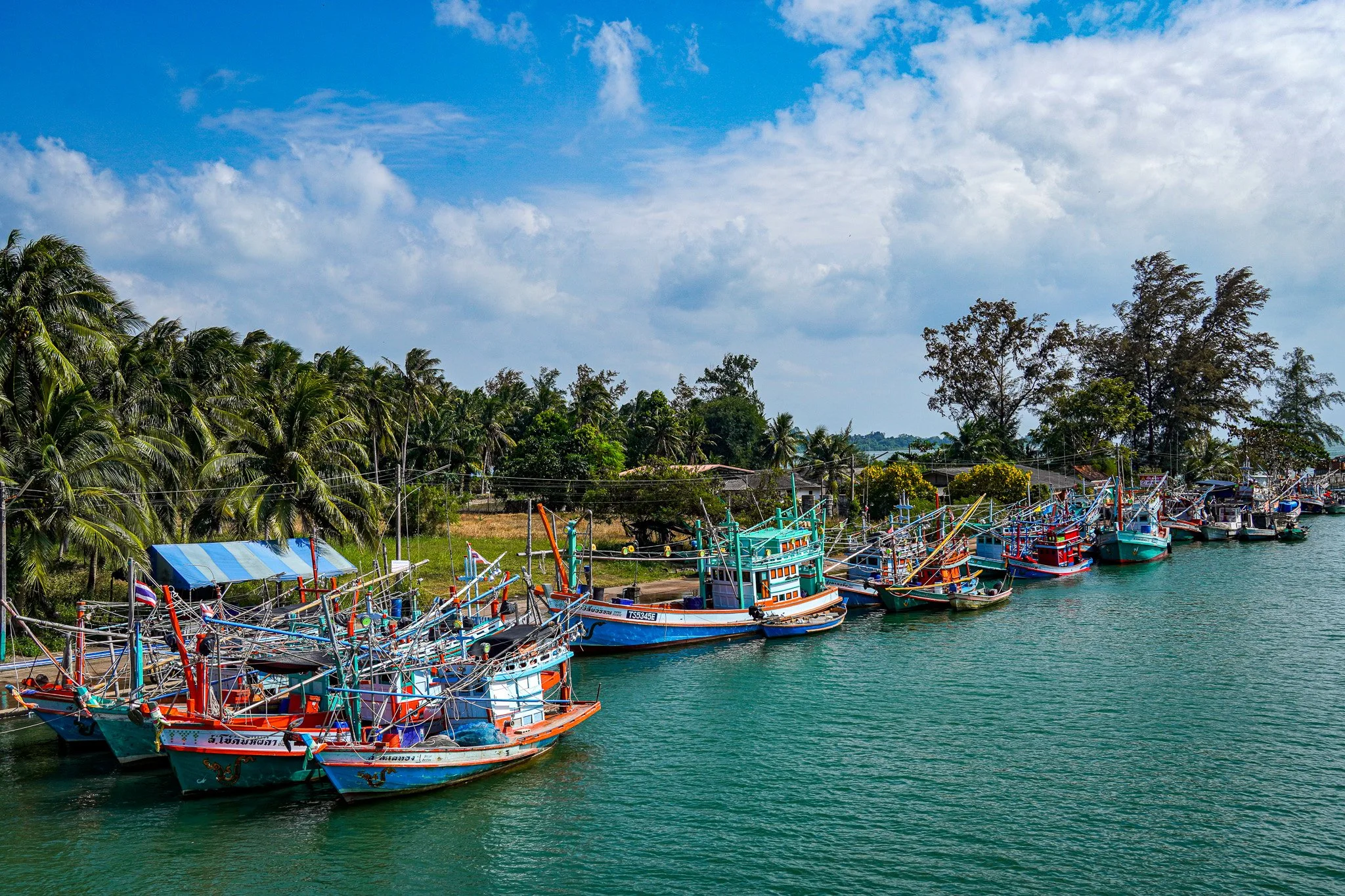
Fortunately this meant a strong tailwind - after 4 hours of cycling I’d covered close to 100km.
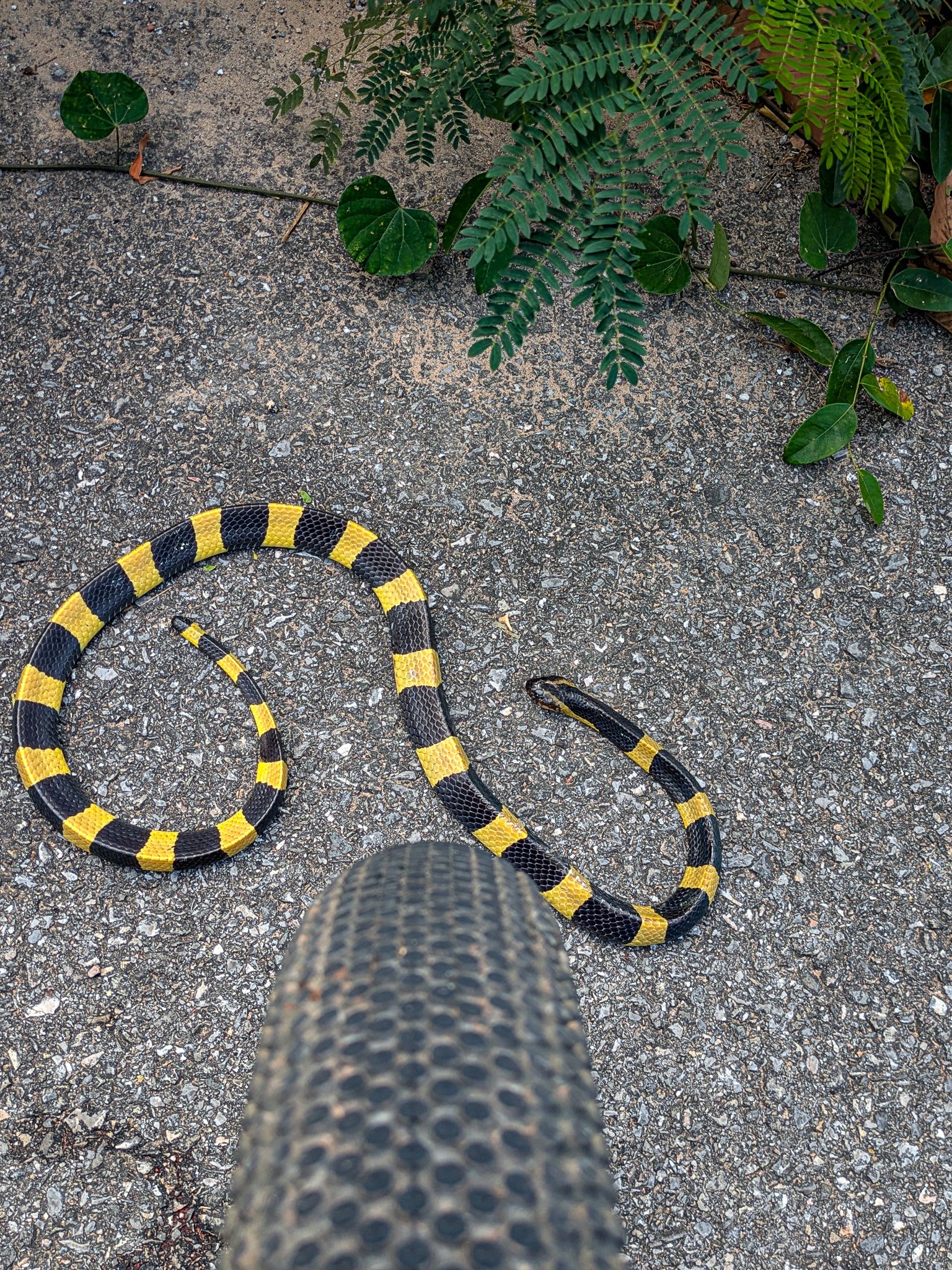
Colourful roadkill. The Banded Krait is one of Thailand’s most venomous snakes. As usual when on the road, I saw far more dead snakes than live ones.
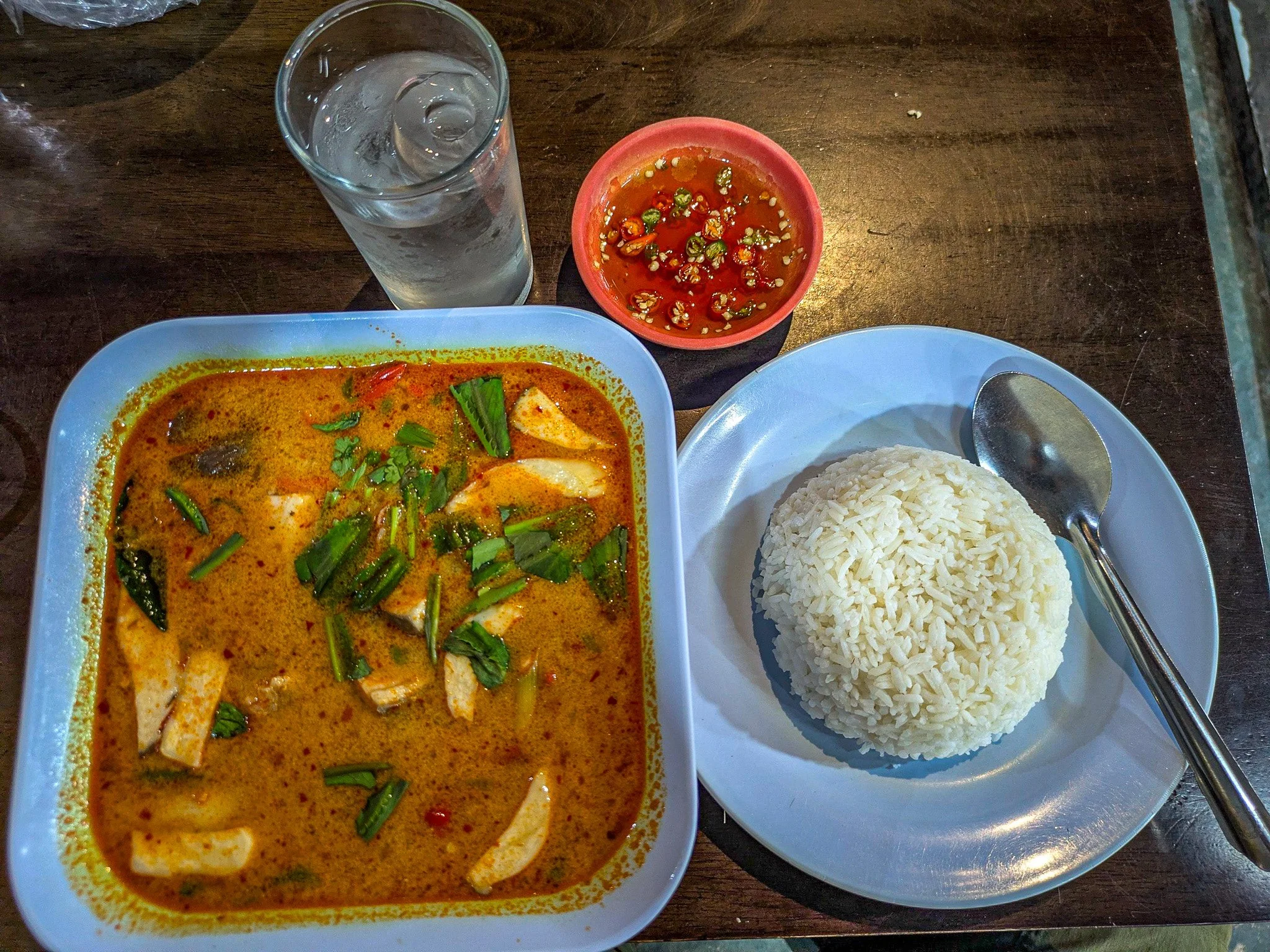
Hard to get bored of the food in Thailand. An excellent Tom Yum seafood soup for around £2.
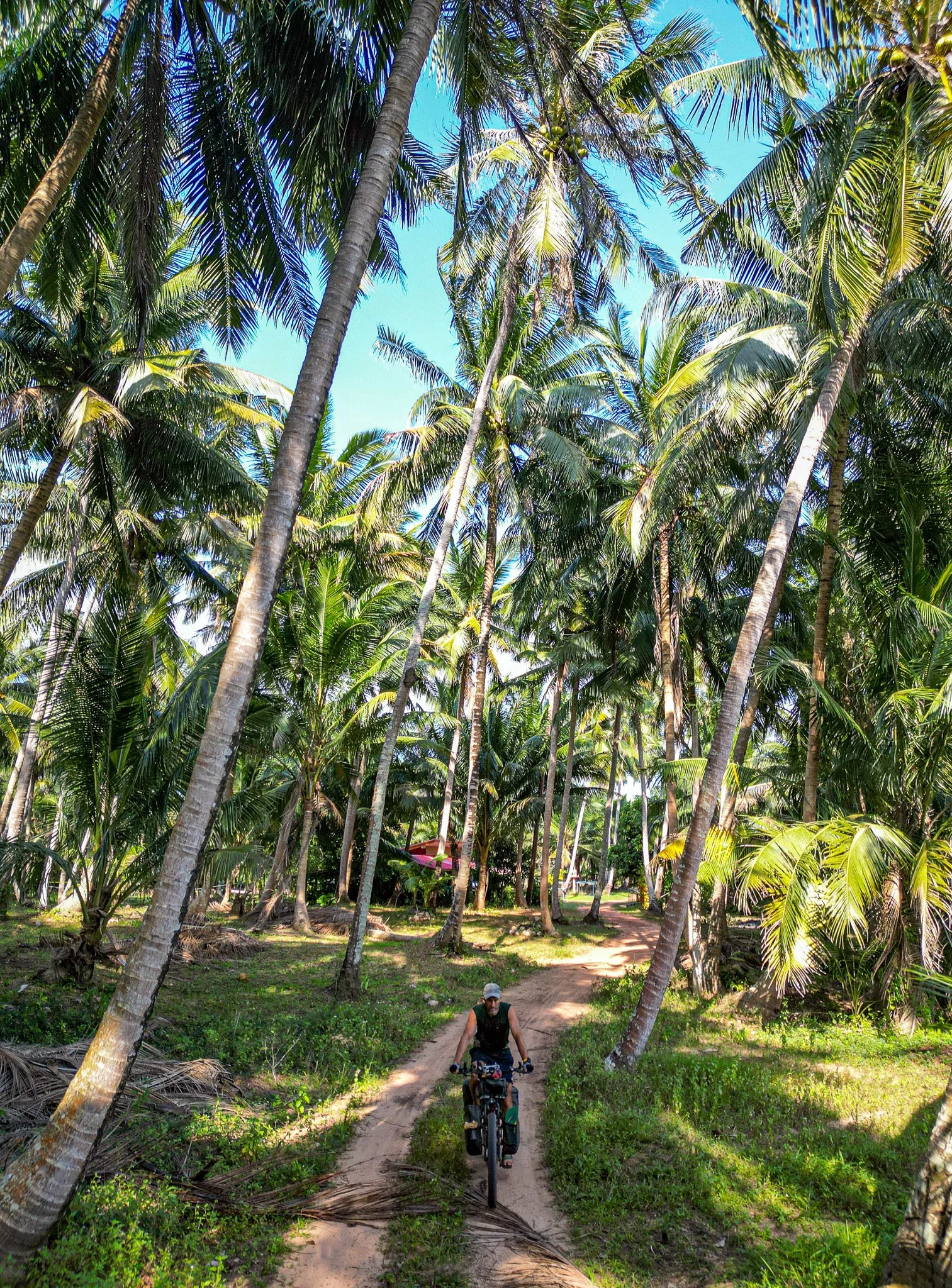
Coastal landscapes in Thailand’s southern provinces are far more characterised by coconut palm plantations than the rubber and sugar cane I saw further north.
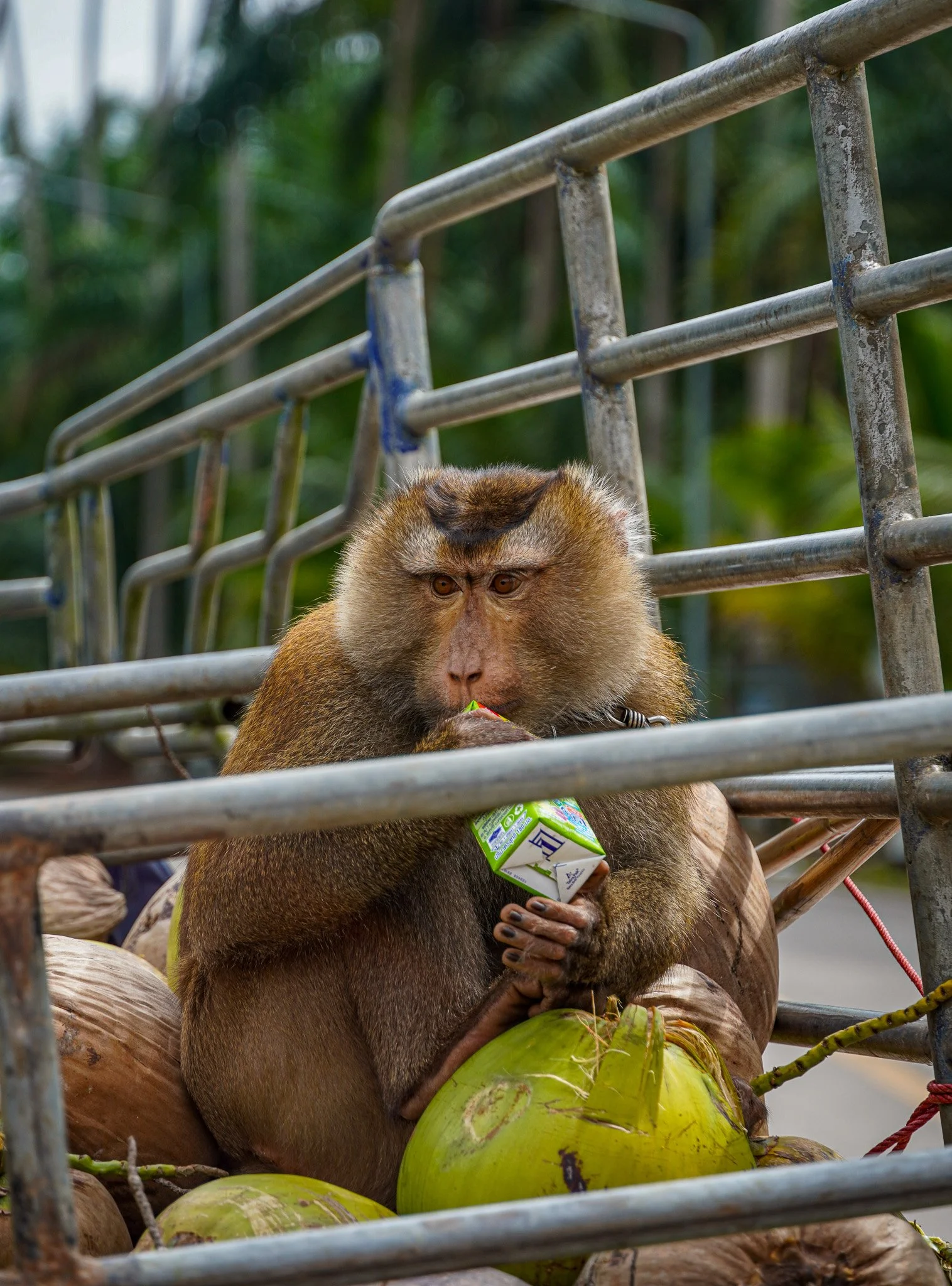
A drink break. In Thailand, monkeys have long been trained to harvest coconuts. Though the practice is declining and increasingly criticised, I still saw pickups carrying coconuts—and the occasional chained monkey, like this one.
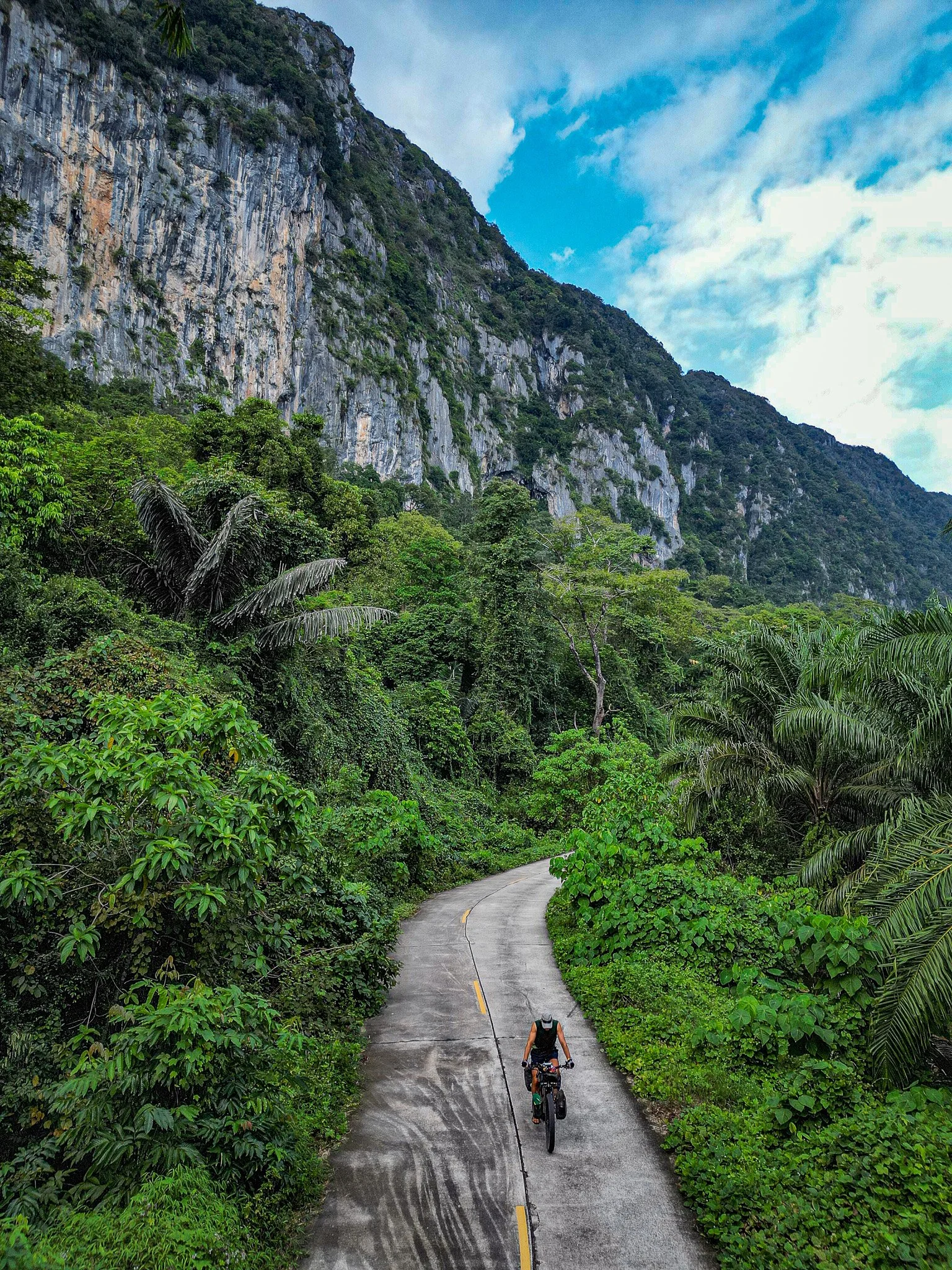
While most of the cycling in southern Thailand followed the coast, my route was more dictated by following what looked like the quietest roads, including this one near Tha Chana on Day 45.
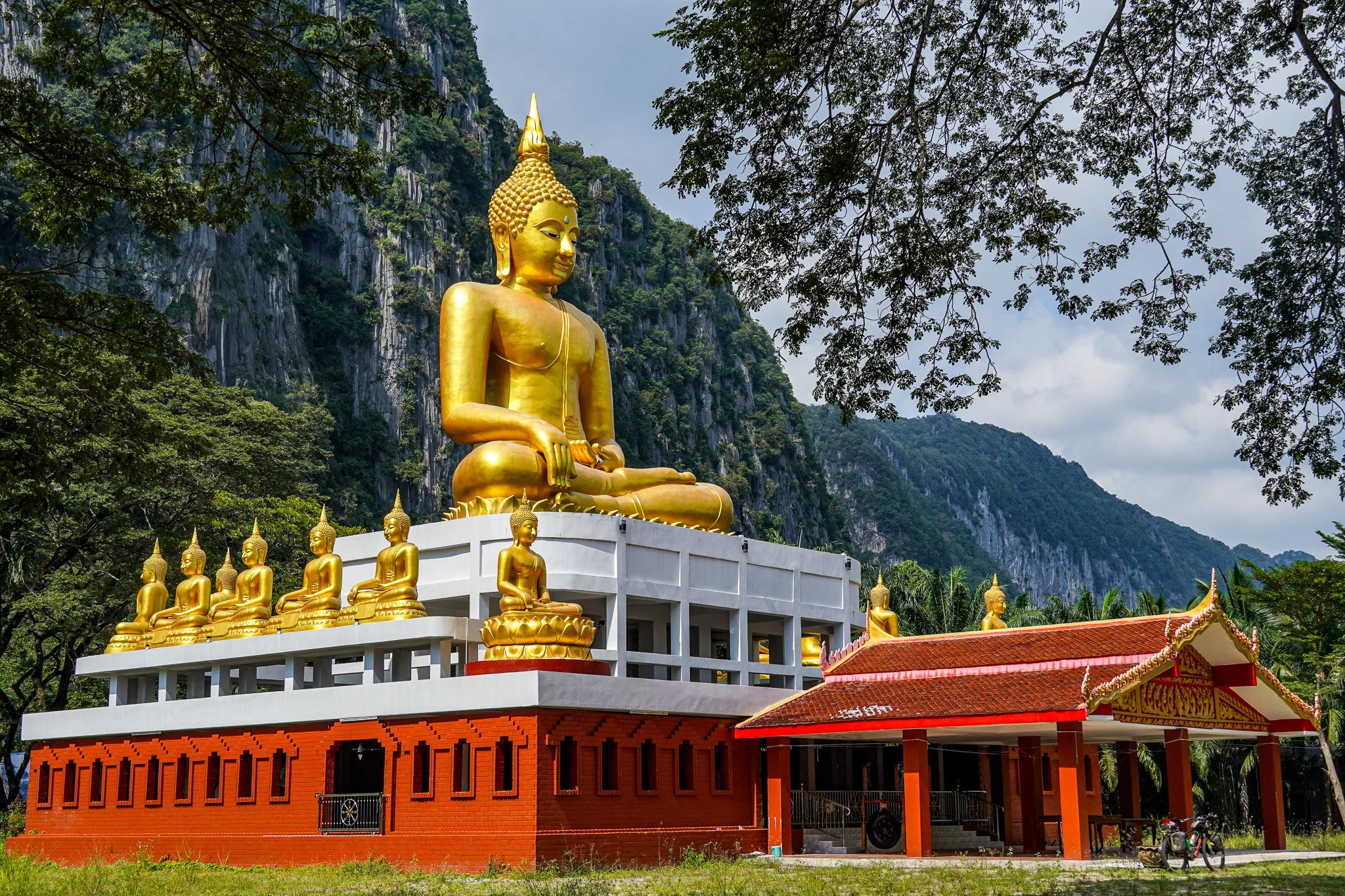
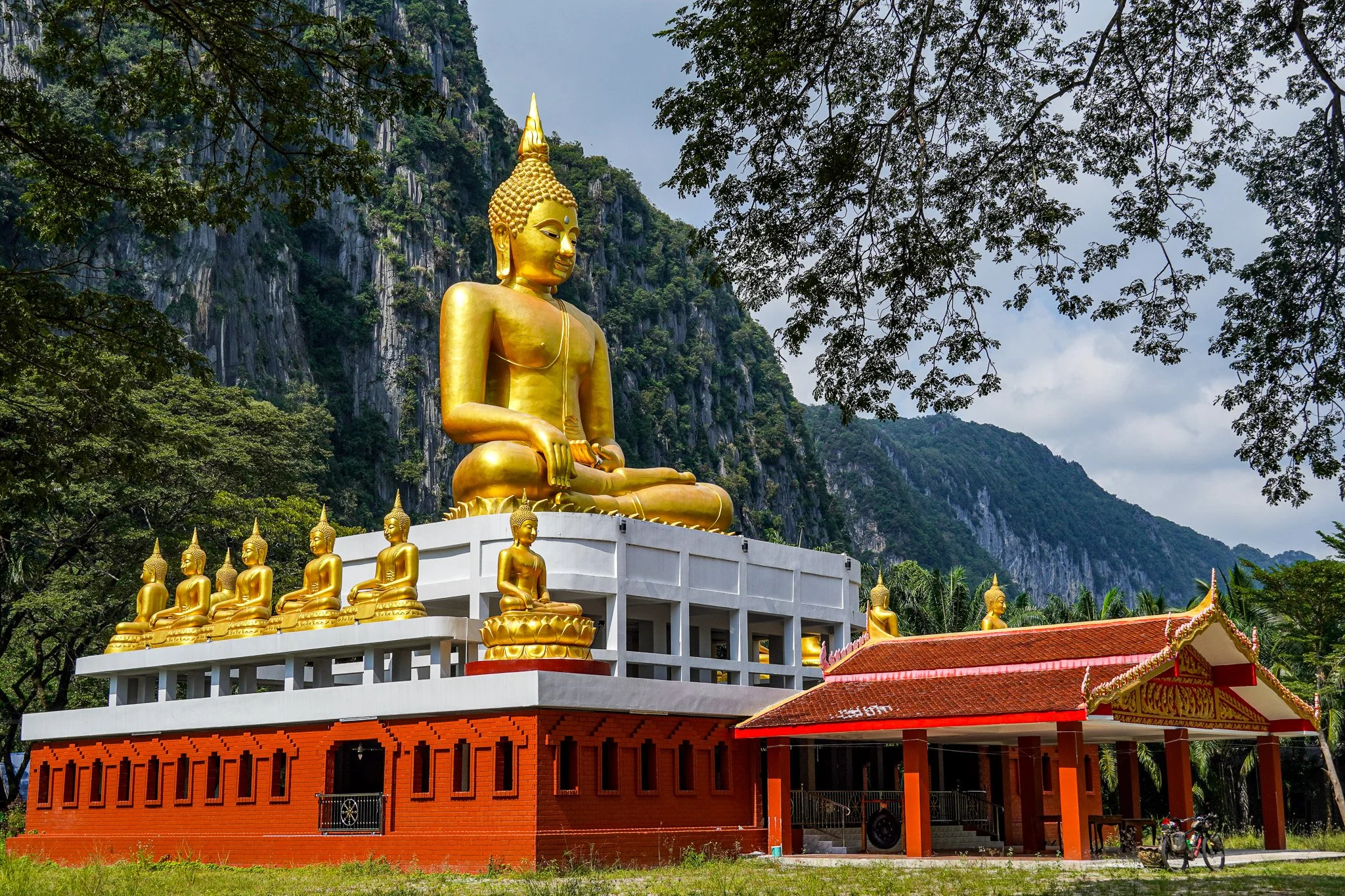
Temple close to Tha Chana.
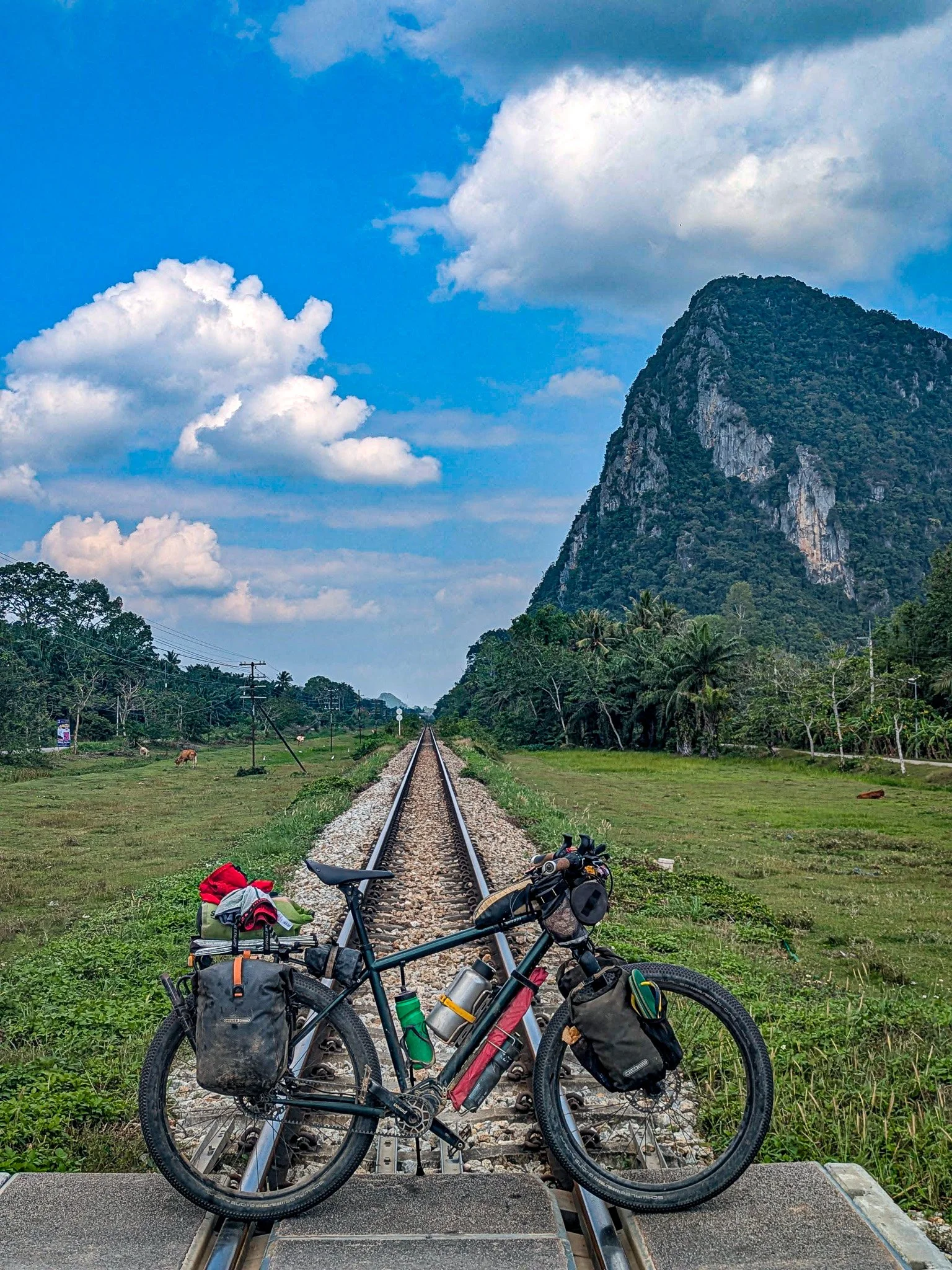
I was often close to the main railway line that runs along the east coast of Thailand.
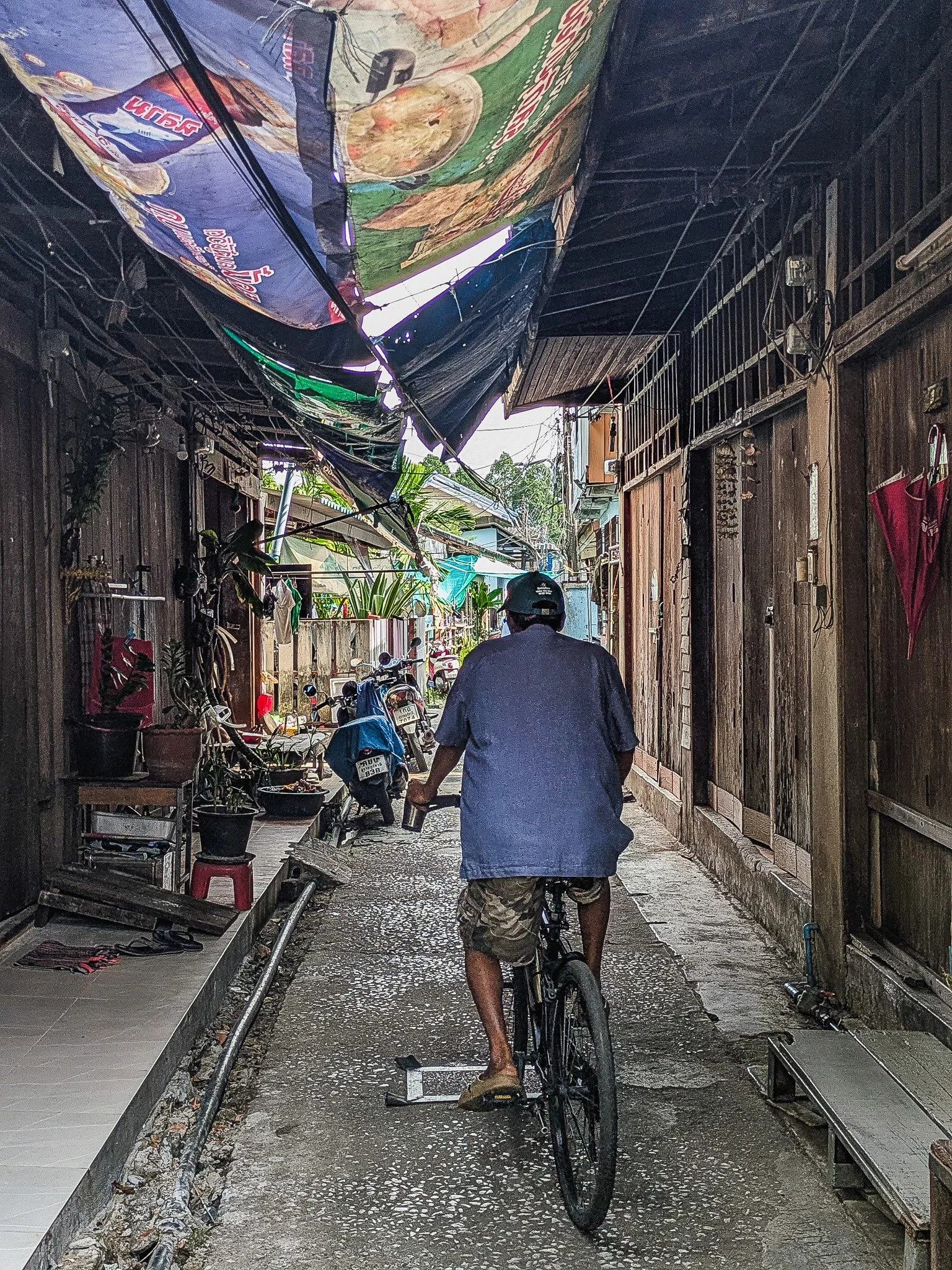
Backstreets in the city of Surat Thani.
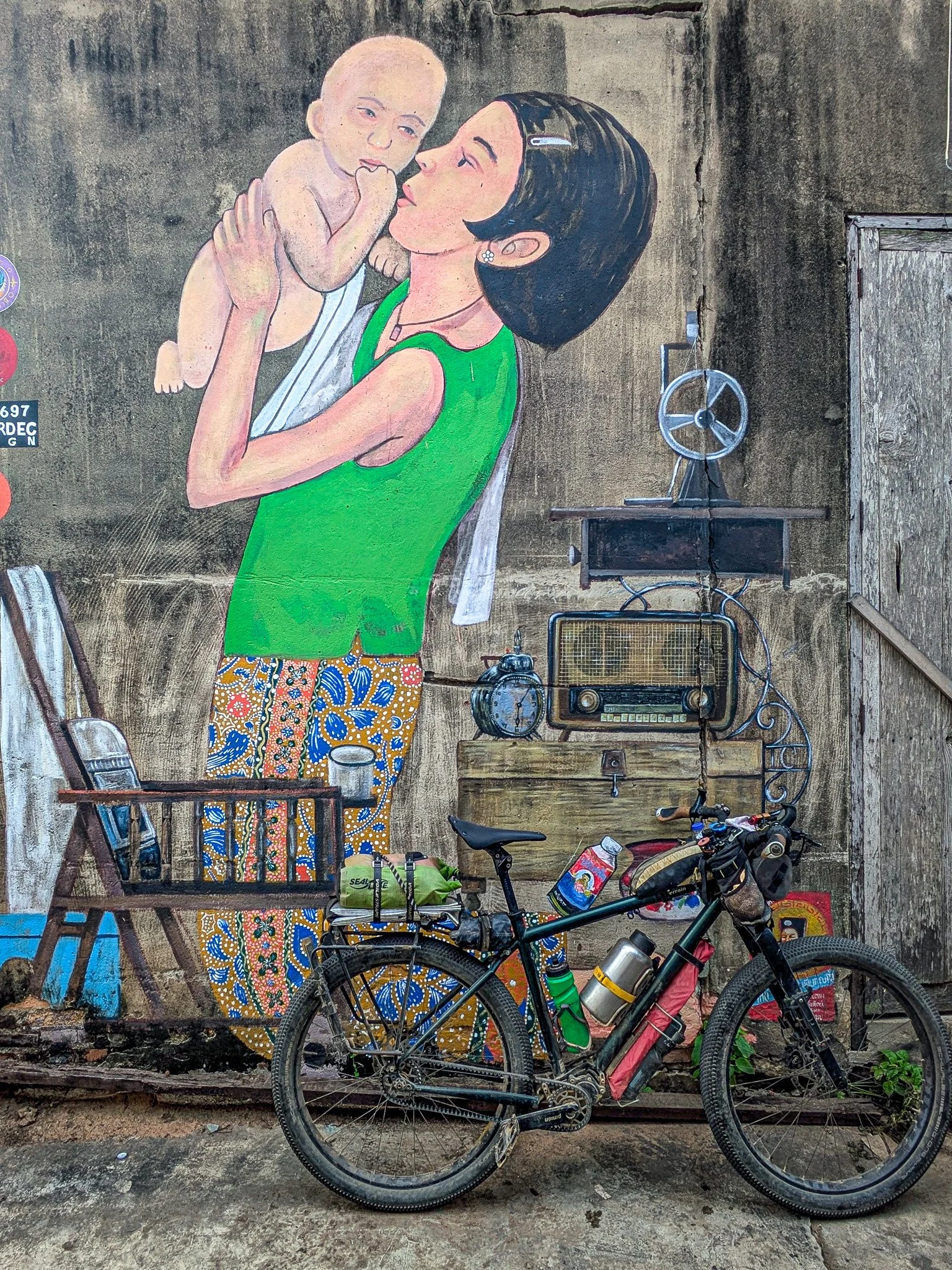
Which has some interesting street art.
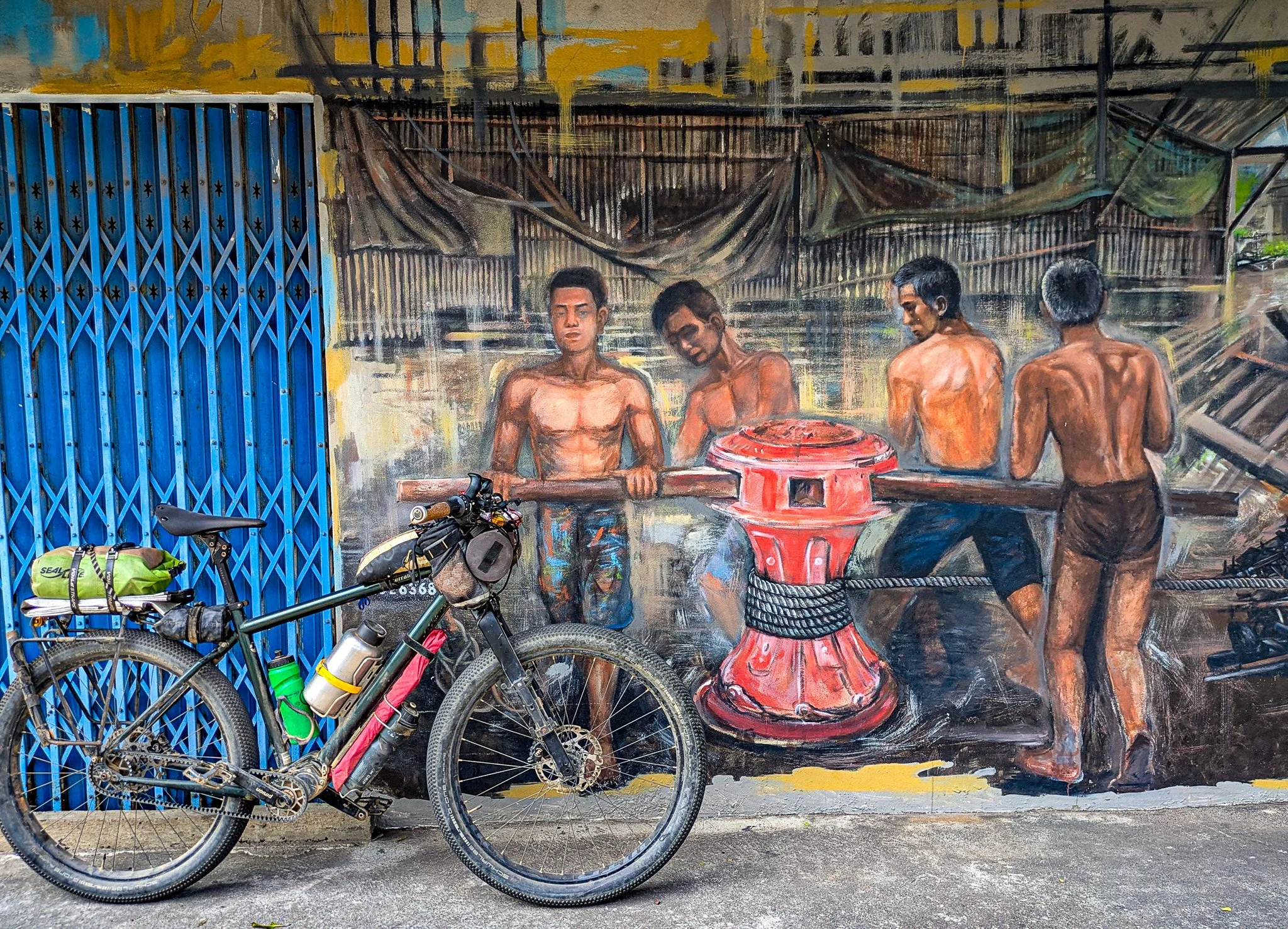
Depicting scenes of its historical sea trading past.
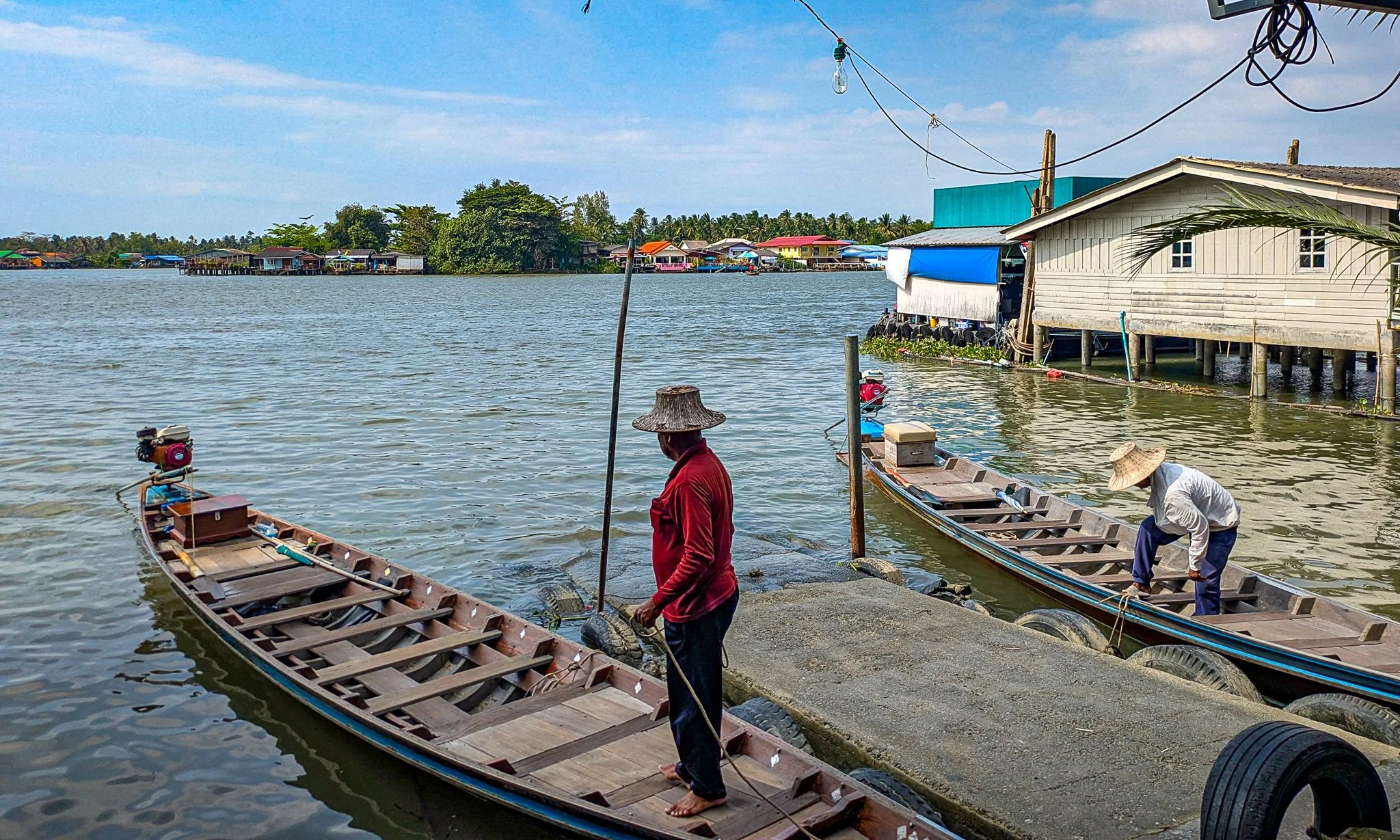
Surat Thani is mostly known as a jumping-off point to reach the popular islands of Koh Pha Ngan and Koh Samui.
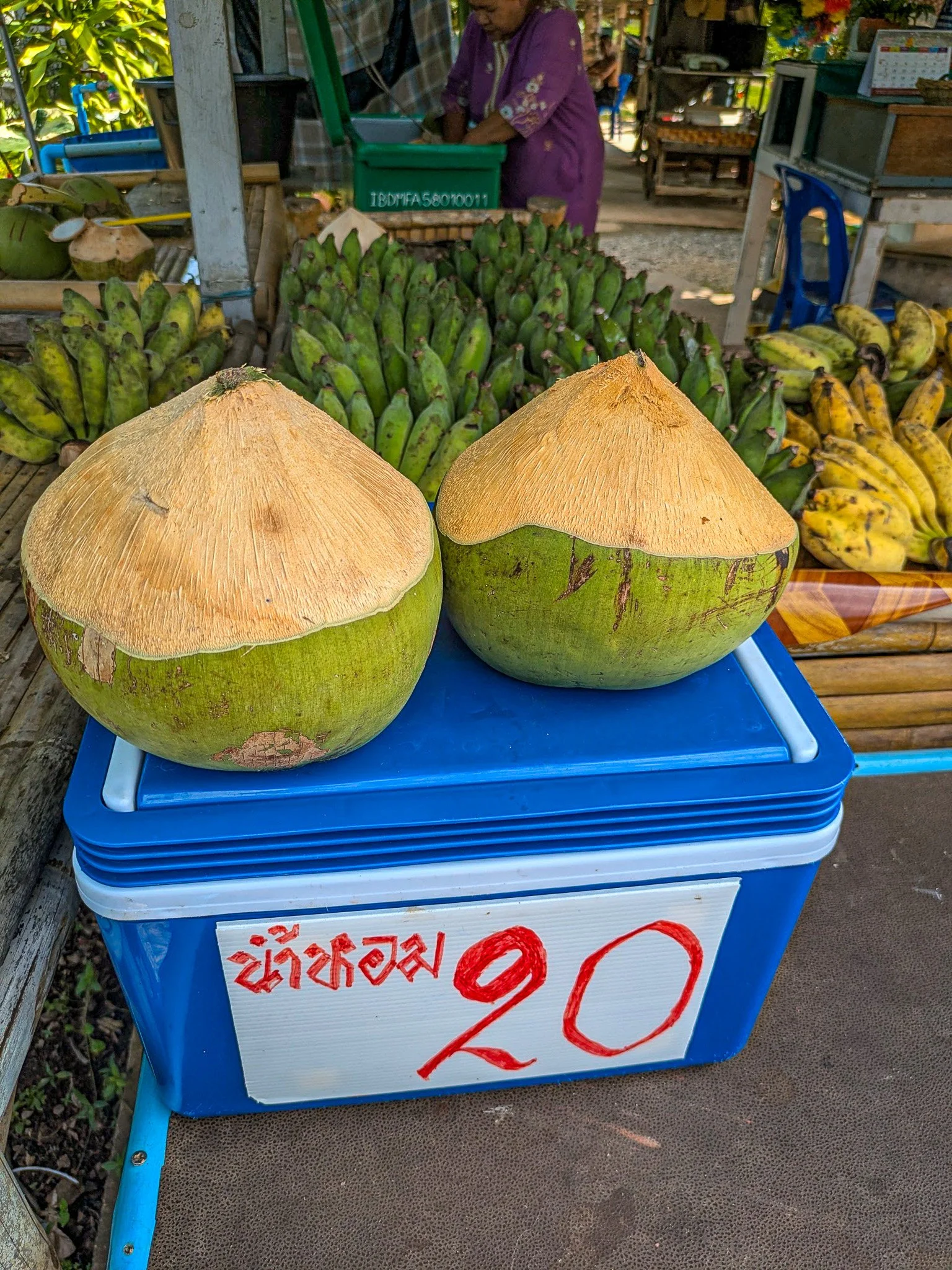
Roadside refreshment. 20 baht around £0.50.
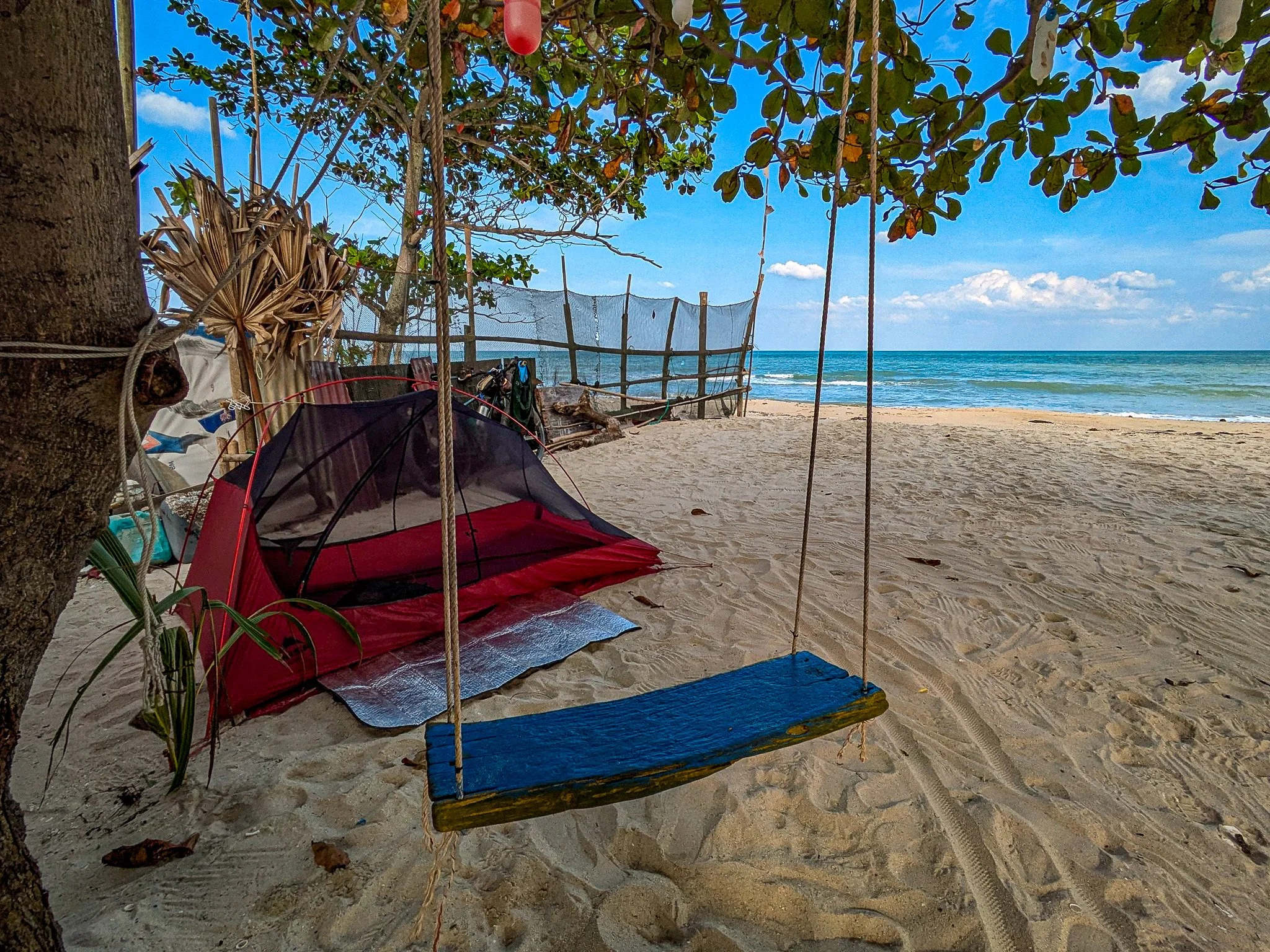
Beach camp south from Khanom. Perfect spot.
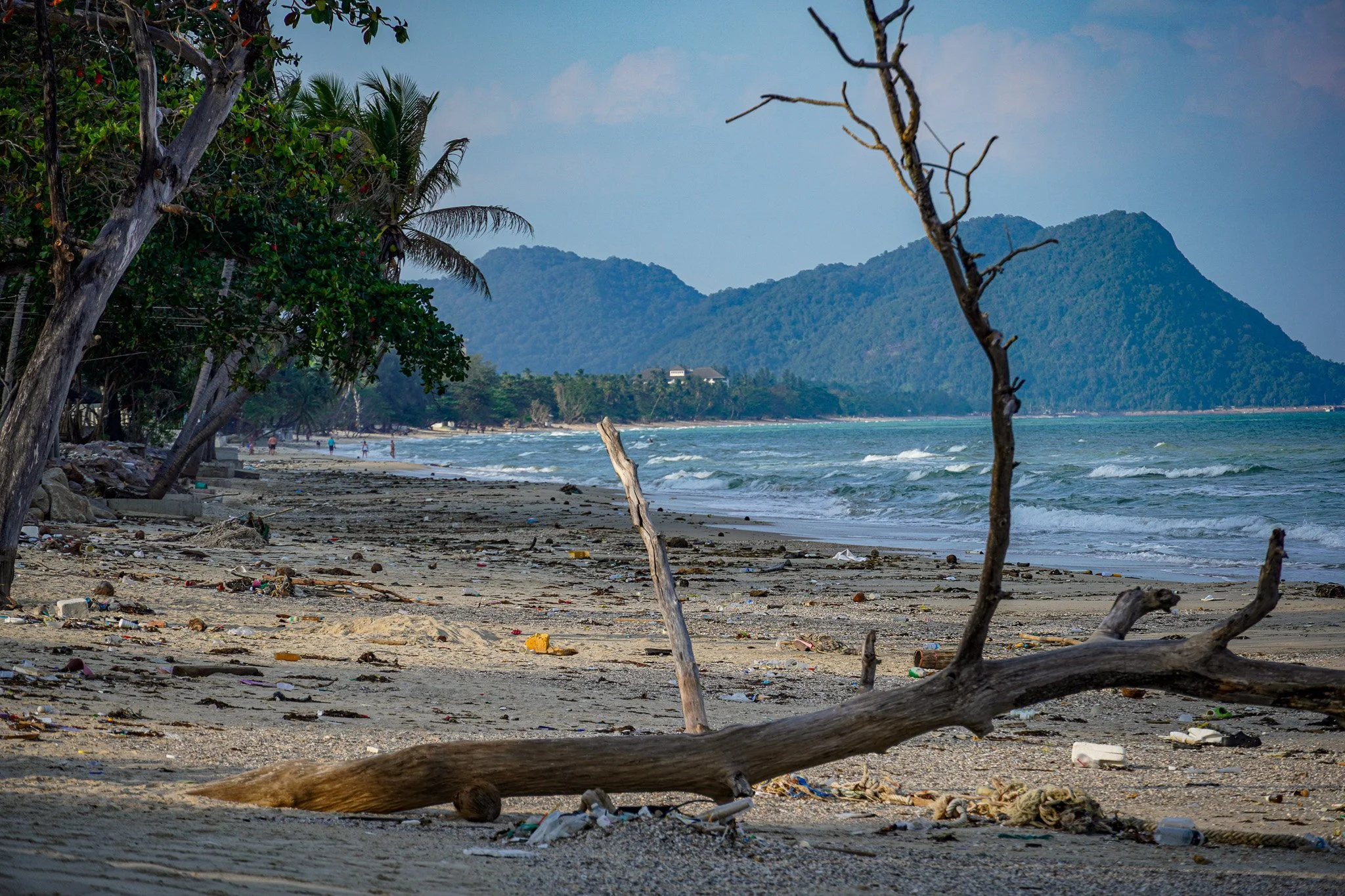
The reality of most of the coastline in Thailand - plastic rubbish - everywhere!
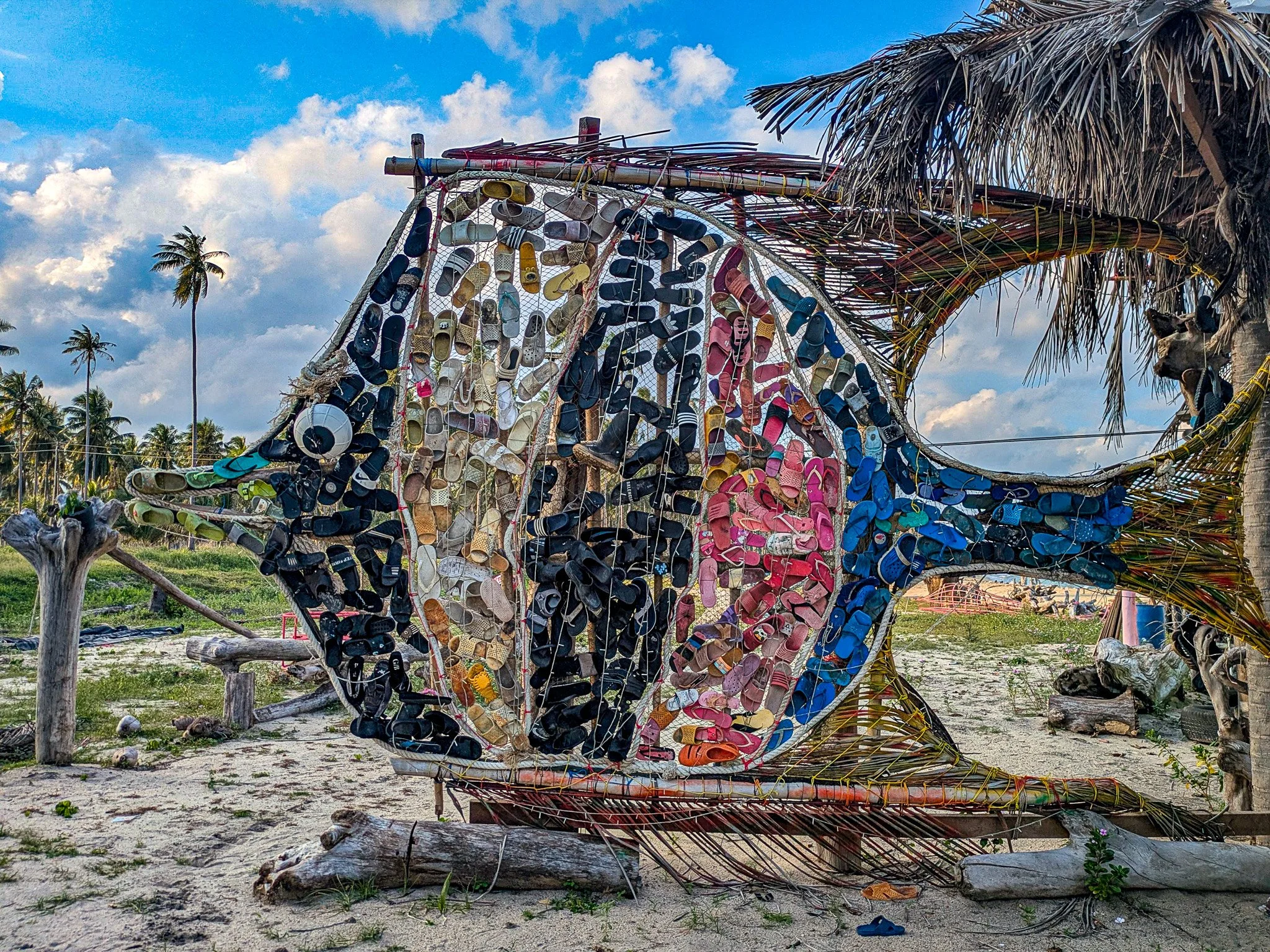
Someone had the creative idea to do something with all the plastic footwear that washes up on the beach.
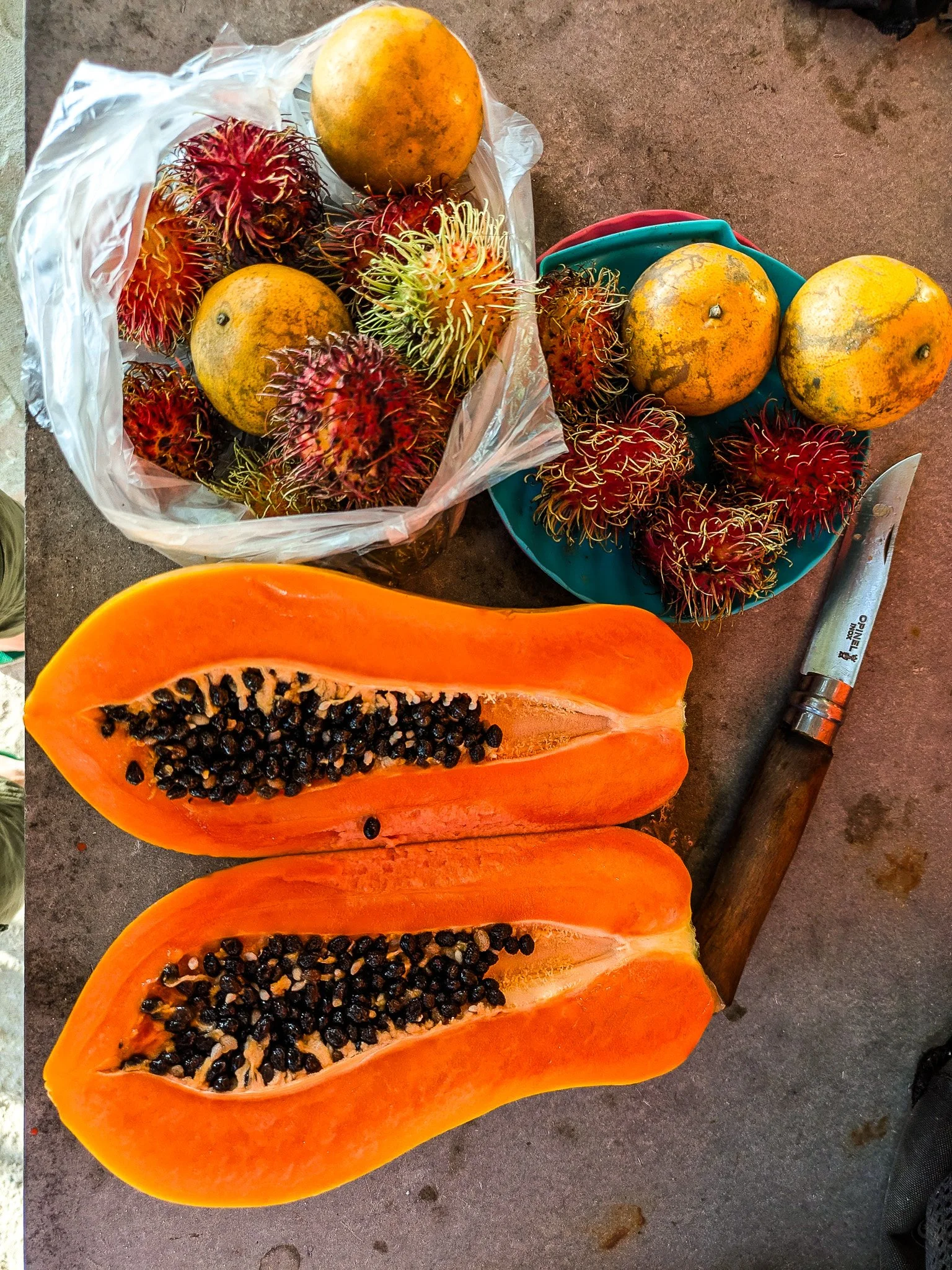
Beach breakfast.
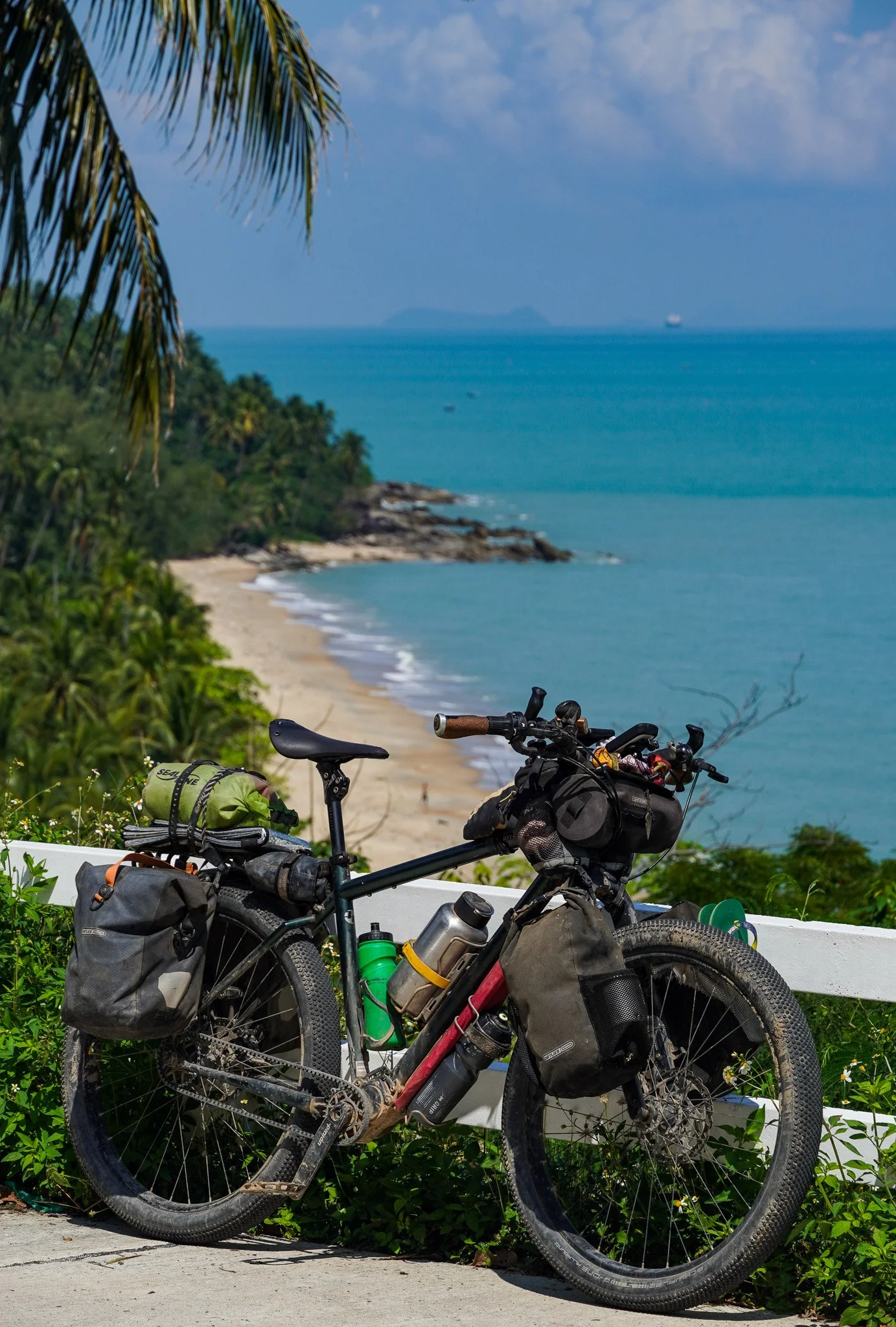
Most of the cycling I did in southern Thailand was on paved roads.
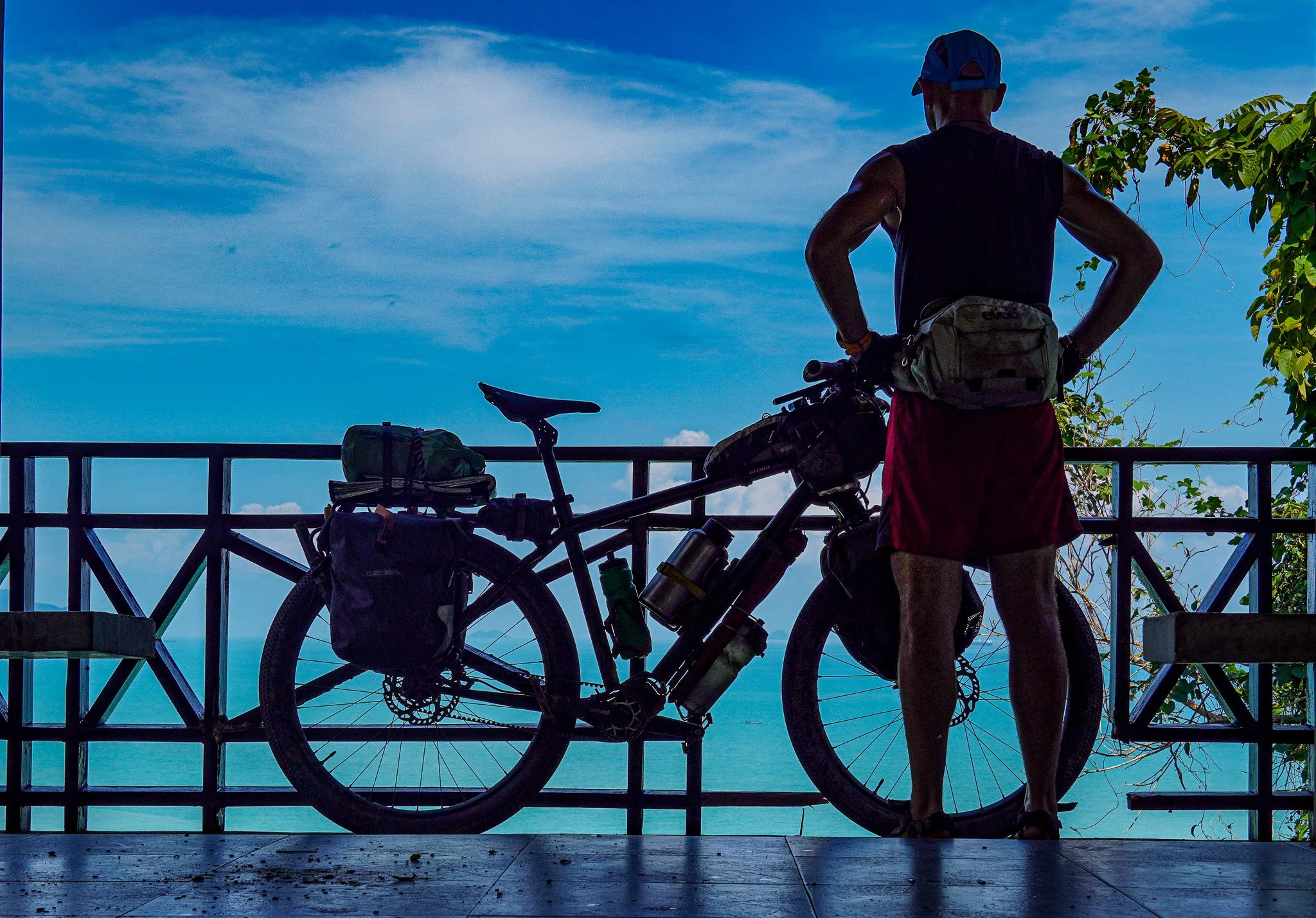
Shade stop. Daytime temps in January were around 30-35°C.
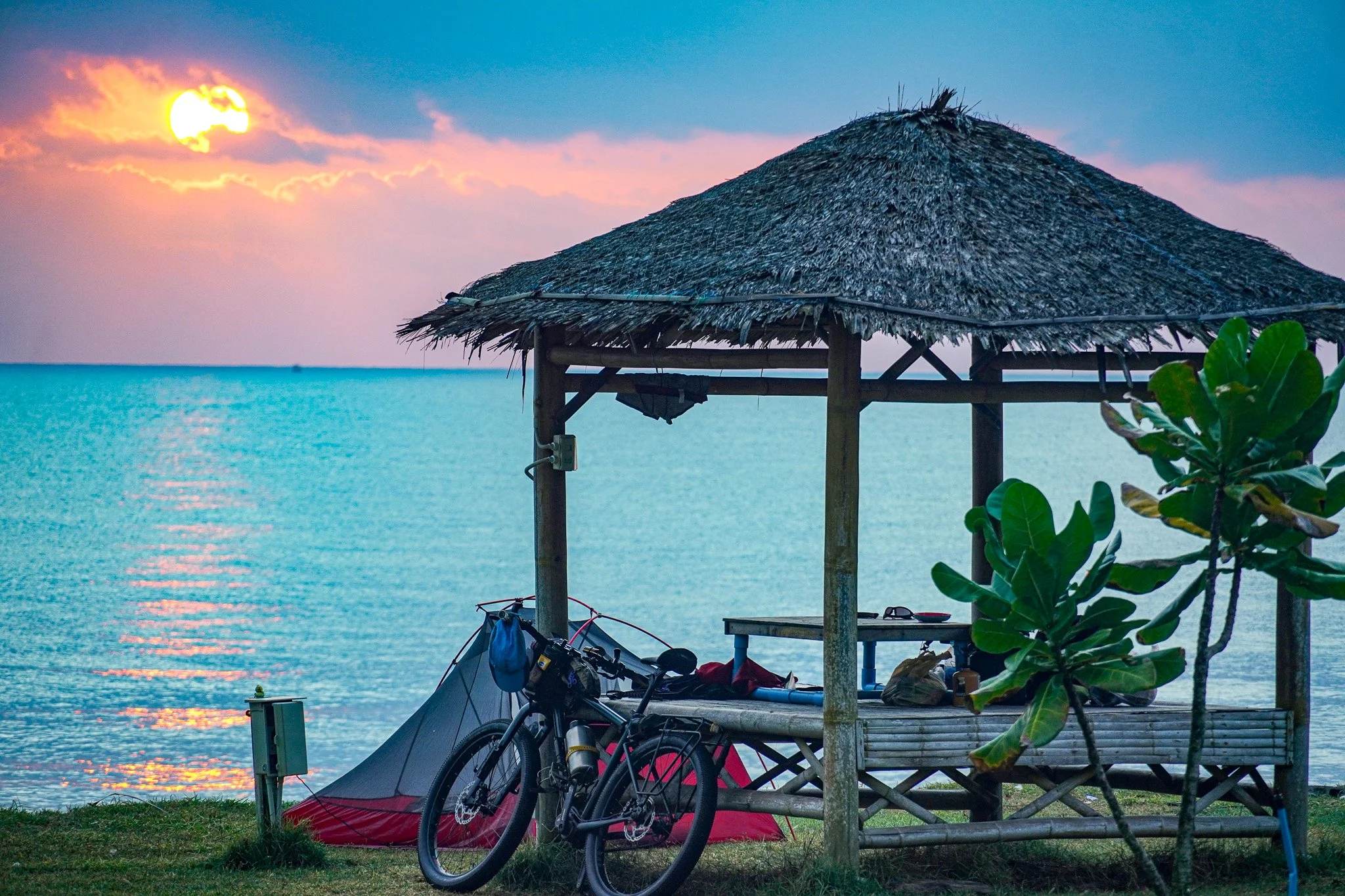
Campsite at the end of Day 48. Originally I envisaged wild camping on beaches, but campsites were cheap and a lot more convenient.
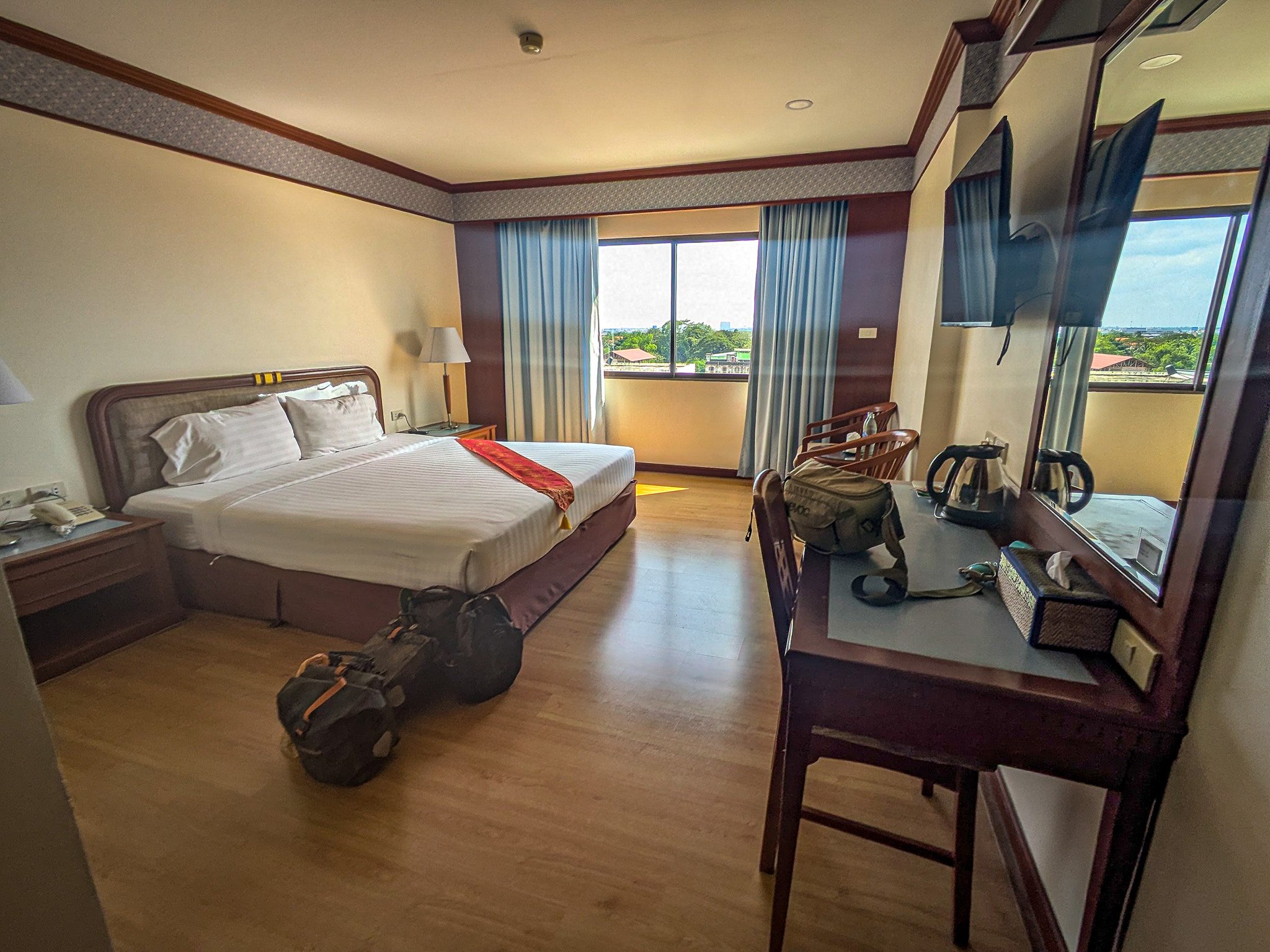
Hotel in the city of Nakhon Si Thammarat. I expected the price to be more than the £12 I paid. Another advantage of staying in places not frequented by tourists is that prices are all generally lower.
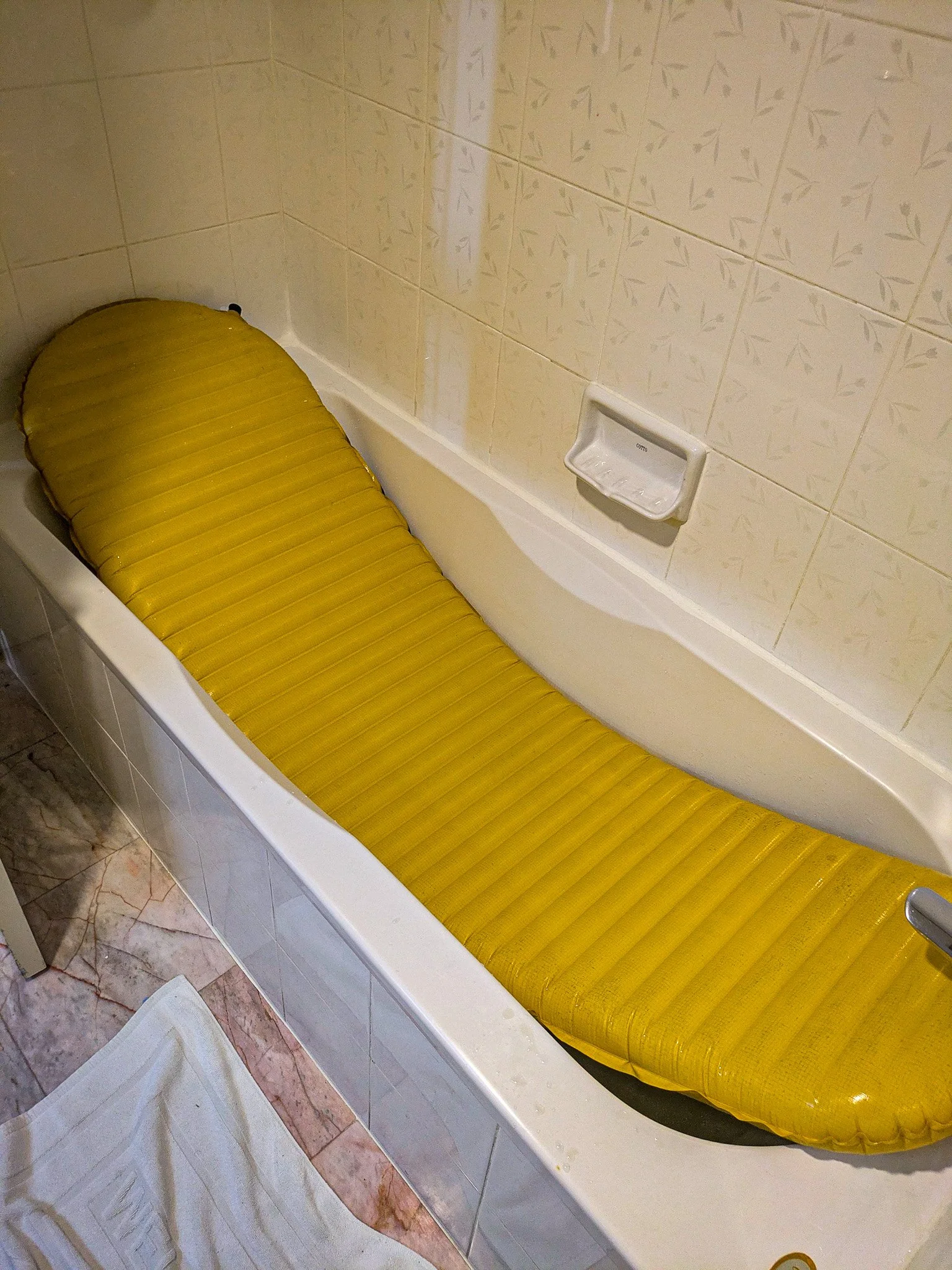
Searching for a mysterious leak. My air mattress was slowly losing air overnight, but it was impossible to find any air bubble.
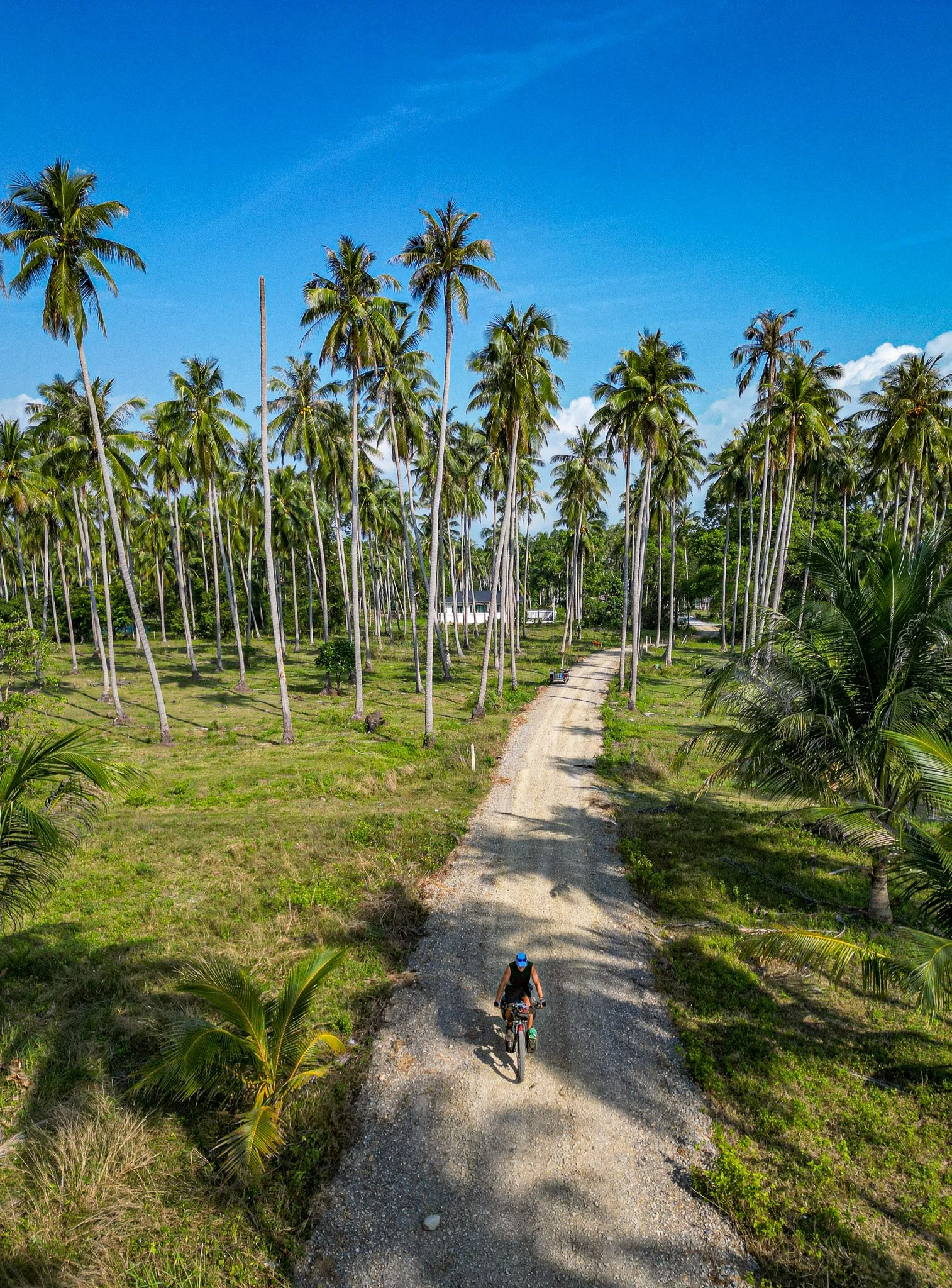
More beautiful palm plantations and quiet gravel tracks as I push further south towards Pattani.
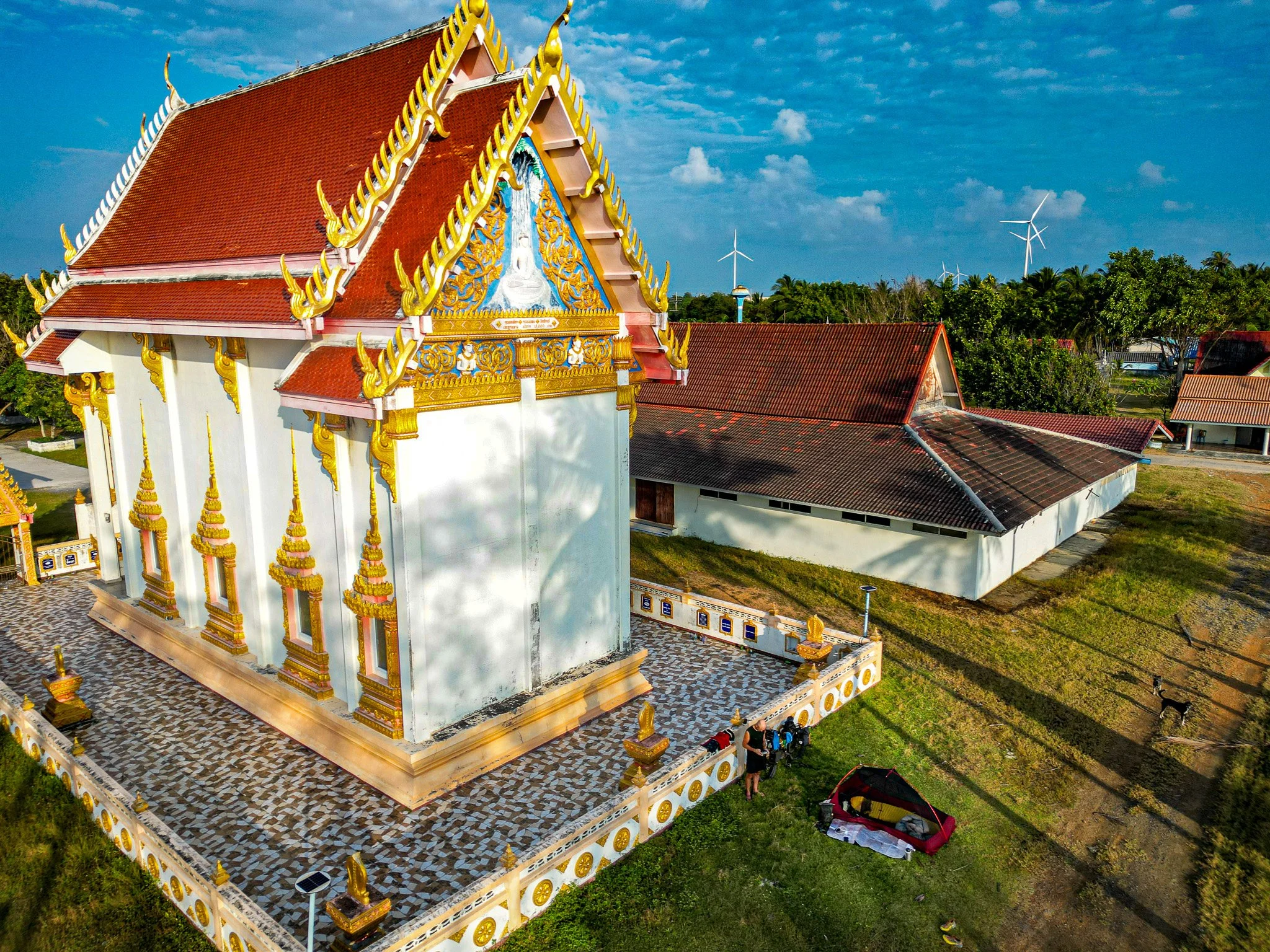
Final temple camp in Thailand. Peaceful with no dogs keeping me awake.
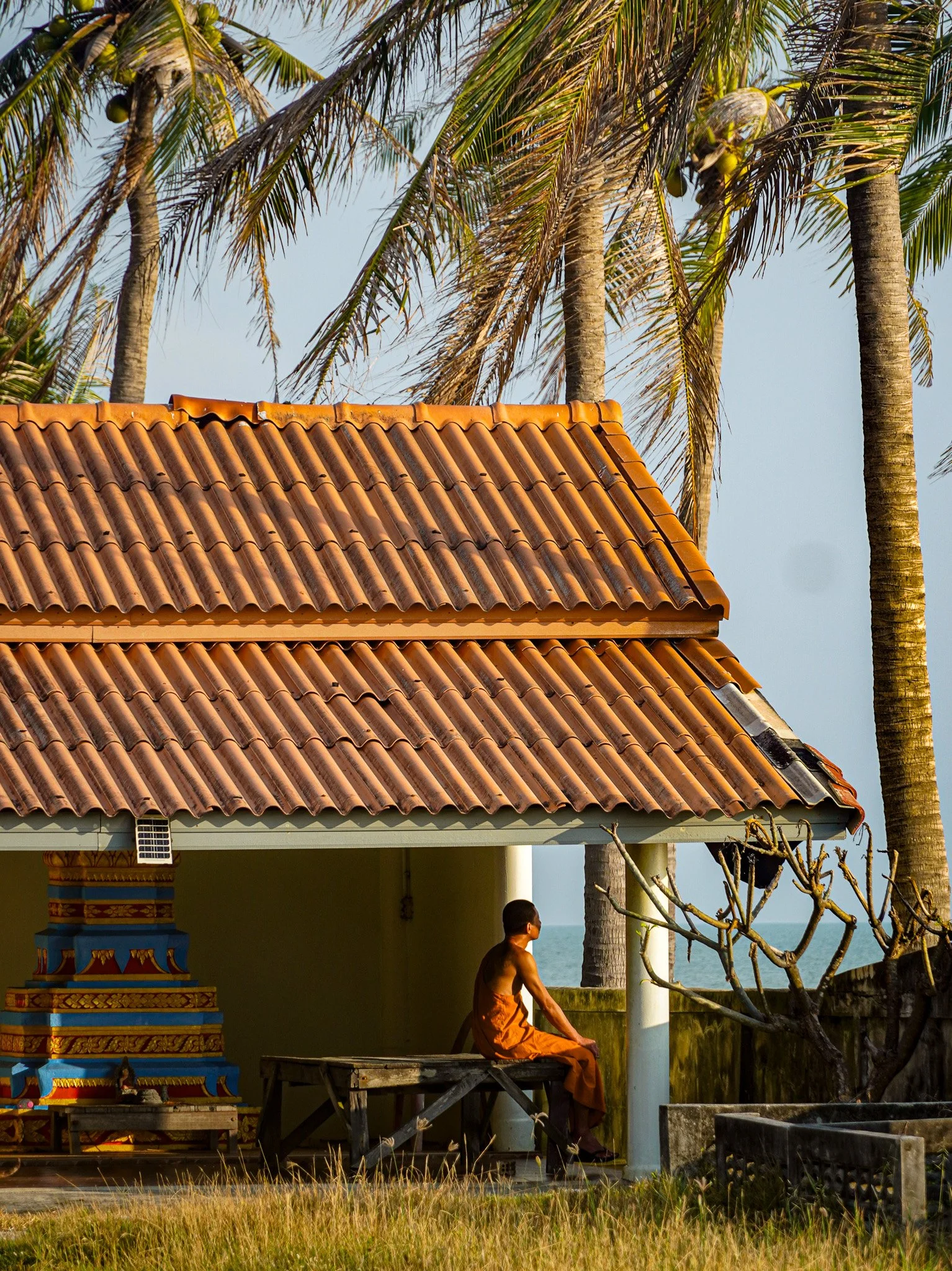
This temple a few metres behind the beach.
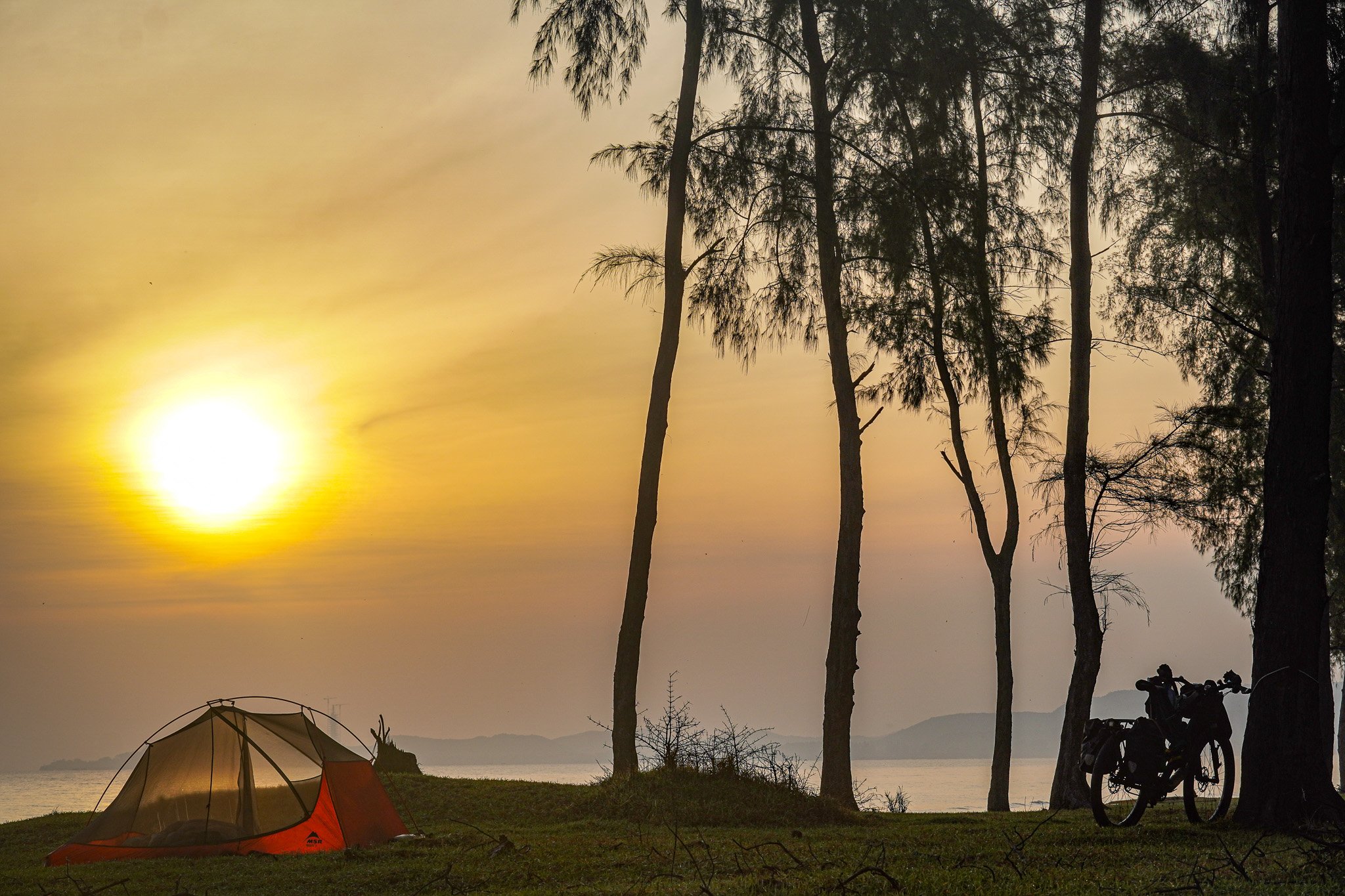
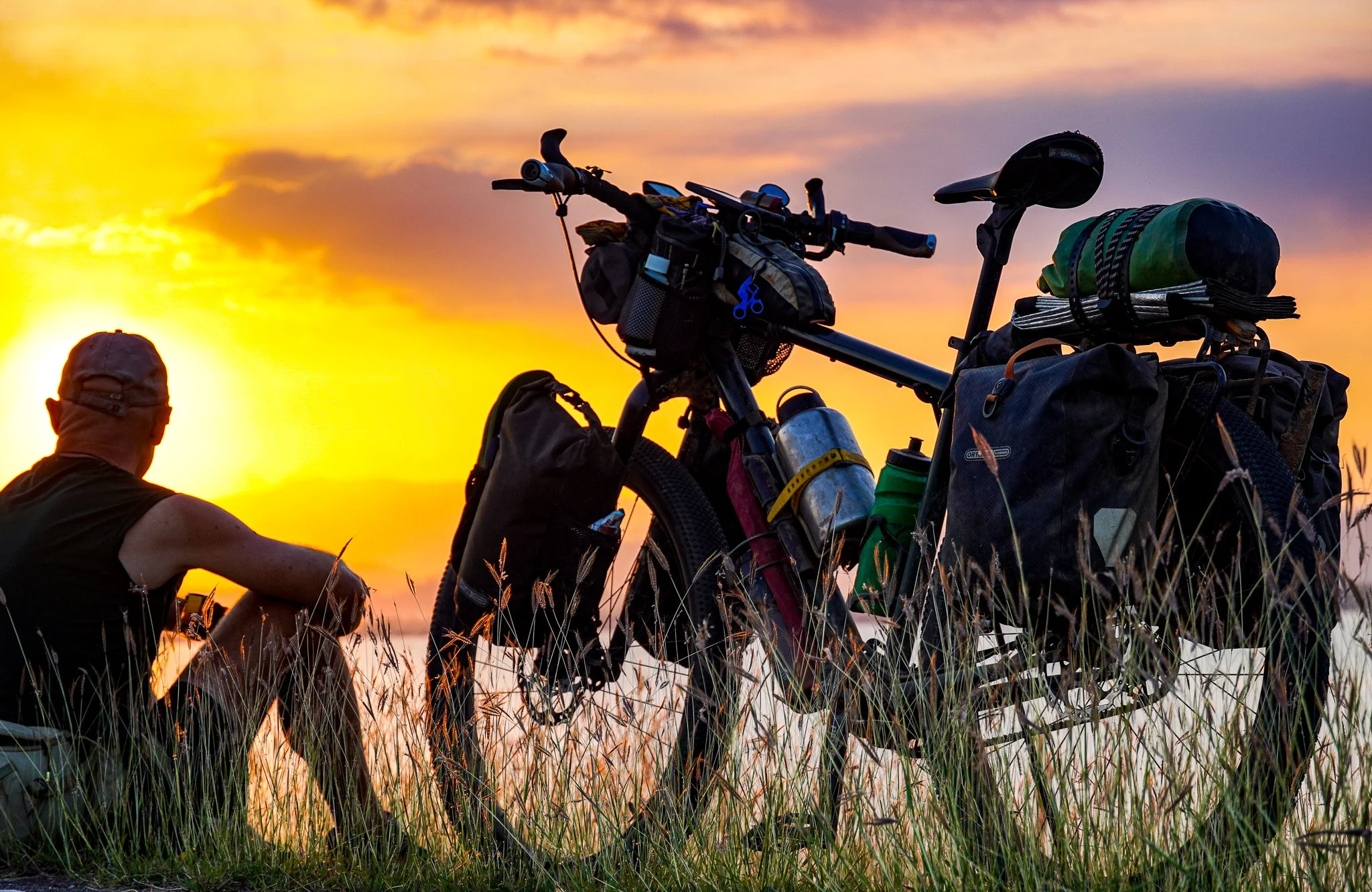
Last beach camp in Thailand. Another great spot.
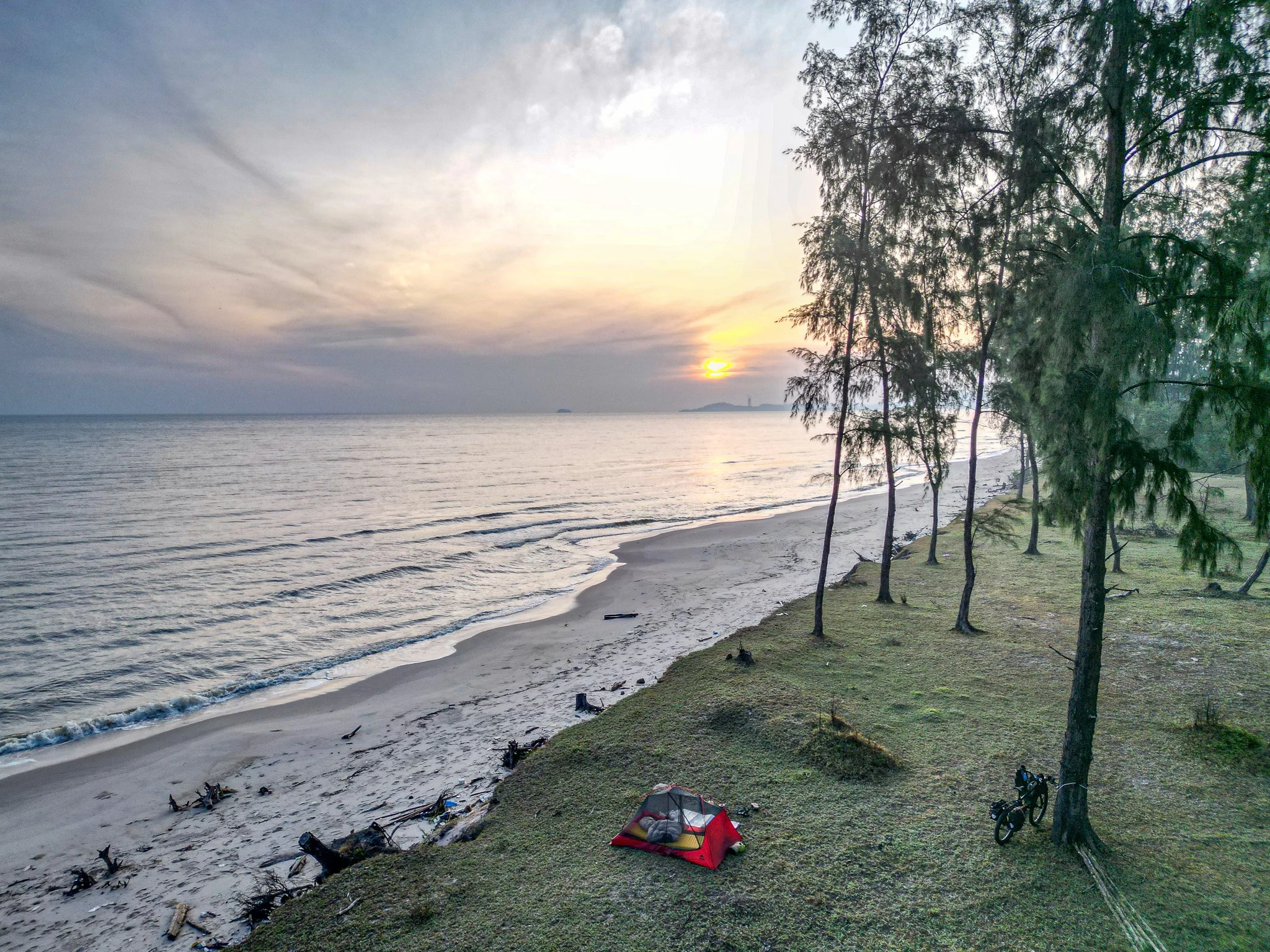
Far enough away from any road to ensure no visits during the night time, but I generally felt very safe when wild camping in Thailand.
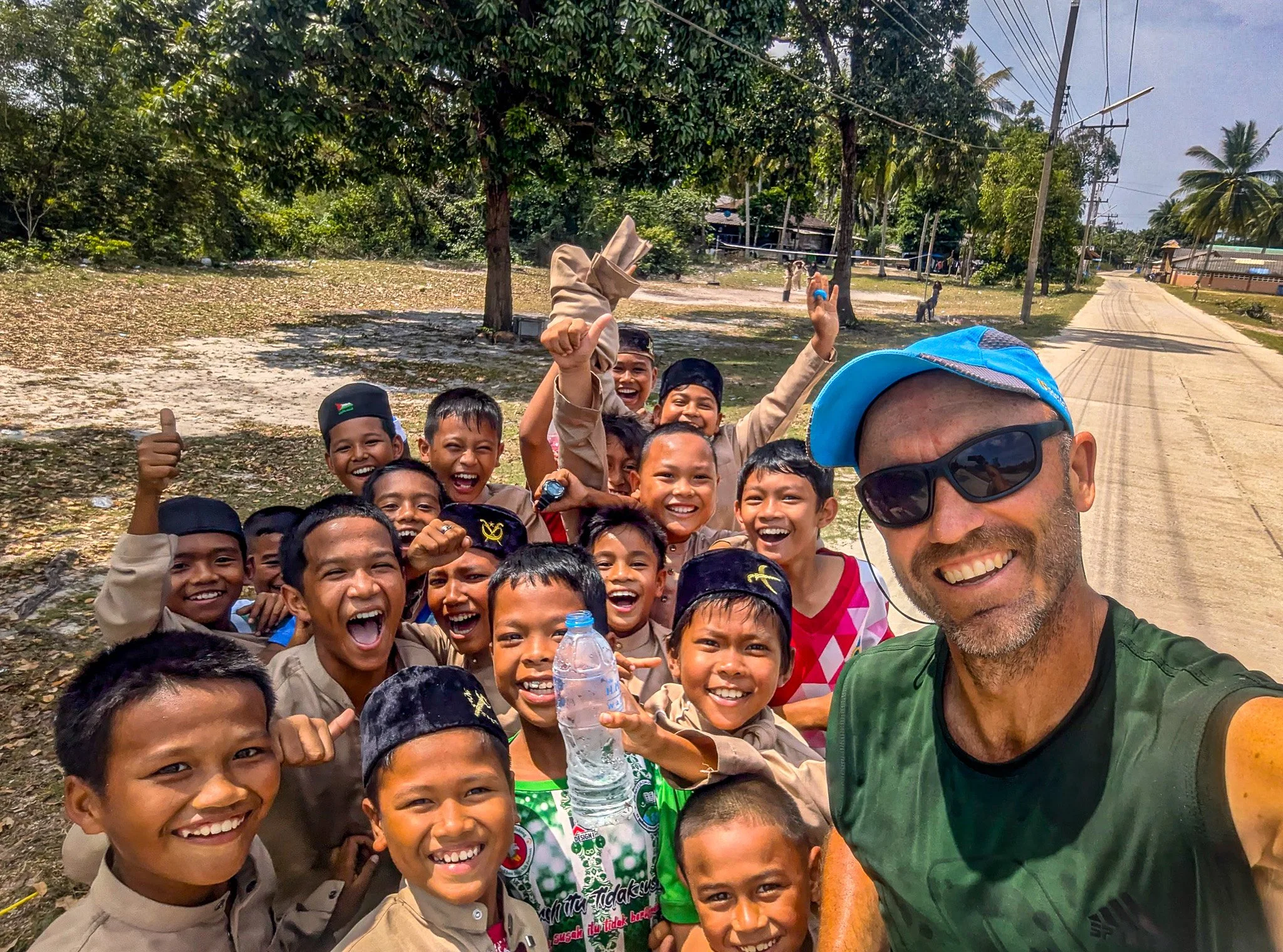
Muslim Thailand. The provinces in the far south of Thailand are predominantly Muslim. Once part of what was an independent Malay sultanate, there has been a long standing conflict with the Thai state. While the region is seen as being less secure, and travel advice usually warns against visiting, I found the people welcoming and friendly.
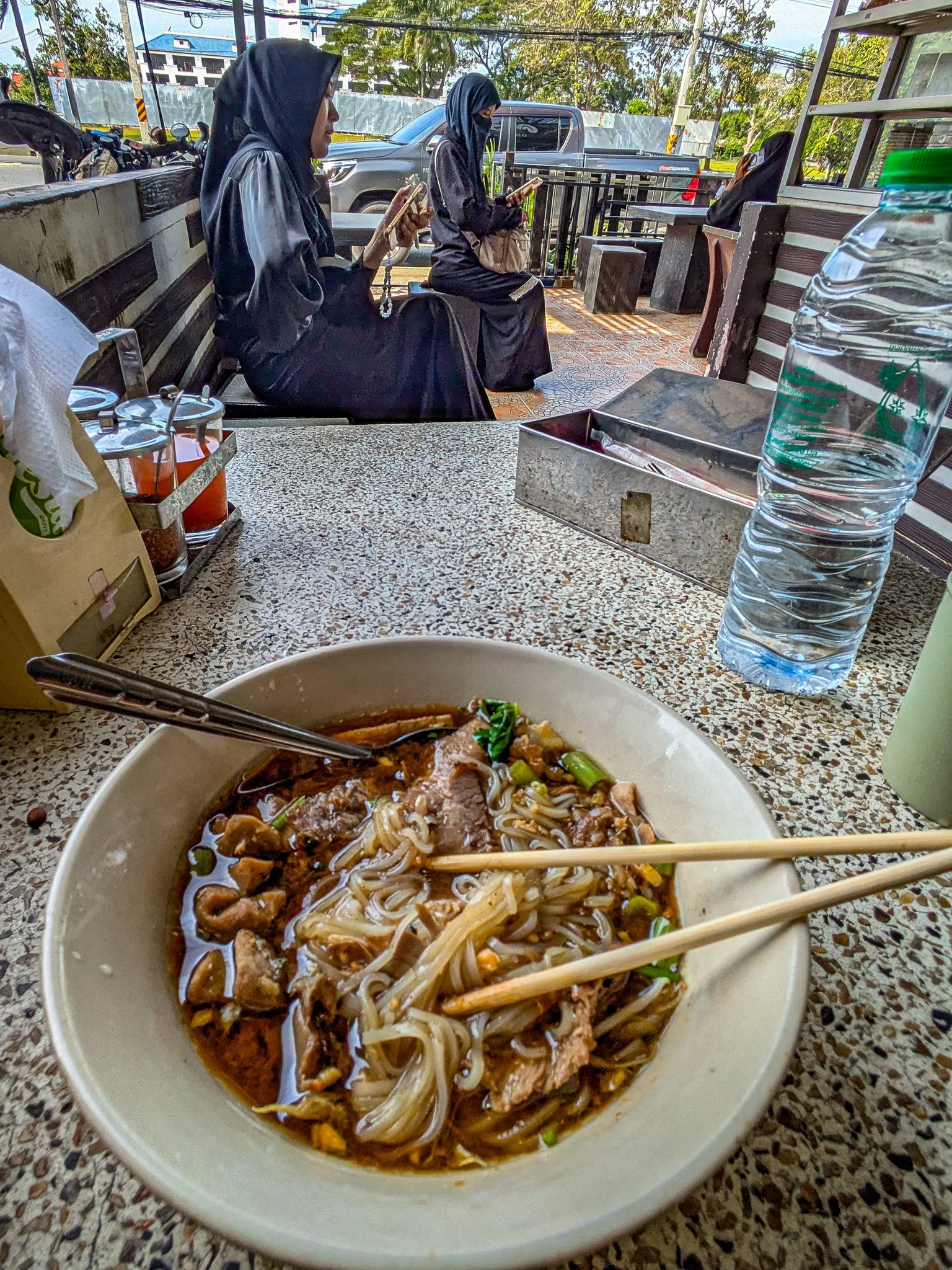
Lunch in Pattani.
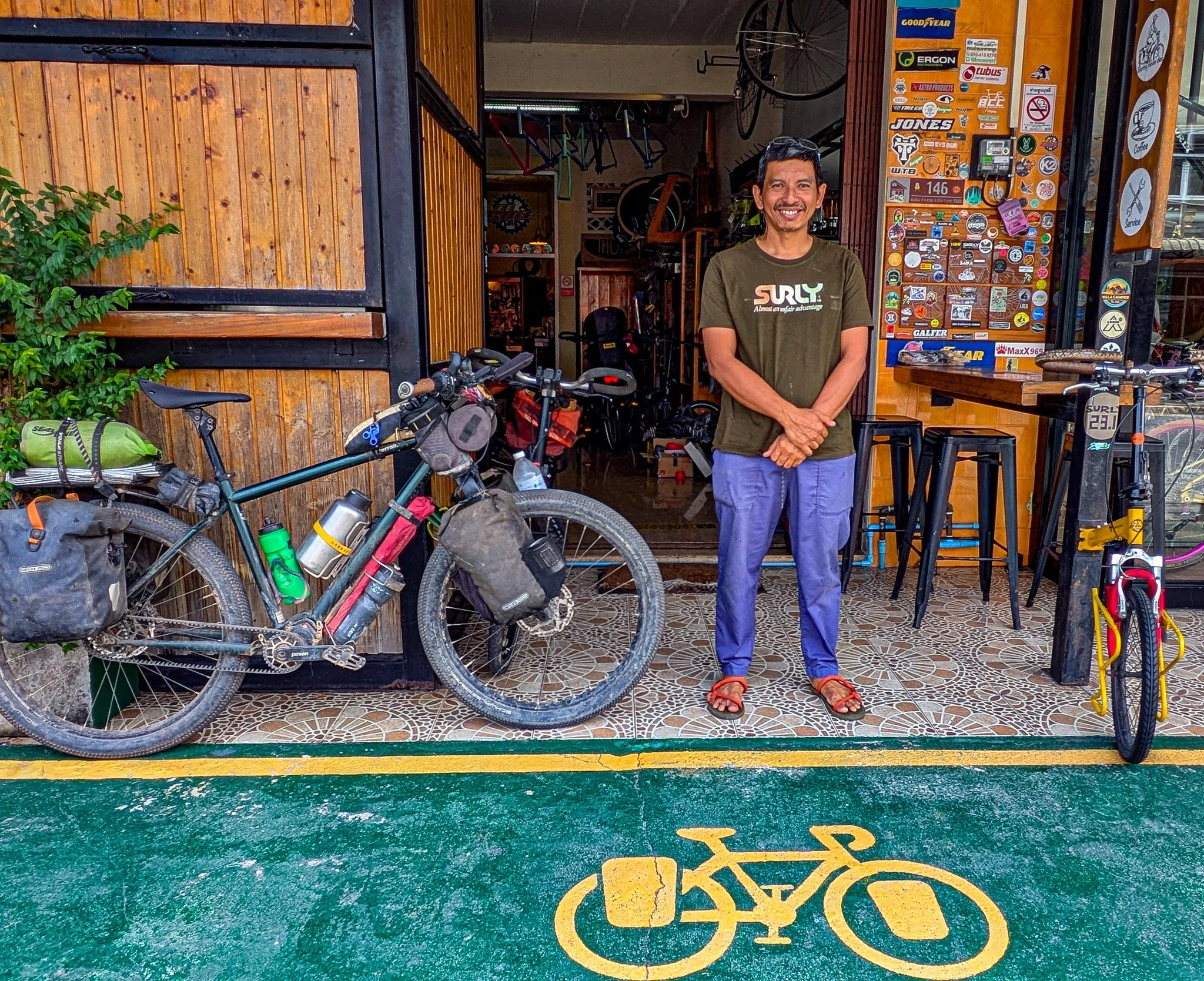
Visiting Vee’s bike shop in the hot and dusty town of Yala. A very incongruous location for what is a specialist bike shop, mostly stocking touring bicycles from the likes of Surly, Velotraum and Thorn.
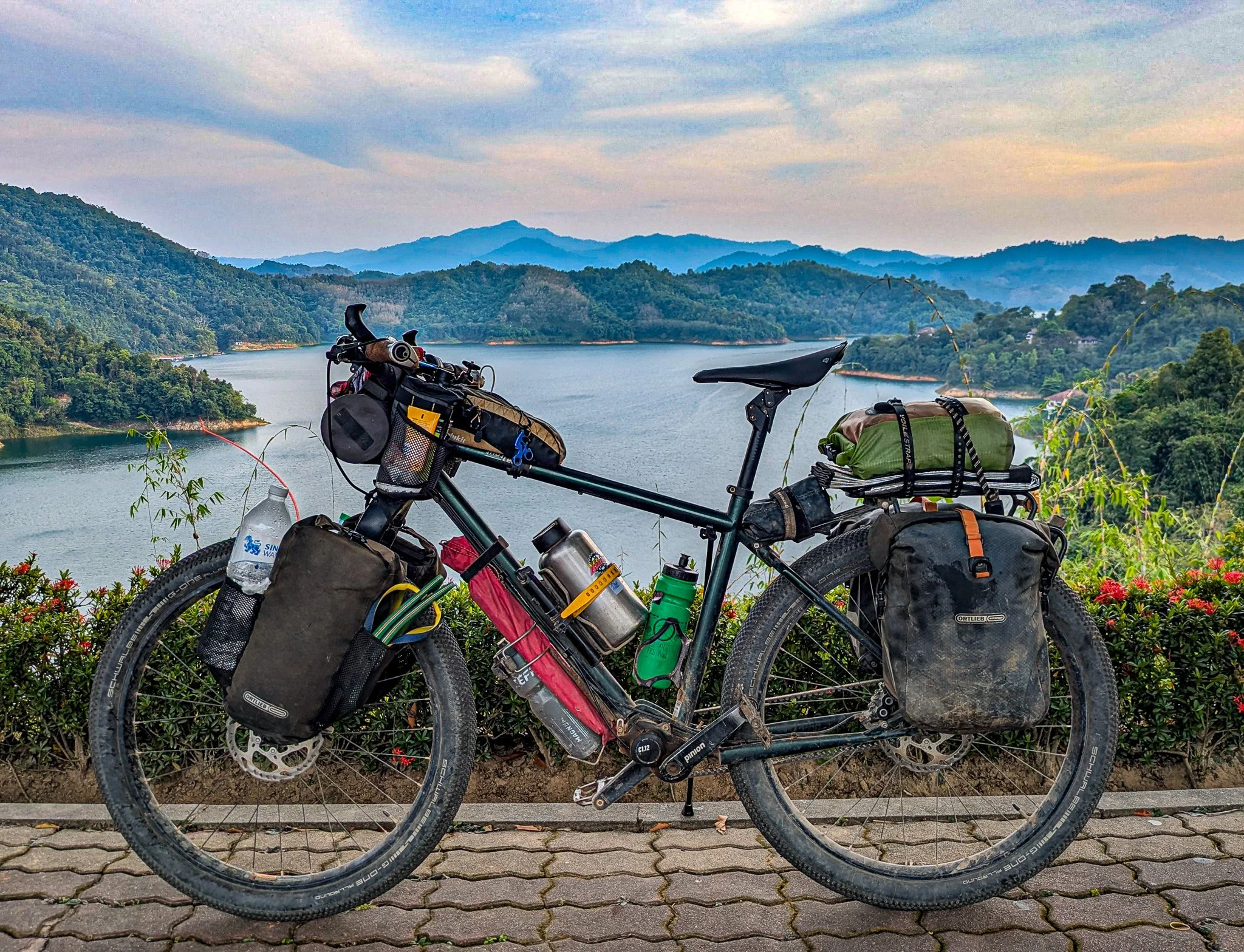
Banglang Dam, on the way to the Malaysian border.
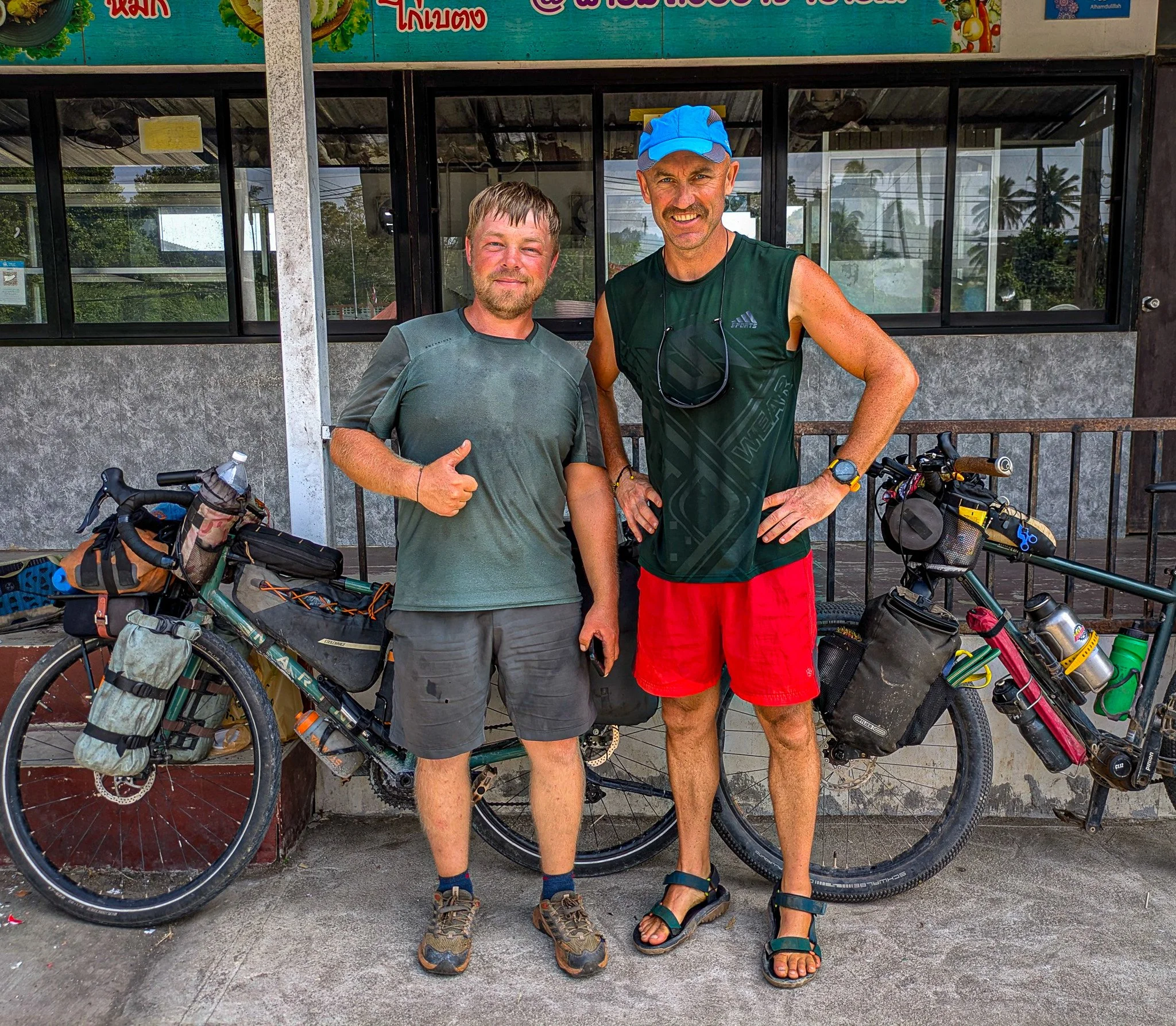
One of the few cyclists I met in southern Thailand was this Russian guy. He was cycling north. He spoke as much English as I speak Russian, so we used Google translate for a chat outside a 7-11.
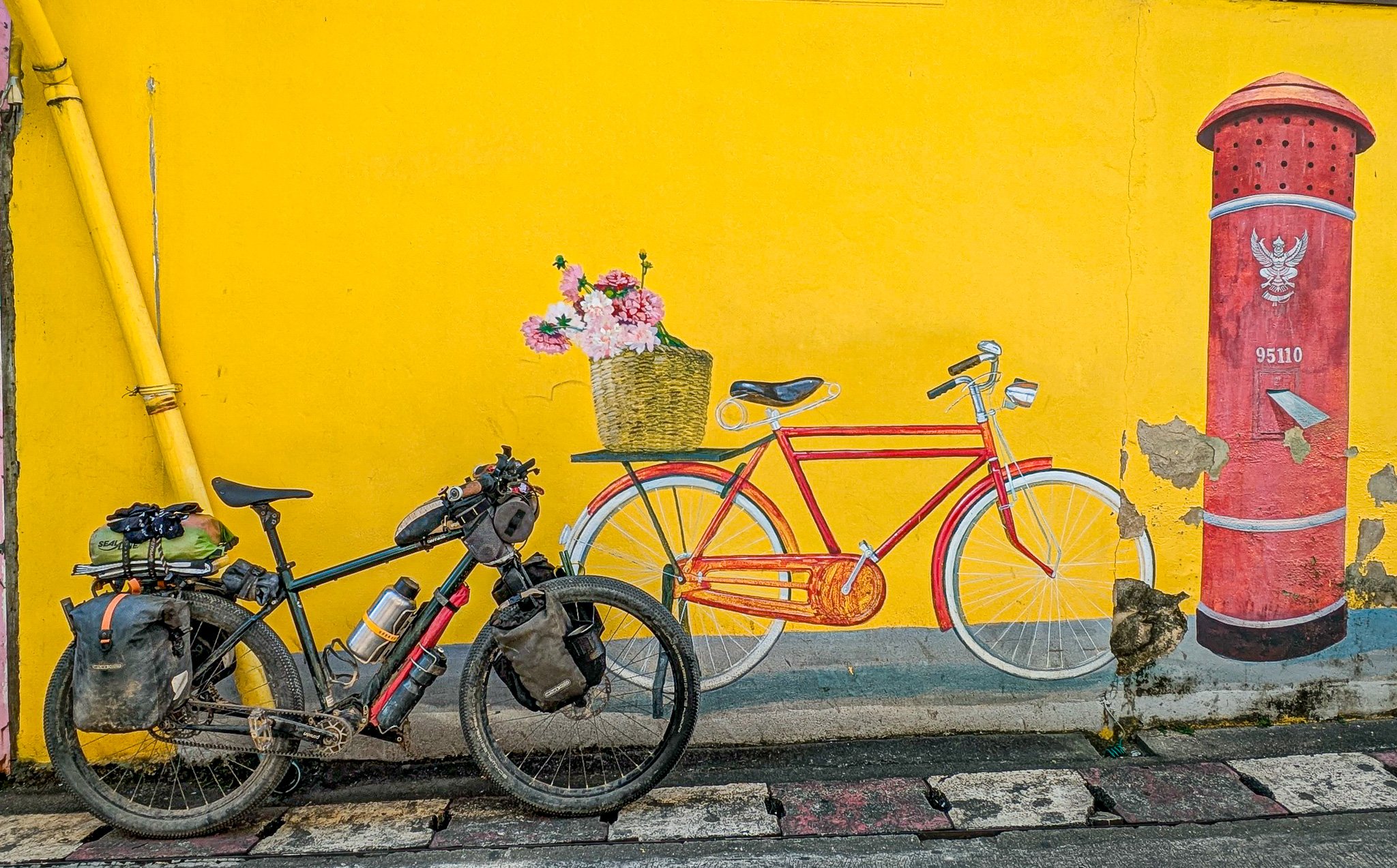
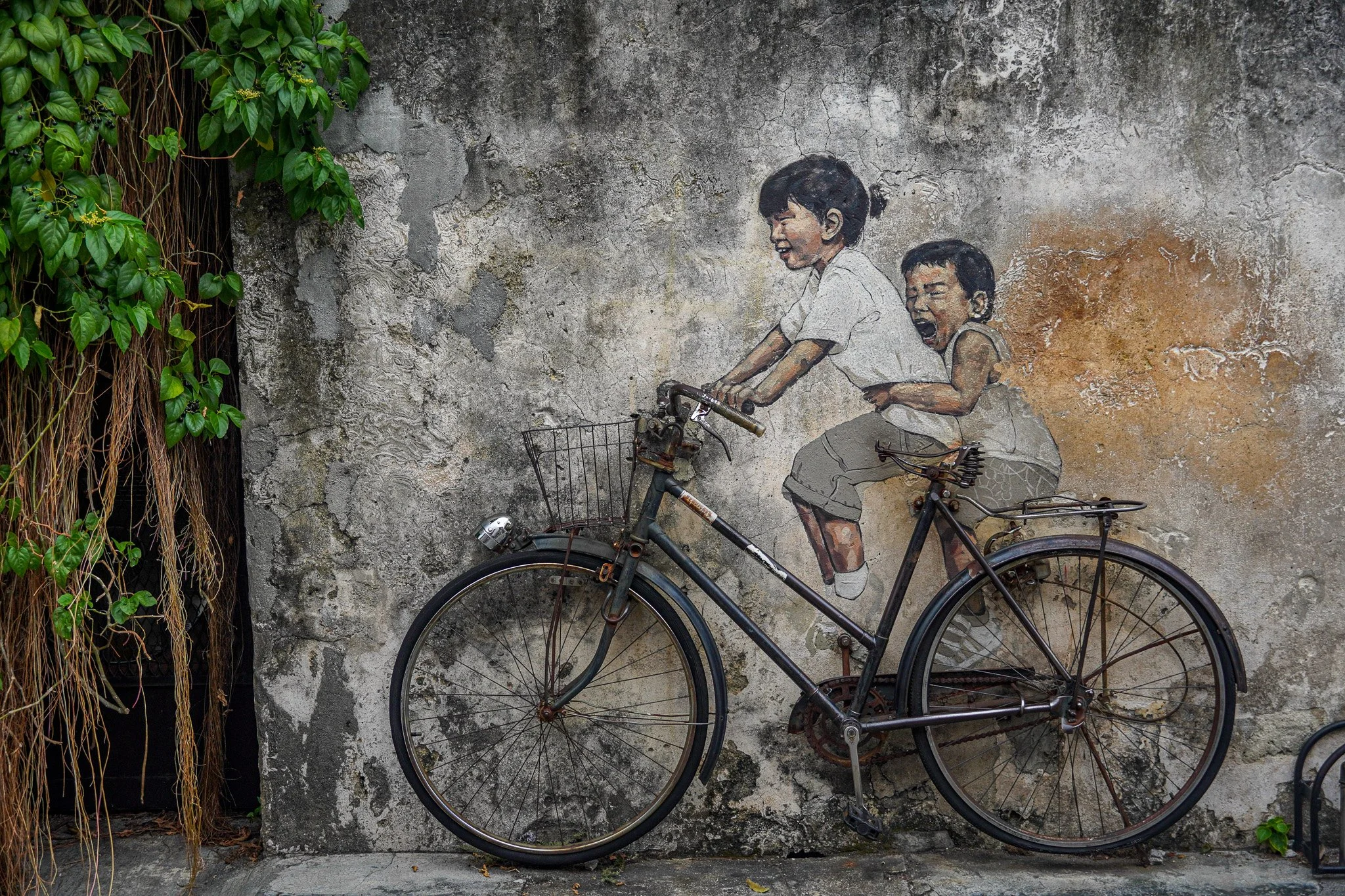
Street art in the town of Betong, a few kilometres from the Malaysian border.
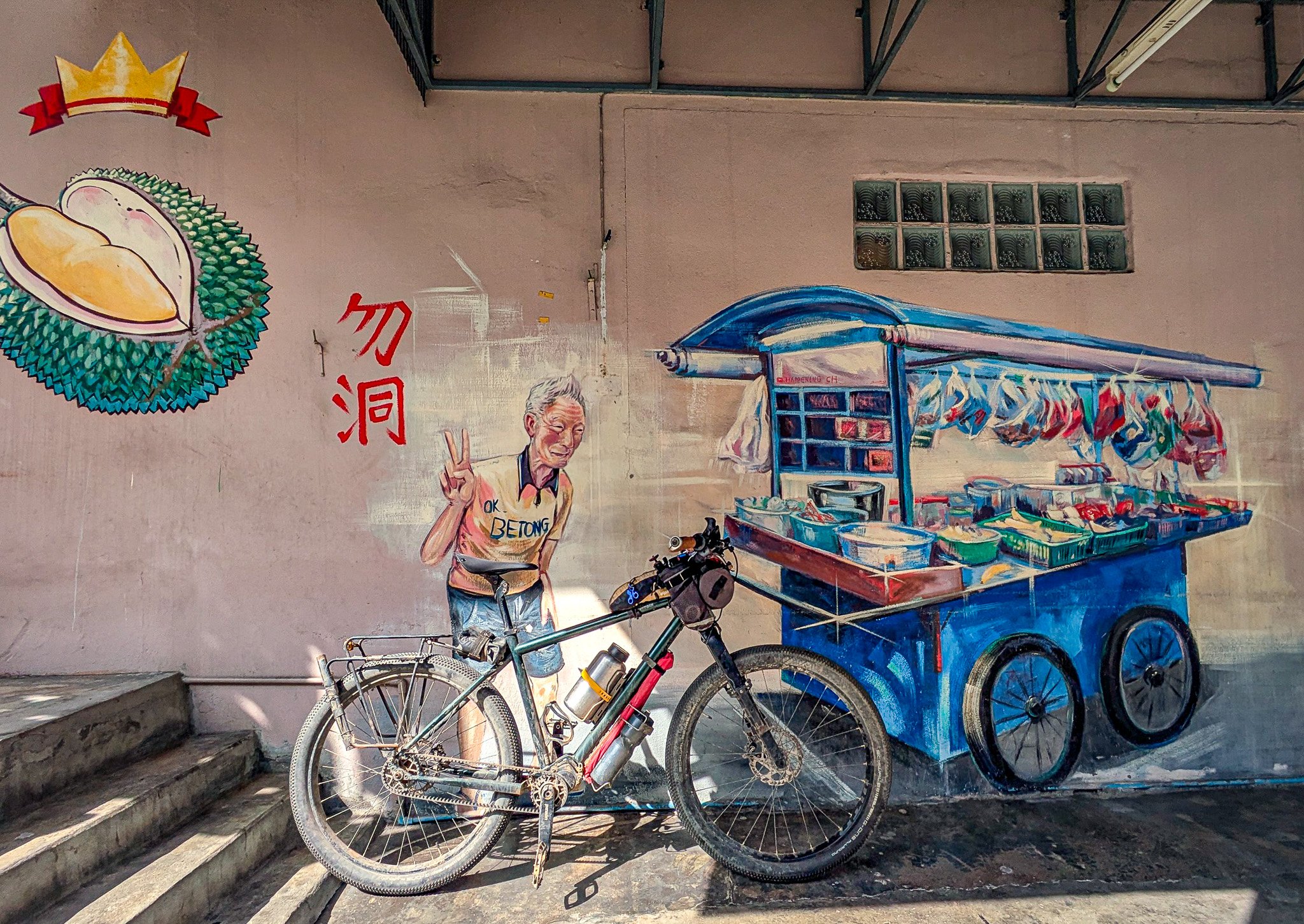
Stayed a couple of nights here.
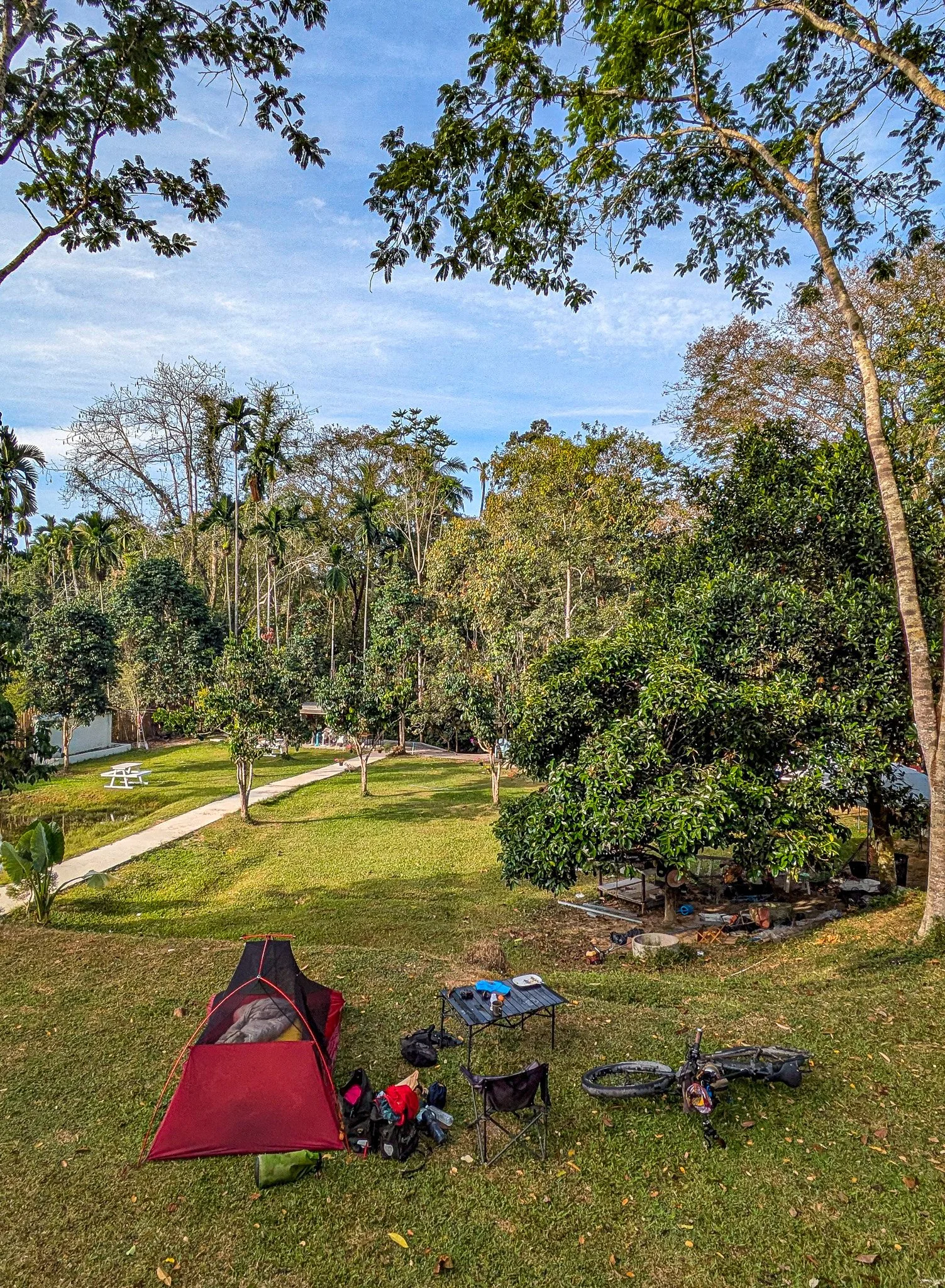
Campsite in Betong. Next stop - Malaysia.
If you enjoyed this post and found it helpful, please consider supporting the site and ongoing content creation by way of a virtual coffee. Always a great motivation. Thanks